Summary
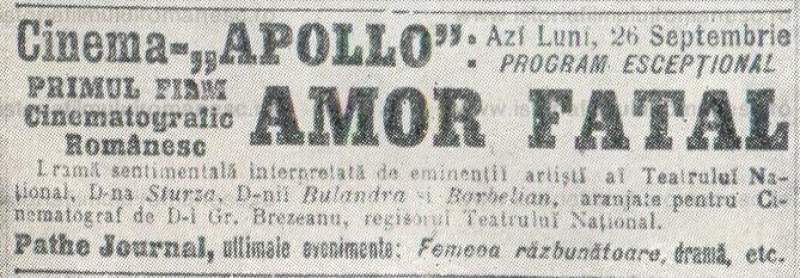
A Bucharest boulevard at dusk, gas-lamps flickering like half-remembered sins, becomes the stage for a lethal quadrille of desire: Lucia Sturza-Bulandra’s aristocratic wife, stifled by velvet obligations, drifts into the orbit of Constantin Neamtu-Ottonel’s fever-eyed anarchist whose every whispered manifesto smells of cordite and lilacs. Her husband, Tony Bulandra’s cavalry major—epaulettes sharp enough to slice moonlight—thinks honour is measured in sabre-thrusts until he discovers the lovers’ clandestine correspondence sewn inside the hem of her mourning veil. Aurel Barbelian’s morphine-addicted doctor, meanwhile, keeps time with a pocket watch filled with arsenic, chronicling heartbeats in the margins of a Bible. Over three feverish nights the city itself seems to inhale their secrets: carriages become confessionals, opera boxes transform into gallows, and a single crimson glove left on a bridge ignites a chain of duels, blackmail letters, and a final embrace beside an open crypt where love and death trade masks. Grigore Brezeanu’s scenario never once flinches; it presses the razor of melodrama against the jugular of bourgeois hypocrisy until the screen drips with fatal radiance.
Review Excerpt
"
Gaslight noir before noir had a name, Amor Fatal flickered across Bucharest’s Eforie Garden in October 1910 and scandalised a kingdom still tipsy on fin-de-siècle perfume. Ninety-odd surviving metres—scorched, spliced, reeking of nitrate nostalgia—are enough to certify that Romanian cinema was born venomous, laced with arsenic kisses and the metallic aftertaste of adultery.
Celluloid Seduction: A Frame-by-Frame Autopsy
Look closer: the camera never pivots without malice. A static wide shot of ..."