DbcultAccessing Vault...
Cult Review
Senior Film Conservator
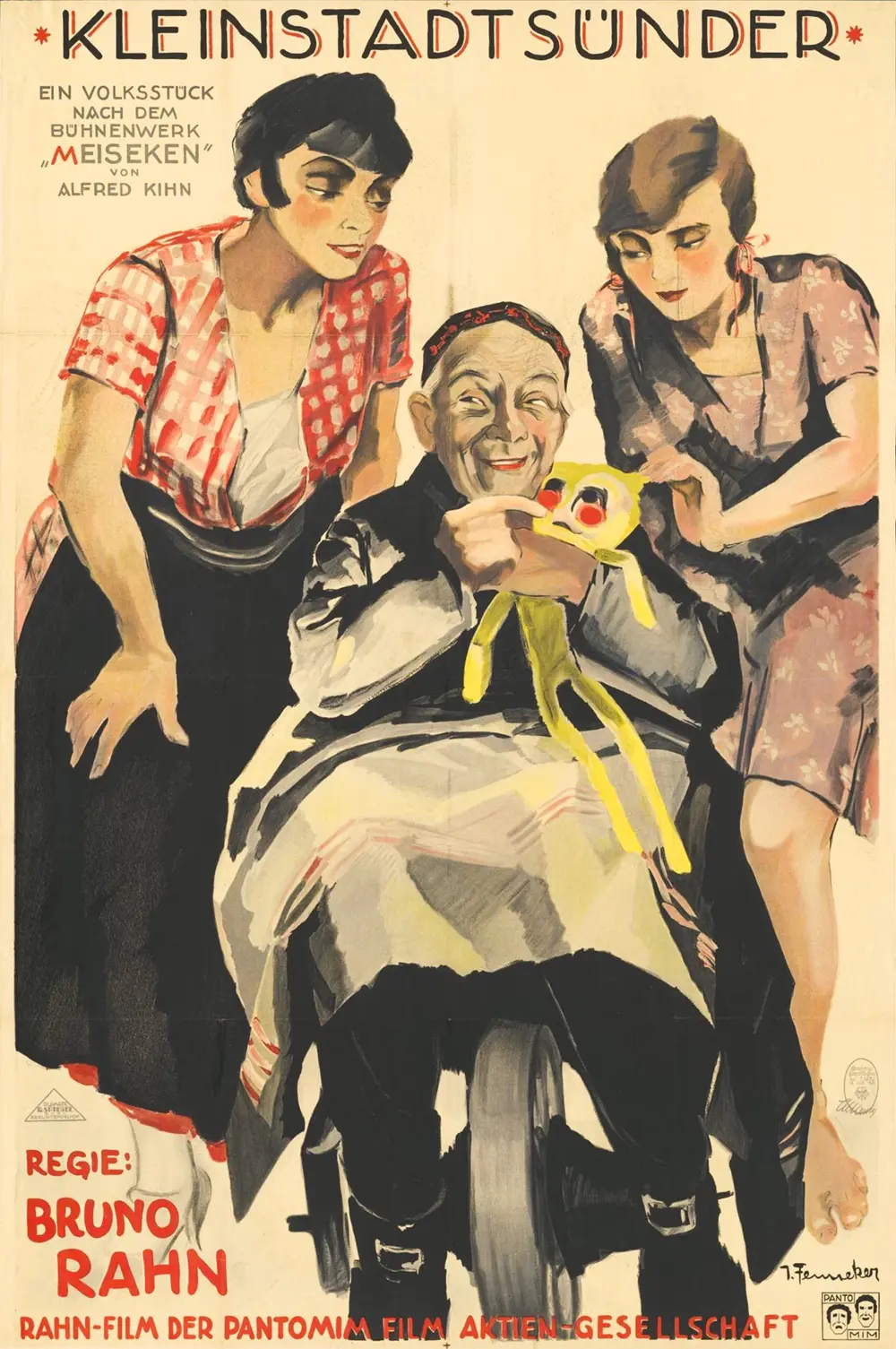
Is Small Town Sinners a forgotten gem of the silent era? Short answer: yes, but only if you have an appetite for the cynical social dynamics of the Weimar Republic. This isn't a film for those seeking a heartwarming tale of rural honesty; it is a sharp, biting look at how poverty turns ordinary people into opportunistic actors. If you are a fan of dark social satire or the legendary Asta Nielsen, this is a mandatory viewing. However, if you prefer fast-paced modern editing or clear-cut moral resolutions, the deliberate pacing of this 1920s drama might leave you cold.
For those looking for a quick verdict, here is the reality of the film's standing today. It remains a fascinating artifact of German cinema that bridges the gap between the grotesque and the romantic. It avoids the heavy-handed moralizing common in American films of the same period like Nina, the Flower Girl, opting instead for a gritty realism that feels surprisingly modern.
1) This film works because it treats its central fraud not as a villainous plot, but as a tedious, necessary chore for survival.
2) This film fails because the transition from the pension scam to the romantic elopement feels structurally disjointed in the final act.
3) You should watch it if you enjoy seeing how silent cinema explored the 'sins' of the working class without the interference of the Hays Code.
The plot of Small Town Sinners is built on a foundation of economic desperation. The innkeeper is not a criminal mastermind; he is a man trying to keep a roof over his head. When Grandad dies, the loss of his pension is not a sentimental blow, but a financial catastrophe. This pragmatic approach to death sets the tone for the entire film. We see the family members looking at elderly men in the village not with respect, but with the calculating eyes of a casting director. They are looking for a 'substitute' Grandad, a visual placeholder for a dead man's bank account.
This premise allows for some of the film's most uncomfortable and effective humor. There is a specific scene where they attempt to 'rehearse' a local drunk to sit in the Grandad's chair. The way they adjust his posture and command him to be silent mirrors the way the director, likely influenced by the stage traditions of the time, handles the ensemble. It is a meta-commentary on the art of performance itself. The characters are acting within the film just as much as the actors are acting for the camera. This layer of artifice makes the small-town setting feel claustrophobic and insincere.
Unlike the more traditional melodrama found in Reputation, Small Town Sinners leans into the absurdity of its premise. The 'sin' is not the fraud itself, but the soul-crushing boredom of the town that makes such a fraud necessary. The film argues that the environment is the true antagonist. The town is a place where secrets are the only currency, and the only way to win is to leave the game entirely.
While the ensemble cast is capable, the film belongs to Asta Nielsen. As the innkeeper's wife, she brings a level of psychological depth that was rare for the period. Nielsen was known for her 'naturalistic' style, which stands in stark contrast to the exaggerated pantomime often associated with silent film. In Small Town Sinners, she uses her eyes to convey a lifetime of disappointment. When the insurance agent arrives, her reaction isn't one of simple fear. There is a flicker of curiosity, a realization that this 'threat' might actually be her ticket out.
Consider the moment she first shares a private conversation with the agent. The camera lingers on her face as she weighs the risk of exposure against the potential for romance. It is a masterclass in subtlety. She doesn't need to wave her arms or collapse in tears; the slight tension in her jaw tells the whole story. Her performance elevates the film from a simple crime caper to a character study of a woman suffocated by her circumstances. She reminds us why she was the first international movie star of the silent era.
The chemistry between Nielsen and the actor playing the insurance agent is palpable, though by modern standards, the romance develops with lightning speed. However, within the logic of the film, this makes sense. They are two people who recognize a shared desire for something more than the provincial life. Their elopement to Berlin is played not as a betrayal of the husband, but as a liberation of the self. It is a punchy, decisive move that breaks the stagnant loop of the pension scam.
Visually, Small Town Sinners utilizes the stark contrasts typical of German cinema in the 1920s. While it doesn't lean fully into Expressionism like *The Cabinet of Dr. Caligari*, it uses lighting to create a sense of unease. The interior of the inn is often shrouded in deep shadows, suggesting the secrets hidden within its walls. The cinematography by the uncredited cameramen captures the textures of the rural setting—the dust, the wood grain, the heavy fabrics—making the world feel lived-in and grimy.
The pacing is deliberate. The film takes its time establishing the daily routine of the scam before introducing the inciting incident of the insurance agent. For some, this might feel slow. For others, it builds a necessary sense of tension. You feel the weight of the lie. You feel the constant fear of a knock at the door. When that knock finally comes, it has a physical impact. The direction ensures that the audience understands the stakes: if the scam is revealed, the family loses everything. This tension is what keeps the viewer engaged through the more dialogue-heavy title cards.
In comparison to a film like The Sleepyhead, which relies on more overt comedic beats, Small Town Sinners finds its humor in the darkness. It is a dry, almost cruel wit. The pacing reflects this. It doesn't rush to the punchline. It lets the discomfort simmer. This makes the eventual explosion of the plot—the elopement—feel like a necessary release of pressure.
Is Small Town Sinners worth your time in the 21st century? Yes. It offers a unique perspective on the 'criminal' film. Most films of this era, such as Prestuplenie i nakazanie, focus on the guilt of the perpetrator. Small Town Sinners is different. It focuses on the exhaustion of the perpetrator. It asks the audience to empathize with a family that is doing something objectively wrong because the alternative is starvation.
The film is also a vital piece of history for those interested in the evolution of acting. Asta Nielsen’s presence alone justifies the runtime. Her ability to command the screen without saying a word is a reminder of what was lost when the industry transitioned to sound. The film isn't a masterpiece in the sense of being perfect, but it is a masterpiece of tone and character. It works. But it’s flawed. The ending comes abruptly, and the husband’s character is left somewhat adrift, but the journey there is fascinating.
Pros:
Cons:
Small Town Sinners is a biting, effective piece of silent cinema that remains relevant because of its honest portrayal of human frailty. It doesn't ask for your forgiveness; it asks for your understanding. While it lacks the grand scale of His Majesty, the American or the high-octane energy of Fighting the Flames, it succeeds as an intimate, gritty drama. It is a film about the small, ugly things people do to survive, and the beautiful, reckless things they do to feel alive. It is a dark, cynical, and ultimately rewarding experience for any serious cinephile.
IMDb 6.9
1921
Community
Log in to comment.