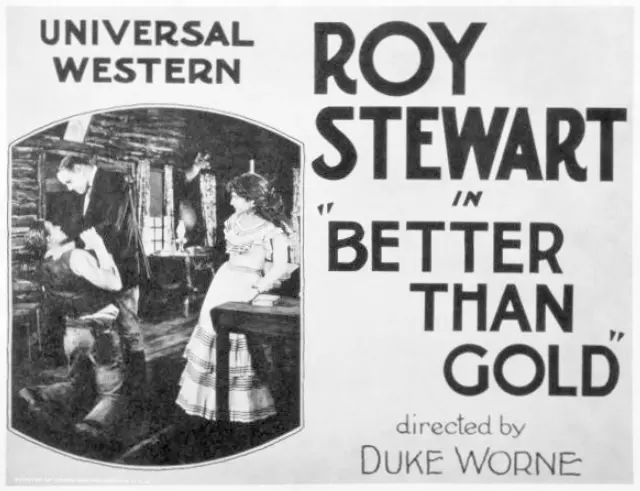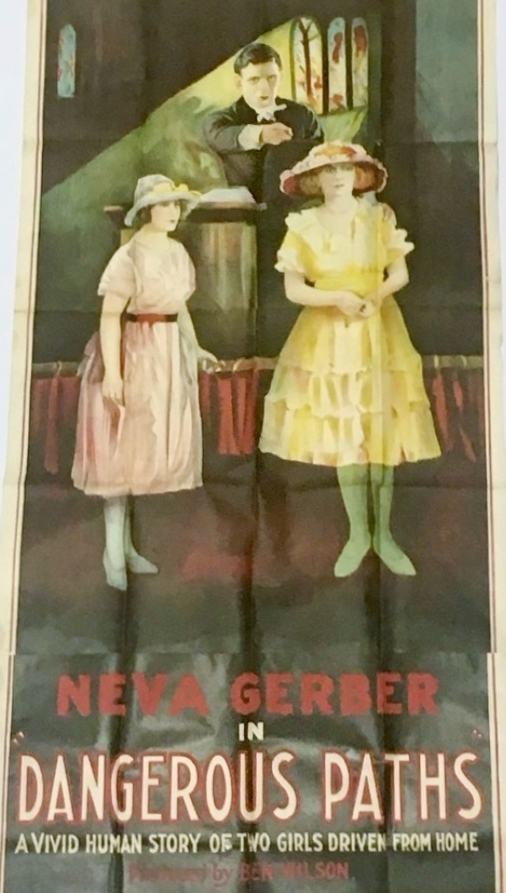
Rather than be forced by her shrewish stepmother into marriage to wealthy but cruel Silas Newton, Ruth Hammond leaves her country home and goes to the city, where she is aided by Violet Benson. Newton finds her there and tries to force his attentions on her, but she has him thrown out of her hotel.
The first image Joseph W. Girard gives us is a silhouette of Ruth—Neva Gerber’s profile cut like obsidian against a livid dusk—hoisting a carpet-bag so small it might contain only her name. That bag, swinging like a pendulum, is the entire twentieth-century womanhood in miniature: property, portability, peril. One cut...

Comparing the cinematic DNA and archive impact of two defining moments in cult history.
Duke Worne

Alexander Butler
Community
Log in to comment.
" The first image Joseph W. Girard gives us is a silhouette of Ruth—Neva Gerber’s profile cut like obsidian against a livid dusk—hoisting a carpet-bag so small it might contain only her name. That bag, swinging like a pendulum, is the entire twentieth-century womanhood in miniature: property, portability, peril. One cut later, we are inside the Hammond farmhouse where Helen Gilmore’s stepmother orchestrates a betrothal with the glee of a butcher weighing lamb. The camera, stationary yet merciless..."
Henry Van Sickle
Joseph W. Girard
United States