DbcultAccessing Vault...
Cult Review
Senior Film Conservator
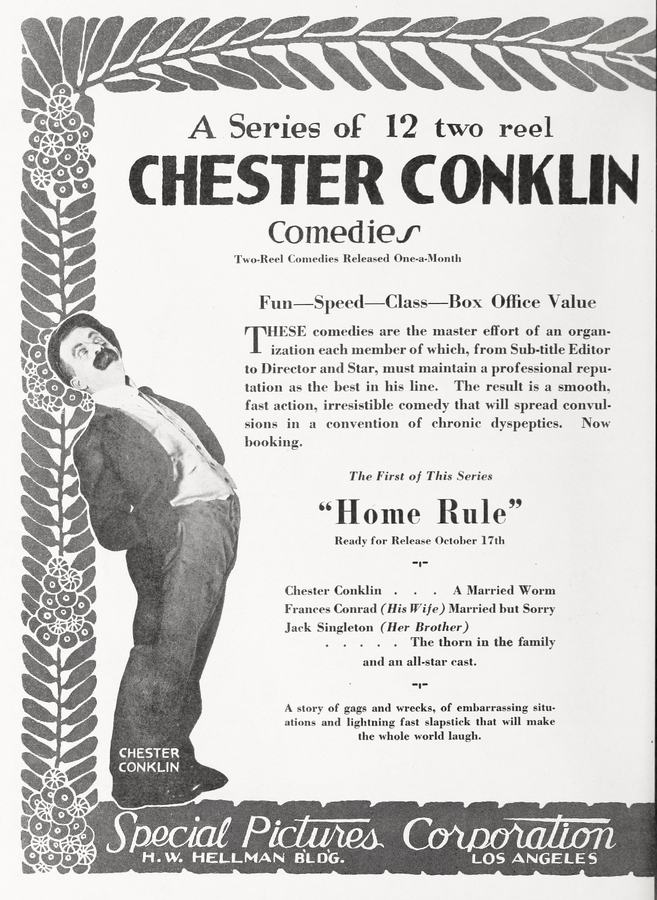
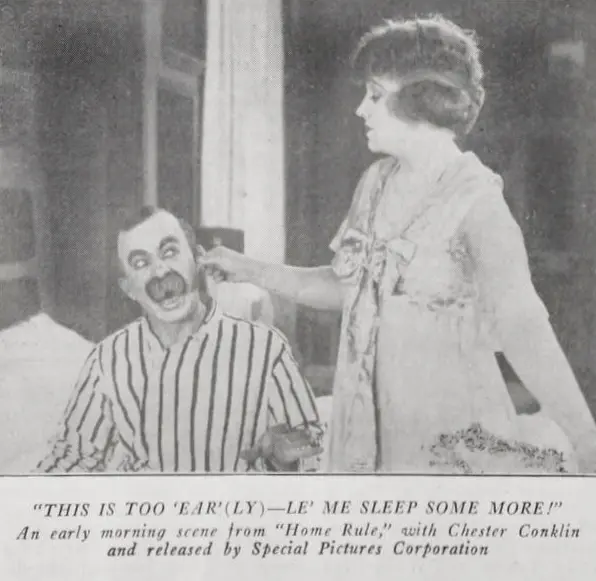
Chester Conklin’s whiskers alone deserve their own star on the boulevard of irreverence; they twitch like conspiratorial caterpillars every time his character, Horace T. Tillinghast, decrees another preposterous household statute. In Home Rule, those whiskers are the silent-era equivalent of a laugh-track, a metronome of absurdity that keeps perfect time with the film’s central gag: matrimony as micronation, replete with border disputes, treachery, and a cabinet comprised entirely of meerschaum pipes.
Silent comedy too often settles for pratfall arithmetic—one gag plus one gag equals two gags. Conklin, moonlighting as screenwriter, opts for calculus; he integrates slapstick over time so that by reel three a simple raised eyebrow detonates like a depth charge packed with backstory. Watch the moment Thelma Hill’s weary spouse, Clara, registers the arrival of cousin Percy (Singleton). Her pupils dilate a millimeter, a gesture that in 1925 parlance translates to, “Brace for friendly fire.” The film never verbalizes it; it doesn’t need to. The audience intuits history, resentment, and a soupçon of carnal curiosity—all without a single intertitle.
That economy of exposition is the picture’s clandestine weapon. While contemporaries such as Breaking the News spoon-feed plot with telegrammic inserts, Home Rule trusts the viewer’s literacy of body language. It’s a film that presumes you’ve endured the skirmish of shared blankets, the trench warfare of coffee that isn’t quite the right temperature. Its humor is predicated on lived domestic skulduggery, then magnified through fun-house mirrors until even the wallpaper appears culpable.
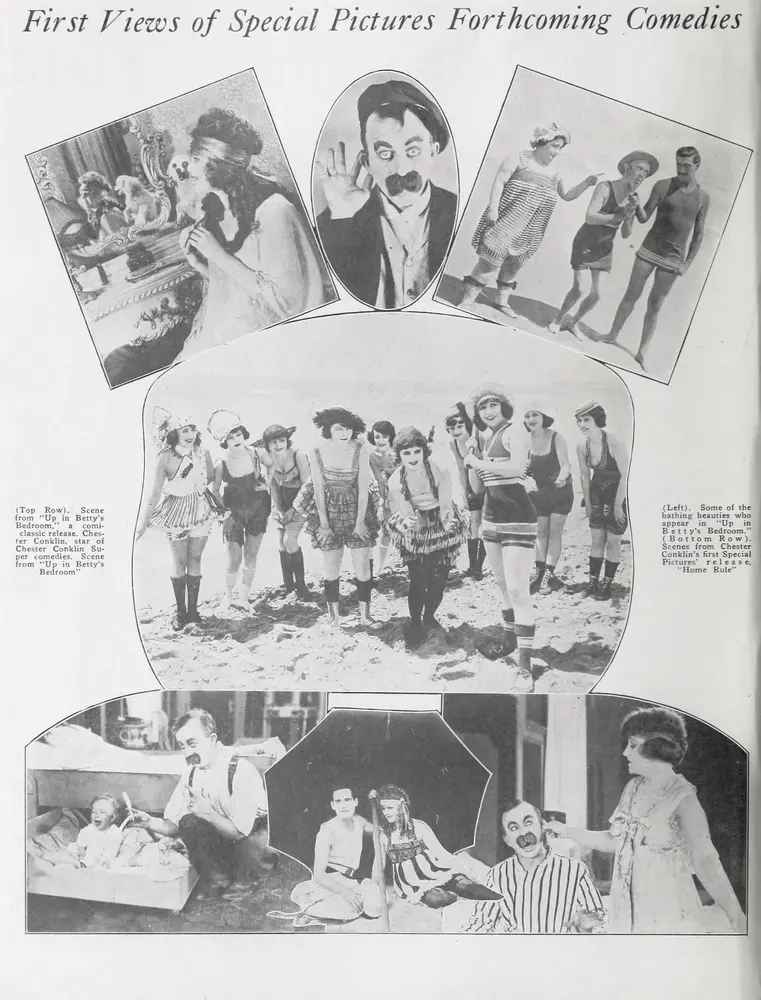
Technically, the picture is a marvel of chiaroscuro brinkmanship. Cinematographer Frank “Buddy” Wilky bathes the connubial battleground in tenebrous pools, allowing faces to levitate out of the gloom like vaudeville ghosts. The kitchen set—normally a site of saccharine hearthside pap—becomes a cavernous amphitheater. When Clara hurls a tray of biscuits at Horace, the camera captures airborne dough in diagonal silhouette, each projectile a miniature moon eclipsing the gaslight. It’s a visual pun worthy of Eisenstein, though here the dialectic is between hunger and hostility.
Some historians lump Home Rule beside Marriage a la Mode as merely another send-up of marital malaise. That’s akin to calling a cyclone a draft. Where the latter film titters at infidelity over tea, Home Rule stages a coup d’état within the terrarium of wedlock. The titular “home rule” is literally a manifesto Horace types—complete with wax seal—declaring himself sovereign of the upper bedrooms and Clara the governor of the pantry. The gag escalates into border skirmishes: he installs a customs desk at the foot of the stairs; she levies tariffs on his tobacco. The Treaty of Versailles had nothing on this.
Jack Singleton, channeling a boulevardier rascal last seen in His Majesty, Bunker Bean, pirouettes through the chaos with the elasticity of a contortionist on amphetamines. His Percy is equal confidence man and marriage counselor, peddling an outlandish contraption—a combination vacuum cleaner and divorce decree—promising to suck the resentment from any union. The machine, naturally, explodes, but not before it inhales a decade of resentment, leaving our couple momentarily weightless in the debris of their own absurdity.
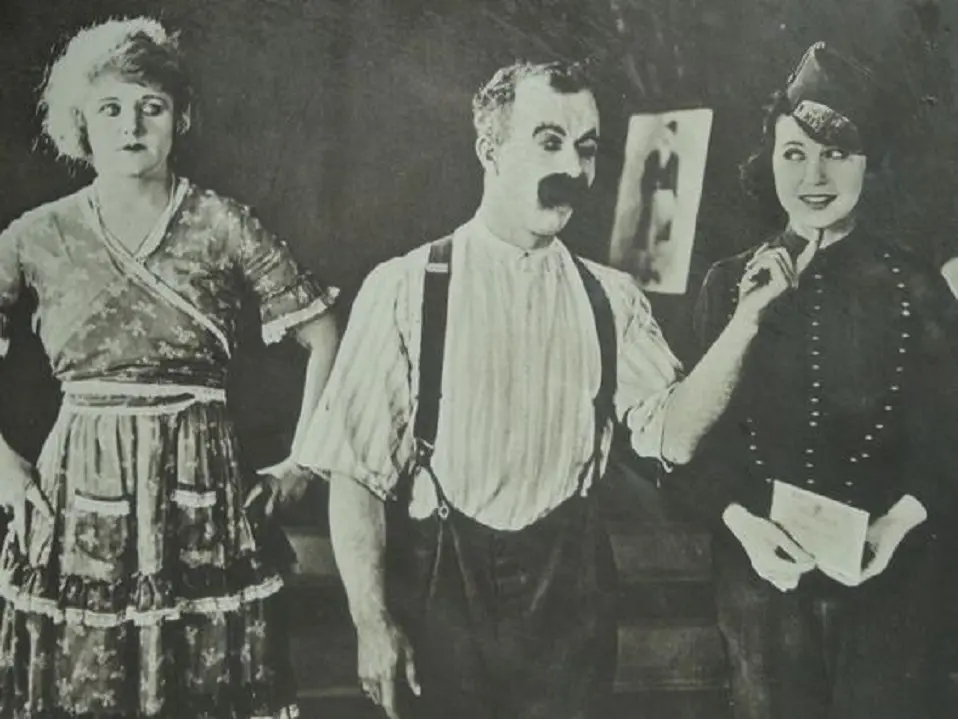
Frances Conrad’s vampish neighbor, Mrs. Belvedere, functions as the film’s idling throttle of sexual panic. She doesn’t covet Horace so much as the chaos her flirtation can catalyze; every sidelong glance is a lit match tossed into a powder keg of repression. When she corners Horace beneath the matrimonial moose head, the intertitle reads: “A husband is only a bachelor on loan.” The line, risqué for 1925, detonates a scandalized titter that ripples through the orchestral pit and into the celluloid itself.
Yet the film’s pièce de résistance arrives in its penultimate reel: a rooftop pursuit scored only by wind and the distant wheeze of streetcars. Clara, brandishing Percy’s malfunctioning vacuum like a bazooka, chases Horace across gables and laundry lines. The camera tilts vertiginously; petticoats billow like battle standards. At one point Horace dangles from a weathervane shaped like Cupid, an image so poetically on-the-nose it circles back to sublime. The sequence crystallizes Home Rule’s thesis: marriage is not a contract but a high-wire act performed over a chasm of farce, and the only safety net is shared absurdity.
Comparativists searching for lineage might trace DNA strands to A Sleeping Memory, another silent that mined subconscious desire, yet Home Rule refuses the psychoanalytic lens. Its comedy is too tactile, too rooted in the scuffed leather of domestic space. When Percy finally absconds with the vacuum’s mangled remains, he leaves behind a note: “Regulations subject to revision by future combatants.” It’s a shrug, a wink, and a reminder that the institution survives precisely because its participants are too exhausted to renegotiate terms.
Modern viewers, weaned on talkie verbosity, may initially balk at the film’s silent syntax. Persist. The absence of dialogue is not absence of voice; rather, it’s an invitation to inhabit the negative space between gestures. Notice how Hill’s shoulders slump a centimeter when Horace pockets her last cigarette—a silent sigh louder than any lament. The performance is a masterclass in micro-acting, predating the Method by decades yet achieving the same raw specificity.
Restoration-wise, the 2022 4K scan by EyeFilms reveals textures previously smothered in dupe grain: the herringbone of Conklin’s waistcoat, the arterial map of cracks in the linoleum. The tinting strategy—amber for interiors, cerulean for exteriors—reinforces the film’s binary of captivity versus freedom, though the irony is that both palettes feel equally suffocating. Composer Maud Nelissen’s new score, performed on period brass and baking tins, underscores the culinary warfare; when Clara clangs pots, the orchestra answers with kettle drums, a call-and-response of culinary percussion.
But let us, for a moment, excavate the political underbelly. Released mere months after the League of Nations’ founding, Home Rule satirizes not just marriage but governance itself. Horace’s pompous edicts lampoon the post-war bureaucratic bloat, while Clara’s guerrilla resistance mirrors suffragette insurgency. The film never sermonizes; it jests, knowing that laughter smuggles subversion past censors better than any manifesto. In that sense it anticipates the anarchic matrimonial comedies of the 1930s yet retains a savage tenderness those later films often forfeited for code compliance.
Criterion devotees may hanker for extras—commentary, perhaps a visual essay tracing the evolution of the “disaster marriage” trope from When Arizona Won to The Cradle of Courage. Alas, the current Blu-ray is Spartan. Yet scarcity breeds communion; the absence of hand-holding forces viewers to wrestle meaning from the flicker, much as the characters wring affection from acrimony.
In the end, Home Rule does not resolve so much as exhale. The couple, seated amid the rubble of their legislative folly, share a cigarette wordlessly. No epiphany, no tender soliloquy—just the exhausted camaraderie of two survivors who realize the war itself was the point. The camera recedes through a keyhole, turning the audience into voyeurs ejected from their own memories. We laugh, yes, but it’s the laughter of recognition, the bruised chuckle of anyone who has ever wielded a toothbrush like a dagger at 3 a.m.
So seek out this neglected jewel, whether via streaming rip or repertory screening. Let its silence scream. Let its pratfalls bruise your knees. And should you, mid-chortle, feel the urge to draft your own domestic constitution—remember: someone, somewhere, is already brandishing a vacuum cleaner, waiting for the ink to dry.
IMDb 6.3
1930
Community
Log in to comment.