Summary
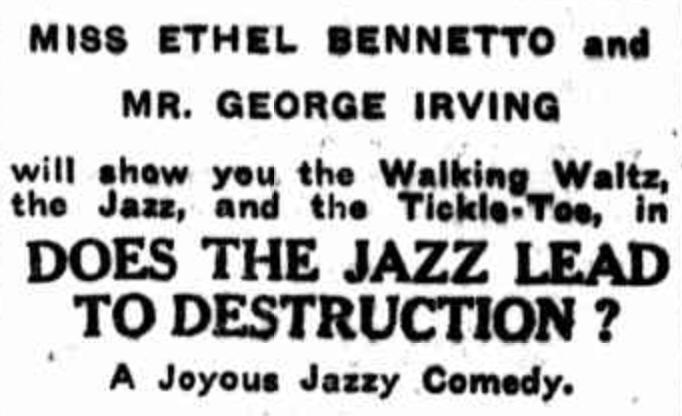
In a feverish post‑war metropolis where neon‑lit speakeasies pulse like arteries, Ethel Bennetto portrays Lena Marlowe, a virtuoso saxophonist whose nocturnal improvisations ripple through the city's underbelly. When a series of inexplicable catastrophes—factory explosions, riots, a sudden surge of political assassinations—trace back to the very venues where Lena performs, the narrative spirals into a chiaroscuro of sound and sabotage. George Irving embodies Detective Harold Finch, a weary gumshoe whose skepticism is eroded by the uncanny synchronicity between Lena's crescendos and the ensuing chaos. As Finch delves deeper, he uncovers a clandestine syndicate that weaponizes jazz frequencies, believing the genre's dissonant harmonics can destabilize societal order. The film weaves flashbacks of Lena's wartime trauma, her mentorship under a mystic bandleader, and a forbidden romance with a revolutionary poet, each thread tightening the knot between artistic expression and destructive potential. The climax converges in a cathedral‑like concert hall where Lena, confronted with the ultimate choice, must decide whether to unleash a final, cataclysmic solo that could either shatter the oppressive regime or annihilate the fragile humanity she cherishes. The denouement leaves the audience suspended between reverberating silence and the lingering echo of a saxophone's last sigh, questioning whether art is a catalyst for ruin or redemption.
Review Excerpt
"
Does the Jazz Lead to Destruction? – Review
body {background:#000;color:#fff;font-family:Georgia,serif;line-height:1.6;margin:0;padding:20px;}
p {margin-bottom:1.2em;}
a {color:#0E7490;text-decoration:none;}
a:hover {text-decoration:underline;}
.highlight-orange {color:#C2410C;}
.highlight-yellow {color:#EAB308;}
When the silver screen flickers with the promise of a new kind of apocalypse, it is seldom a meteor or a virus that threatens humanity, but rather the very cadence of a cultural..."