DbcultAccessing Vault...
Cult Review
Senior Film Conservator
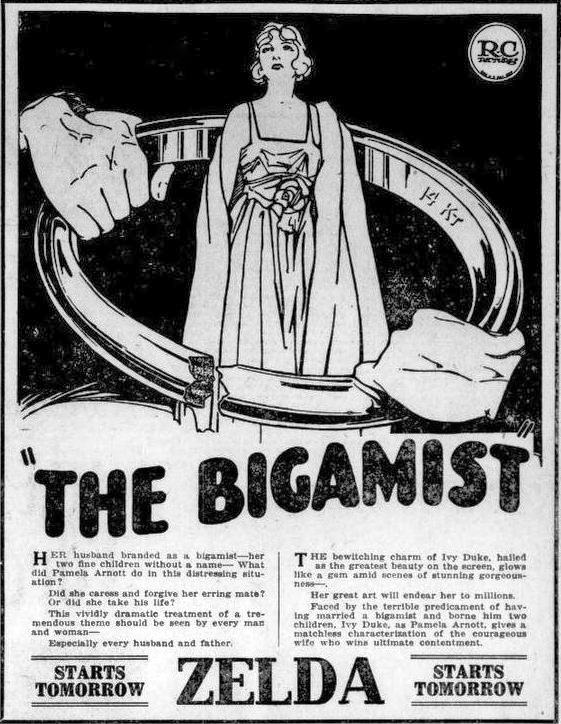
London, 1921. A year before Hitchcock christened the thriller with Number 13, another British filmmaker—actor-auteur Guy Newall—slipped a cyanide capsule into the institution of marriage and recorded the contortions for posterity. The Bigamist arrives not as antique curio but as a scalpel still wet, dissecting masculine cowardice with a precision that makes post-#MeToo dramas feel like they’re fumbling with blunt safety-scissors.
Shot on shoestring sets that wobble when doors slam, the film nonetheless achieves an intimacy so clammy you can practically taste the Ovaltine cooling in Pamela’s neglected teacup. Newall—who wrote, directed, and stars—casts himself as Herbert, the ambidextrous husband whose duplicity is revealed in the first ten minutes via that lethal epistolary bombshell. The gamble is audacious: no slow-burn suspense, just immediate moral vertigo. From there, the narrative becomes a séance of recrimination, a Möbius strip where every flashback doubles back to bite its own tail.
Cinematographer Bert Ford—later condemned to quota-quickie purgatory—composes frames like a man who trusts silence more than words. Note the recurring motif of mirrors cracked by off-screen fists: Herbert shaving while reflected glass fractures his jawline into cubist shards, presaging the splintering of identity. Or the moment both wives—unaware of each other—stand in identical doorways, their silhouettes overlaid via double exposure so that they appear to share one body, two hearts. The device predates Die Maske’s German-expressionist flourish by a full year, yet feels subtler, more venomous.
Colorwise, the 35mm restoration leans toward silver-amber, but the emotional palette is all bruised persimmon and nicotine umber. Intertitles—ostensibly white—bleed into the frame like bandages insufficient for the wound beneath. One card reads: “A man may wear two faces, but only one can smile at a time.” The aphorism stings because it is both epigram and epitaph.
Ivy Duke’s Pamela is no sobbing ingénue; her eyes narrow into fiscal calculators the instant suspicion germinates. Watch how she fingers the envelope—thumbnail scraping parchment with the same absent rhythm she uses to test ripeness at the grocer’s. The body remembers what the mind refuses. Conversely, Barbara Everest as the other Mrs. Endicott carries the stunned dignity of someone handed death-sentence poetry in a language she must translate on the spot. Their confrontation—restrained to a single medium-shot—achieves the volcanic hush of strangers recognizing mutual damnation.
Newall courts our contempt yet denies us catharsis. His Herbert is less cad than casualty of a culture that equates virility with acquisition; every time he bows—slightly, always slightly—it’s as though he’s measuring the clearance for yet another mask. The performance ages like milk left on a windowsill: by the final reel, the actor’s own jowls seem to accuse him.
Viewers conditioned by talkie exposition may fidget at the film’s glacial mid-section, but patience bequeaths rewards. When the courtroom empties, Ford holds on a bench where a forgotten glove trembles in the draft—an image more eloquent than any verdict. The absence of synchronized dialogue amplifies ambient ghosts: the creak of counsel’s leather satchel, the staccato click of stenographer keys like distant artillery. One thinks of Homunculus 6. Teil’s apocalyptic hush, though here the world ending is merely one man’s moral universe.
Music? The restoration grafts a contemporary score—piano, sparse strings—that opts for lament rather than suspense. During the letter reveal, a single plucked violin note sustains for fifteen seconds, long enough to feel like scalpels carving air. It never resolves; it simply stops, as if ashamed to continue.
Cinema’s first decades were oddly prurient about polygamy. Compare Tell Your Wife Everything (1918), which played the concept for slapstick: a husband’s second spouse turns out to be a circus strongwoman who can bench-press his remorse. Or The Way of the World, where the revelation prompts a yacht chase through Monte Carlo—bigamy as carnival. The Bigamist excises such frivolity; it is the rare silent that refuses to flatter its audience with escapism. Instead, it rubs our noses in the domestic soot we paid to forget.
Yet the film also predates the full Hays-coded moral stranglehold, allowing ambiguity to fester. No minister sermonizes; no title card lectures on “the sanctity of the hearth.” Guilt is existential, not judicial. The closing iris closes on Herbert’s shadow dissolving into prison bars that resemble nothing so much as the iron railing of his own marital bed. We are left to decide whether the cage is society’s or self-wrought—a nuance that would evaporate once 1930s censorship demanded retributive clarity.
Swap telegrams for Tinder bios and the film could premiere at Sundance next January. The mechanics of deception—parallel phones, calendars coded in pet-names, receipts smelted in office ashtrays—map neatly onto today’s dual-SIM affairs. Scholars of Mirandy Smiles have argued that early cinema’s gender politics are too period-bound to bruise contemporary skin; The Bigamist proves otherwise. Each time Herbert claims “work trips,” modern viewers reflexively picture push-notifications silenced, Slack statuses set to “focus mode.” The silent era’s restraint paradoxically sharpens the indictment: bereft of spoken excuse, the lies feel naked, archaeological.
What hasn’t migrated across the century is the stigma toward the other woman. The screenplay, co-penned by a male writer duo, grants the second wife flashes of agency—she owns a bookshop, articulates desire—but ultimately frames her as collateral tissue in the blast radius of male ego. Feminist critics may bristle, yet the film’s refusal to redeem Herbert feels quietly radical for 1921. He exits not as tragic anti-hero but as a man whose name has become unspeakable, a lexical Chernobyl.
The print survives via a 1998 BFI restoration, itself stitched from a 1928 Czech distribution copy and a nitrate fragment rescued from a Devon barn. Resultant blemishes—water stains shaped like continental drift—become accidental poetry. During a climactic close-up, a vertical scratch slices across Herbert’s cheek like a dueling scar, as though the celluloid itself demands accountability. Purists decry such imperfections; I’d argue they’re the film’s stigmata, proof that history kept receipts.
Frame-rate drift causes occasional Keystone gait, but the flicker imbues candle-lit confessionals with proto-noir chiaroscuro. One sequence—Herbert prowling a fogged Thames embankment—anticipates the climactic dockside of The Symbol of Sacrifice yet feels colder, more clandestine. The Thames, after all, is a liquid archive where Victorians dumped opium debts; here it swallows another secret.
Stream via BFI Player globally, or snag the region-free Blu-ray bundled with The Scottish Covenanters and a scholarly commentary that contextualizes British silent cinema’s legal anxieties post-Matrimonial Causes Act. Academic libraries stateside often hold 16mm prints; if you sniff one, petition for a public screening—this is a film that demands communal inhalation, the rustle of coats as viewers cross and uncross guilty legs.
Rating? Stars feel trite for a work that interrogates the very currency of faith. If compelled: ★★★★½—half-star deducted for the script’s glancing blow at class privilege, though perhaps that omission is the point: betrayal travels first-class on every socioeconomic carriage.
The Bigamist will not restore your belief in marriage, nor in men, nor in the comforting lie that progress equals moral evolution. It will, however, remind you that every era has its wolves, its sheep, and its letter-carriers—messengers who, even in 1921, delivered shrapnel in innocent white envelopes. Ninety minutes later, when the screen blackens to mirror your own reflection, the question ceases to be whether you could forgive Herbert. The question is whether you can forgive the rest of us, still building our nests from the same brittle paper, still surprised when the envelope arrives.

IMDb 7.1
1933
Community
Log in to comment.