DbcultAccessing Vault...
Cult Review
Senior Film Conservator
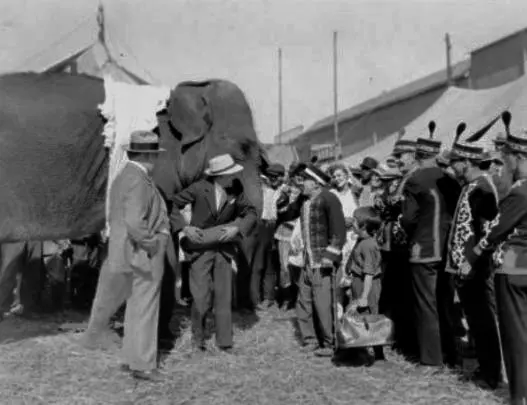
Short answer: yes, but with significant caveats. The Great Love (1925) is absolutely worth watching today for a very specific audience: silent film enthusiasts, those fascinated by early Hollywood’s eccentricities, and anyone with a soft spot for unusual animal co-stars. If you’re looking for a fast-paced, modern narrative or struggle with the conventions of silent cinema, this film is likely not for you.
This isn't a film that will convert skeptics to the silent era, but for those already inclined, it offers a surprisingly charming and often baffling experience that speaks volumes about the storytelling sensibilities of its time.
Marshall Neilan's The Great Love unfurls a narrative that, on paper, sounds like the fever dream of a whimsical storyteller. A struggling country doctor, a circus elephant, a kidnapped sweetheart, and two thousand Boy Scouts – it’s a concoction that defies easy categorization. Yet, within its silent-era confines, it largely manages to weave these disparate threads into something surprisingly coherent, if undeniably quirky.
The film introduces us to Dr. Lawrence Tibbits, played by Johnny Aber, a picture of earnest rural medical practice. His world, initially defined by mundane ailments and the quiet rhythms of small-town life, is dramatically upended by a circus fire. This inciting incident, while visually modest by today’s standards, effectively establishes the stakes and introduces Norma, the elephant, as a pivotal character.
What follows is a testament to the power of unconventional bonds. Norma, rescued and healed by Dr. Tibbits, develops an attachment that transcends typical animal-human relationships depicted on screen. Her repeated returns to the doctor’s home, trampling gardens and causing gentle disruption, serve as both a running gag and a genuine portrayal of loyalty. It’s a bold narrative choice to give such prominence to an animal, and the film commits to it fully.
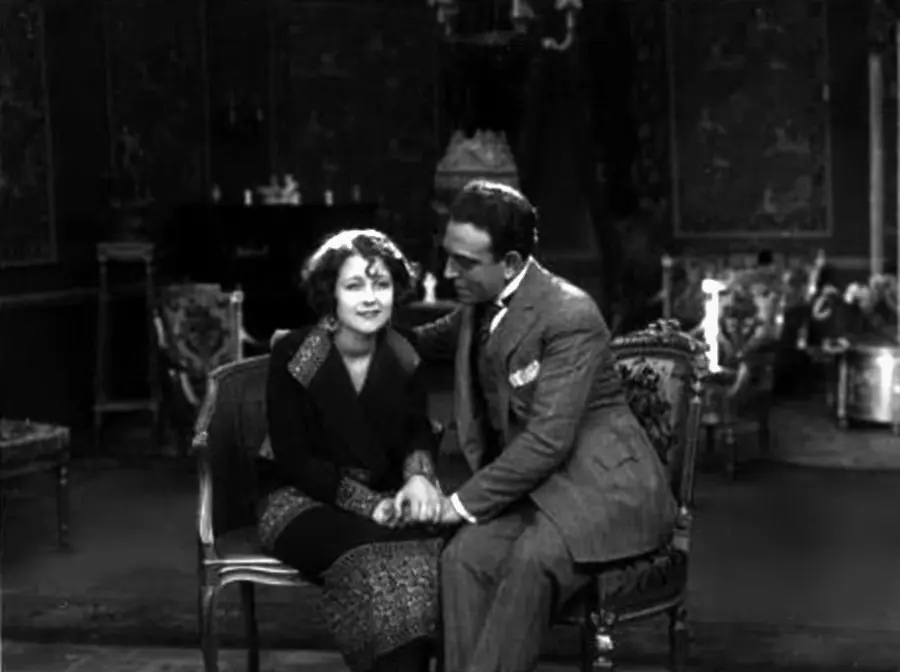
The central romance between Tibbits and Minette Bunker, portrayed by Viola Dana, provides the more traditional emotional anchor. Minette is the classic silent-era sweetheart, sweet and somewhat helpless, setting the stage for the dramatic rescue sequence that forms the film's climax. The integration of the elephant into this romantic drama is where the film truly distinguishes itself, elevating it beyond a mere melodramatic escapade.
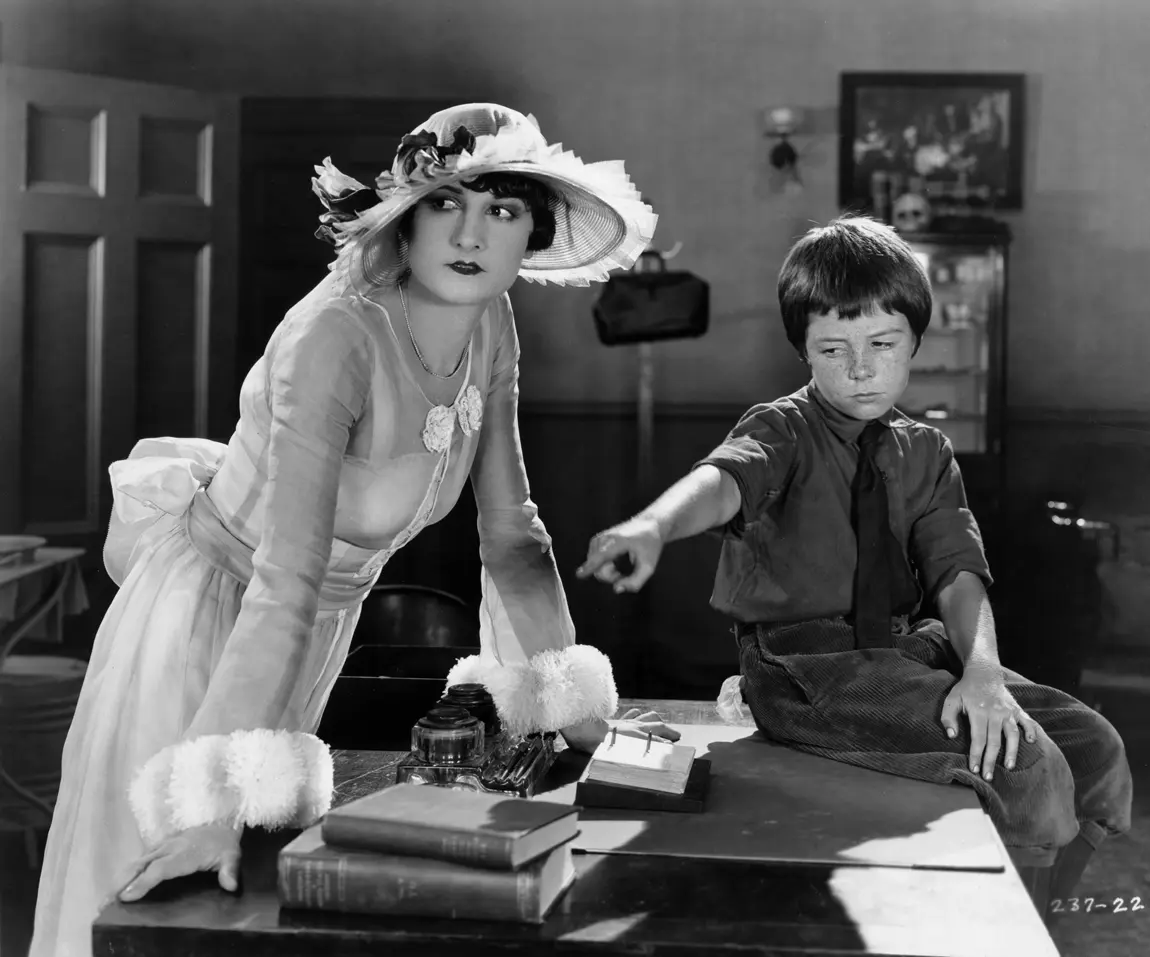
The cast of The Great Love delivers performances that are characteristic of the silent era, relying heavily on exaggerated expressions and physical comedy to convey emotion and intent. Johnny Aber as Dr. Tibbits embodies the archetype of the virtuous, somewhat naive hero. His expressions of concern, determination, and affection are clear, if a little broad, suitable for the period's cinematic language.
Viola Dana, as Minette Bunker, plays the damsel in distress with a certain charm. Her portrayal is less about nuanced character development and more about fulfilling a specific narrative function – the object of affection and the catalyst for heroism. She projects an innocence that makes her kidnapping feel genuinely distressing, even if her agency is largely reactive rather than proactive.
However, it is Zasu Pitts, in a supporting role, who truly shines and arguably provides the most memorable human performance. Pitts was a master of understated, almost melancholic comedy, and her presence here, even in a role that isn't the romantic lead, offers a unique flavor. Her signature nervous gestures and wide-eyed innocence, often tinged with a subtle sadness, are a delightful counterpoint to the more straightforward performances around her. Her ability to convey complex emotions with minimal movement is a testament to her unique talent, making her scenes feel surprisingly modern. It’s a strong argument that Pitts, even in small doses, could steal any scene she was in, much like she did in films such as Pettigrew's Girl.
And then, of course, there's Norma. The elephant is not merely a prop but a character with agency, whose actions drive significant portions of the plot. The filmmakers manage to imbue Norma with personality – a gentle giant whose loyalty is both endearing and comically disruptive. The logistics of filming an elephant in an era without CGI are impressive, and Norma’s performance feels remarkably genuine, a true feat of animal training and directorial patience.
Marshall Neilan, a prolific director of the silent era, demonstrates a clear hand in balancing the various tones of The Great Love. The film navigates between heartwarming animal friendship, budding romance, light comedy, and dramatic peril without feeling jarring. His direction is straightforward, prioritizing clear storytelling over experimental techniques, which was often the norm for popular cinema of the time.
Neilan's pacing, while deliberate by modern standards, is effective for a silent film. He allows moments to breathe, particularly in the scenes establishing Norma’s attachment to Dr. Tibbits. The sequence where Norma repeatedly returns, for instance, builds its humor through repetition and the escalating scale of her 'disruptions.' This slow burn of comedic build-up is a hallmark of silent-era slapstick, and Neilan executes it well.
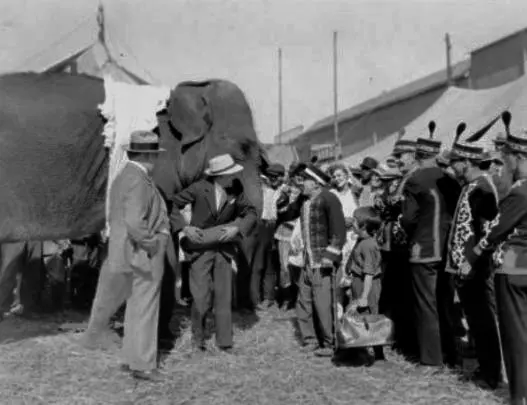
The rescue sequence involving the Boy Scouts is a prime example of Neilan's ability to orchestrate a large-scale, exciting set piece. While not as grand as some epic spectacles of the era, the sheer number of children involved, combined with Norma's presence, creates a sense of genuine adventure and community spirit. It’s a delightful, almost surreal moment that feels uniquely 1920s in its earnestness and slightly absurd charm.
One could argue that Neilan’s direction, while competent, occasionally leans too heavily on established silent film tropes, particularly in the romantic melodrama. However, his willingness to embrace the outlandish premise of an elephant as a co-star and even a rescuer is where his creative vision truly shines. This film works because Neilan fully commits to its unique premise, never winking at the audience, but rather inviting them into its sincere world.
The cinematography in The Great Love is functional and effective, characteristic of mid-1920s filmmaking. While it lacks the groundbreaking artistry of a Murnau or the dynamic flair of a Griffith, it successfully conveys the narrative through clear compositions and well-lit scenes. The rural setting is captured with a pleasant, idyllic quality, emphasizing the simplicity and charm of the country life that Dr. Tibbits inhabits.
Silent films, by necessity, relied heavily on visual storytelling, and The Great Love employs a mix of wide shots to establish settings and close-ups to emphasize character emotions. The close-ups of Zasu Pitts, for instance, allow her subtle facial expressions to register with impact, underscoring her unique screen presence. Similarly, the camera often focuses on Norma’s eyes, attempting to convey her intelligence and affection, a challenging but often successful endeavor.
The use of intertitles is standard for the period, providing dialogue and exposition where visuals alone might not suffice. They are generally well-integrated, moving the story forward without feeling overly intrusive. There’s a particular charm in the directness of these text cards, a stark contrast to today’s dialogue-heavy cinema.
One of the more unexpected observations is how effectively the film uses its limited visual effects to portray the elephant’s actions. The scale of Norma’s movements, from lumbering through fields to participating in a rescue, is conveyed convincingly through careful framing and editing, a testament to the practical effects expertise of the era. It feels authentic in a way CGI often struggles to replicate, reminding us of the tactile reality of early cinema. While not as visually groundbreaking as something like Adventures of Tarzan (which had its own challenges with animal stars), it holds its own.
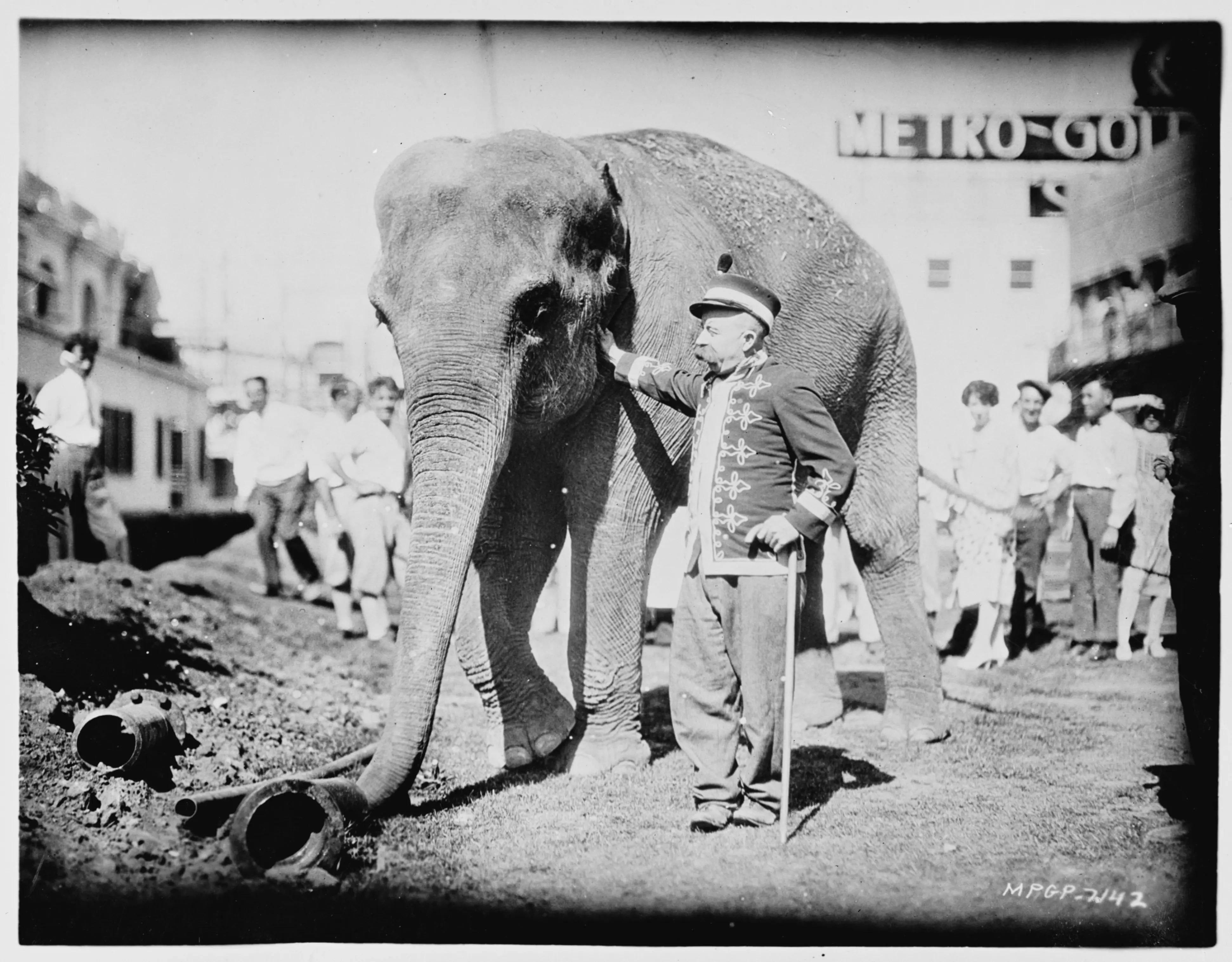
At its core, The Great Love is a film about loyalty, community, and the surprising places love can be found. The titular 'great love' isn't just the romantic affection between Tibbits and Minette; it extends to Norma's unwavering devotion to the doctor and the community's willingness to rally around its own. This expansive definition of love gives the film a warm, generous spirit.
The tone is predominantly lighthearted and optimistic, even during moments of peril. The kidnapping, while serious, never descends into truly dark territory, maintaining a sense of adventure rather than pure terror. The inclusion of the Boy Scouts, in particular, injects a dose of wholesome, almost childlike heroism into the climax, reinforcing the film's family-friendly sensibilities.
There's an undeniable innocence to the storytelling, a reflection of the 1920s cinema that often prioritized clear moral lines and happy endings. This film fails because it occasionally shies away from exploring the deeper implications of its more dramatic moments, opting instead for a swift resolution driven by its eccentric plot devices. However, this simplicity is also part of its charm, offering a nostalgic glimpse into a less cynical form of entertainment.
The film’s unique blending of genres—part romantic comedy, part adventure, part animal drama—is its greatest strength. It’s a testament to a time when filmmakers were perhaps more willing to experiment with unusual combinations, creating narratives that stood out precisely because of their unconventional elements. It doesn't take itself too seriously, which is a crucial ingredient for its success.
You should watch it if you appreciate the historical context of silent cinema, enjoy eccentric premises, or are simply curious about how an elephant became a romantic hero’s sidekick. It’s a fascinating artifact that showcases the unique charm and narrative conventions of the 1920s.
For those accustomed to modern sound films, the pacing might feel slow, and the melodramatic acting style could be an acquired taste. However, for the right viewer, The Great Love offers a delightful and often surprising experience.
It's a wonderful opportunity to see Zasu Pitts in her element, even if her role isn't the primary focus. Her ability to convey so much with so little is a masterclass in silent film acting. The sheer novelty of the elephant's role also makes it a compelling watch, demonstrating the ingenuity of early filmmakers.
Marshall Neilan's The Great Love (1925) is more than just a historical curio; it’s a delightful, if peculiar, piece of silent cinema that manages to charm despite its age. Its strength lies in its audacious premise and the heartfelt commitment of its cast, particularly the scene-stealing Zasu Pitts and the surprisingly effective Norma the elephant. While it won't redefine your understanding of cinematic masterpieces, it offers a unique and genuinely enjoyable glimpse into a bygone era of filmmaking.
“The film’s greatest triumph is convincing you that an elephant’s unwavering loyalty is not only plausible but a truly essential element of a romantic rescue mission.”
It’s a film that asks you to suspend disbelief and embrace its whimsical spirit, and for those willing to do so, the rewards are considerable. It might not be for everyone, but for aficionados of silent film or those looking for something truly different, The Great Love is an unexpected pleasure. It stands as a testament to the diverse storytelling landscape of the 1920s, proving that even the most outlandish ideas could find their way to the silver screen and capture the hearts of an audience.
IMDb —
1924
Community
Log in to comment.