Summary
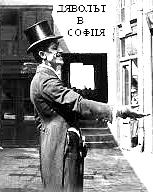
A horned misanthrope, weary of sulphur and ennui, slips through a fissure above the Balkans and lands, cloven hooves first, on Sofia’s cobblestones. Cloaked in crimson and theatrical soot, he expects awe; instead he harvests jeers, hurled stones, and the indignity of a stray dog lifting its leg against his cloak. Undaunted, he conjures a pocket-sized press that exhales crisp leva, purchases a tailored suit of imported serge, and re-emerges as a platinum-toothed financier whose laughter clangs like counterfeit coins. Bankers toast him, bishops bless him, actresses trail his cigar smoke like moths. He elects a night-blooming streetwalker as his Virgil; her kin—an emaciated patriarch who steals milk from cats, a mother whose spine has bent into a question mark from sewing army uniforms—welcome Satan to Sunday supper. Together they swirl through jazz cellars where saxophones bleat like dying goats, through salons where wives swap husbands for diamond rivers, through parks where bureaucrats sell permits to breathe. A bored aristocrat in mink gloves begs him to expedite her widowhood; he delegates the stabbing to his beloved’s father, who pockets the infernal mint, slits the husband’s throat, and vanishes into the foggy docks of Thessaloniki. With the machine gone, credit evaporates, invitations shrivel, and the fallen angel finds himself spattered with gutter mud, denounced by the same press that once toasted him. Crawling back toward the geothermal glow of home, he concludes that Sofia’s asphalt purgatory outstrips hell’s cruelest furnace; the city, not the devil, is the apex predator of malice.
The devil is bored in his kingdom. He makes up his mind to descend to earth and get familiar with the kind of life people lead. He chooses the city of Sofia for his excursion. His first contacts are by no means encouraging. Strolling along the streets in the capital in his outlandish Mephistophelean costume, he is chased and stoned. Then the devil puts into operation his tiny machine for printing money. Dressed in the latest fashion he continues his walk unmolested. Money opens the doors of the richest homes for him and he soon becomes a member of the capital city's high life. The devil chooses a prostitute as his partner, who introduces him to her family. The father is a thief and a drunkard so that the mother is forced to be the bread-winner. Satan and the prostitute find themselves in the whirl of easy life. A young high society woman asks him to murder her elderly husband so that she may inherit his wealth. He refers her to his companion's father who willingly helps her. After the murder, the old crook steals the money-printing machine and flees. The Devil leaves without resources. High society expelled him in disgrace. More dead than alive, convinced that people are much wicked than he is, he manages to return to hell with great difficulty. Not for the world will he substitute hell for Sofia.