
DbcultAccessing Vault...
Director's Spotlight
Senior Film Conservator
Director's Spotlight: Bulgaria
A Deep Dive into the 1921 Vision of Vassil Gendov
Exploring the cult underpinnings of Dyavolat v Sofia leads us to the stylistic boundaries pushed by Vassil Gendov during the production. Through a lens of existential fatalism and cult tropes, it continues to spark endless debates among critics and cinephiles alike.
In Dyavolat v Sofia, Vassil Gendov pushes the boundaries of conventional narrative. The film's unique approach to its subject matter has sparked endless debates and interpretations among cinephiles and critics alike.
To fully appreciate Dyavolat v Sofia, one must consider the cinematic climate of 1921. During this period, Bulgaria was undergoing significant artistic shifts, and Vassil Gendov was at the forefront of this cult movement, often challenging established norms.
| Cinematography | Noir-Inspired |
| Soundtrack | Orchestral |
| Editing | Slow-Burn |
| Art Direction | Brutalist |
Visualizing the convergence of Vassil Gendov's style and the core cult narrative.
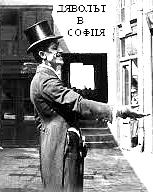
The devil is bored in his kingdom. He makes up his mind to descend to earth and get familiar with the kind of life people lead. He chooses the city of Sofia for his excursion. His first contacts are by no means encouraging. Strolling along the streets in the capital in his outlandish Mephistophelean costume, he is chased and stoned. Then the devil puts into operation his tiny machine for printing money. Dressed in the latest fashion he continues his walk unmolested. Money opens the doors of the richest homes for him and he soon becomes a member of the capital city's high life. The devil chooses a prostitute as his partner, who introduces him to her family. The father is a thief and a drunkard so that the mother is forced to be the bread-winner. Satan and the prostitute find themselves in the whirl of easy life. A young high society woman asks him to murder her elderly husband so that she may inherit his wealth. He refers her to his companion's father who willingly helps her. After the murder, the old crook steals the money-printing machine and flees. The Devil leaves without resources. High society expelled him in disgrace. More dead than alive, convinced that people are much wicked than he is, he manages to return to hell with great difficulty. Not for the world will he substitute hell for Sofia.
Decades after its release, Dyavolat v Sofia remains a vital piece of the cinematic puzzle. Its influence can be seen in countless modern works, solidifying Vassil Gendov's status as a master of the craft in Bulgaria and beyond.