Summary
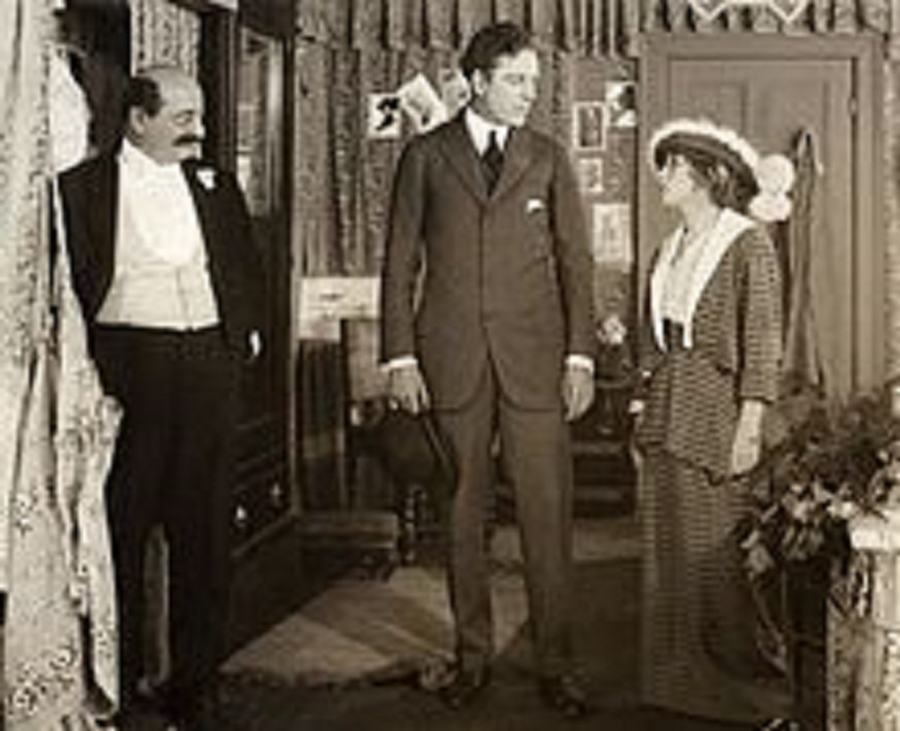
A snow-slicked cobblestone alley in fin-de-siècle Warsaw becomes the echo chamber for one man’s irredeemable trespass. Weryha, a bourgeois husband liquefied by possessive acid, drags his unnamed wife—played by Maria Górska with the porcelain fragility of a Meissen figurine left too close to the hearth—through the threshold of their once-opulent apartment and hurls her into the frost-bitten night like a broken chamber-pot. The moment her spine meets the curb, a shriek detonates: parturient with agony, laced with the metallic tang of betrayal, it ricochets off cornices, penetrates windowpanes, tunnels through Weryha’s cochlea, and nests inside the spiral recesses of his guilt. From that sliver of suspended time onward, the scream is no longer hers; it is a squatter in his skull, swelling nightly into a cathedral of reproach, rattling his cut-crystal decanters, smearing the mirror-mercury of his vanity, until the boundary between auditory hallucination and corporeal torment liquefies. Cinematographer Stanislaw Przybyszewski—also the film’s writer—renders each frame like a Secessionist lithograph: chiaroscuro gaslight carves obsidian gutters into which the heroine’s shadow pools like spilled absinthe, while the intermittent iris-ins circle Weryha’s eyes until they become twin bullet holes in a wanted poster. The narrative refuses catharsis; instead it spirals inward, Möbius-strip fashion, as the protagonist drowns in a sound only he can harvest. When the final reel gutters out, the scream does not cease—it merely migrates into the viewer, a viral souvenir of masculine cruelty fossilized in celluloid amber.
Weryha throws his wife out into the street in jealous rage. When struggling the woman gives out a cry of pain and despair. This terrible scream remains in Weryha's ears forever and haunts him constantly.
Review Excerpt
"
There are silences that deafen. In Krzyk, the hush between intertitles is so razored that when Maria Górska’s mouth cracks open to birth that epochal scream, the auditorium itself seems to haemorrhage. The film understands something most psychological horror still fumbles: trauma is an acoustic graffiti tag—it keeps re-spraying itself across the walls of the perpetrator’s mind long after the victim has limped away.
A Street Named Afterthought
Przybyszewski sets the eviction sequence on a cul-d..."