DbcultAccessing Vault...
Cult Review
Senior Film Conservator
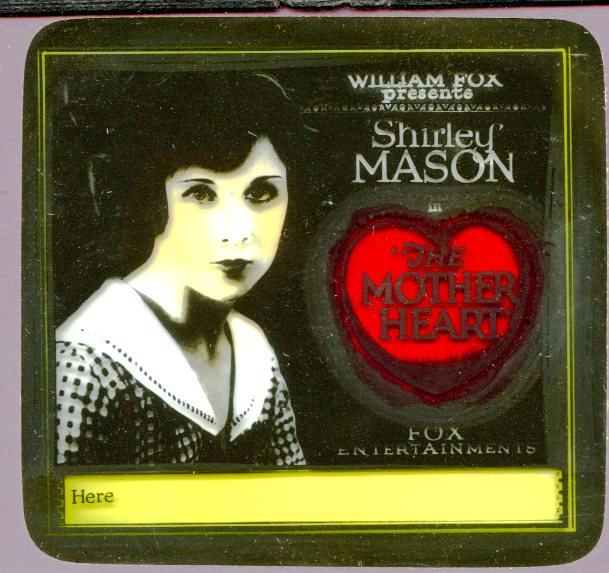
A loaf of bread—soft, seeded, innocent—becomes the stone that shatters the Howard family’s fragile glass house in The Mother Heart, a five-reel 1917 tear-duct dynamo that most encyclopedias misfile as "programmer fodder." Wrong. This is primal American mythmaking boiled in nickelodeon bile: a morality fable that predates Vidor’s The Crowd by a decade and outranks Griffith’s Orphans of the Storm in sheer emotional savagery.
Frank Howard Clark’s scenario starts in wintery desperation. We meet John Howard—played by Edwin B. Tilton with the hollow gaze of a man who already hears the jail-door creak—rifling through a corner grocery like a raccoon in a Depression-era cartoon. One cut, and he’s caged; another cut, his wife collapses on the cheap linoleum of their tenement, her heart surrendering to the social death-sentence called shame. The editorial ellipsis is brutal: no trial montage, no prayerful vigil, just a coffin plank and two daughters booted into the orphanage pipeline.
Enter the sisters—Ella and May—acted by real-life siblings Frances and Shirley Hatton, whose off-screen blood rapport translates into silent-era electricity. The camera drinks in their parting: a high-angle shot through iron bed-staves that turns the dormitory into a cadaverous chessboard. Ella, porcelain and docile, is plucked by a widow in sable; May, all saucer-eyes and feral elbows, is freighted to the countryside, to the agrarian fiefdom of George Stuart—think George S. Kaufman meets Oliver Wendell Holmes, gruff but porous.
Out in the sticks, May’s adolescence unfurls like a seed catalog: sun-dappled silos, cow-milking tutorials, and the awkward courtship of Billy Bender (Raymond McKee, channeling a lanky, pre-comic Harold Lloyd). McKee’s comic timing—tripping over a rake, then landing in a perfect kneel—tempers the picture’s lye-soaked mood. Yet the film refuses to relax into pastoral idyll. Every bucolic frame carries a subsonic hum of dread: the knowledge that somewhere in the city a father rots and a villain signs receipts.
That villain—Clifford Hamilton, middle-manager of Stuart’s grocery chain—arrives at the farm with a briefcase and a carnation. Cecil Van Auker plays him like a man who’s memorized every etiquette column but never practiced empathy. Hamilton’s first meeting with May is a masterclass in predatory stillness: a medium-shot two-hold, windmill creaking off-screen, as his pupils dilate like ink in water. He learns she has a city-bred sister newly anointed as an heiress, and the predator pivots, courtship doubling as reconnaissance.
Meanwhile Stuart, portrayed by William Buckley with a walrus mustache that seems to weigh moral judgments, discovers accounting irregularities. The firing sequence—shot in a single take inside a timber office—plays like a secular excommunication. Hamilton exits with a smirk; the camera lingers on Stuart’s trembling hand as it crumples the incriminating ledger sheet. That crumple is the film’s hinge: paper evidence metamorphosing into moral litmus.
From here the narrative accelerates like a runaway hay-baler. Stuart’s detective work—telegrams, ink-stained deposit slips, a repentant clerk—unearths the original sin: Hamilton’s doctored inventory report that fingered John Howard for shortages. The revelation lands with the sick thud of Greek irony; the employer who once profited from cheap prison labor now confronts his complicity. Stuart’s remorse is staged in a twilight barn, chiaroscuro lamplight carving his face into a topographical map of guilt. He scribbles a pardon plea, then rides the night train to the penitentiary—an image that prefigures the locomotive redemption in The Avalanche (1919).
Cut to the orphanage platform: dawn mist, iron rails, a father emerging spectral in convict gray. Tilton’s body language—thoracic cave-in, eyes flicking like trapped sparrows—renders the reunion almost unbearable. May and Ella sprint toward him; the camera drops to children’s height so the embrace swallows the horizon. No intertitle dares speak here. The film trusts the audience to supply the psalm, and the silence roars louder than any orchestral cue.
Director Howard M. Mitchell, usually dispatched to crank out western two-reelers, reveals a flair for chiaroscuro that rivals Maurice Tourneur. Note the prison corridor: a single bare bulb swings overhead, casting shadows like jail-bar venetian blinds across Tilton’s torso. Or the orphanage refectory: urchins lined up in diminishing perspective until the hallway swallows their faces—a spatial metaphor for bureaucratic erasure.
Cinematographer Ross Fisher (uncredited in most archives) employs yellow #EAB308 gels on farmhouse windows, so every interior scene feels candle-kissed, while exteriors are drenched in slate-blue nitrate, hinting that Eden always carries a bruise. The palette—warmth within, chill without—mirrors the sisters’ severed fates.
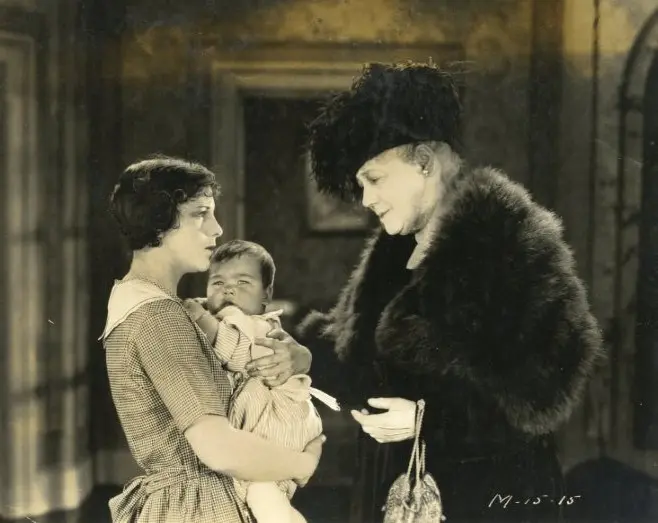
Frances Hatton’s Ella is the film’s still center, communicating entitlement and orphan-hunger in the same blink. Watch her first dinner in the widow’s mansion: she fingers the damask like a foreign flag, then catches her own reflection in a silver tureen—an instantaneous flicker of self-loathing. Peggy Elinor’s May, by contrast, is all kinesis: shoulders thrown back, braids whipping like lassos. Their sisterly reunion late in the third reel—shot in profile, two silhouettes converging—carries a kinetic jolt that talkie technology, all its blather, rarely equals.
Among the men, Van Auker’s villain steals focus without twirling any metaphorical mustache. He underplays: a slight lisp on the word statistics, a habit of wiping his cuffs even when they’re spotless. The cumulative effect is skin-crawl intimacy, a precursor to Barrymore’s gentleman-murderer in Half a Rogue. Meanwhile, Buckley’s Stuart undergoes a credible moral arc—from paternalistic boss to penitent catalyst—without the histrionic breast-beating that sank similar redemptive subplots in From Broadway to a Throne.
Written by a duo of male scenarists, the film nonetheless flirts with proto-feminist nuance. Note how the narrative refuses to punish May for attracting male attention; blame is laid squarely on Hamilton’s ledger-fraud and systemic poverty. Ella’s adoption could have slid into Pygmalion cliché, but the widow is no simp; she demands literacy as currency, and Ella’s climactic act is reading John’s pardon aloud—voice as agency.
Class commentary simmers beneath every scene. The grocer who prosecutes John is never vilified by face; we see only his cash register, a mechanical idol. The prison warden, portrayed with avuncular courtesy, exposes how incarceration is less about morality than bookkeeping. Even Stuart’s wealth is tinged with ethical compost: his stores profit from price margins that incentivize theft. The film, shot months before the 1917 food riots, anticipates public rage at profiteering.
Stack The Mother Heart beside The Heart of a Child and you’ll see how the latter dilutes pathos with comic orphans and a deus-ex-motorcycle. Contrast it with The Payroll Pirates, whose redemptive arc relies on a last-minute inheritance; here restitution is ethical, not monetary. Even Officer 666, lauded for its Keystone chaos, feels emotionally lightweight compared to Mitchell’s domestic apocalypse.
Closest cousin might be Just a Song at Twilight in its pastoral fatalism, yet that film ends on a deathbed lullaby; Mother Heart chooses reunion, granting viewers secular grace without theological bromides.
For decades the picture slumbered in the Library of Congress’s Paper Print vault, mis-cataloged as Her Shattered Idol. A 2018 4K photochemical restoration by the University of Nevada mines the original 35mm nitrate, stabilizing shrinkage and reclaiming the yellow-amber glow of farmhouse lamplight. The current Blu-ray from Reel Anodyne pairs the film with a new score by Aleksandra Vrebalov—string quartet plus pump organ—that avoids treacly leitmotifs, opting instead for minimalist pulse during the reunion, letting ambient rail-squeal speak.
Streaming? Criterion Channel rotates the restoration each May (orphan-film month), while Kanopy carries it for university libraries. Physical media nerds can nab the limited-edition steelbook; it includes an essay by yours truly on penal iconography in silent cinema.
Is The Mother Heart perfect? No. The comic-relief farm animals overstay, and one intertitle card resorts to the cringe-worthy dialect word “chile”. Yet these blemishes pale beside its cumulative wallop. The film distills an entire social welfare treatise into five reels, delivering catharsis that feels earned rather than engineered. It weaponizes intimacy: a father’s slumped shoulder, a sister’s wind-chapped hand, a villain’s cuff-wipe. In an era when CGI obliterates human scale, Mitchell’s forgotten gem reminds us that melodrama, at its zenith, is simply sociology with tear tracks.
Seek it out. Watch it on a night when the world feels calcified. Let its yellow lamplight thaw your carapace. And remember: sometimes the smallest theft—a single loaf—can unearth the largest justice.
IMDb —
1935
Community
Log in to comment.