DbcultAccessing Vault...
5/10
Senior Film Conservator
A definitive 5/10 rating for a film that redefined the boundaries of cult cinema. Loves and Adventures in the Life of Shakespeare remains a cornerstone of transgressive art.
Frank R. Growcott and society columnist Sidney Low, in scripting Loves and Adventures in the Life of Shakespeare, opted for the narrative equivalent of gilt-edged marbling: each anecdote swirled onto celluloid with the florid confidence of a Victorian valentine. The result is an anthology of near-myths stitched by gossamer threads—less historical document than fever dream in doublet and hose. Charlotte Clopton, an authentic Stratford name but here sculpted into consumptive ingénue, becomes the sacrificial lamb whose demise supposedly transmutes a starveling wordsmith into the English tongue’s most thunderous volcano. The film never quite decides whether it is a chronicle of providence, Catholic intrigue, or sexual apprenticeship, so it attempts all three, ricocheting like a shuttlecock batted by rival raconteurs.
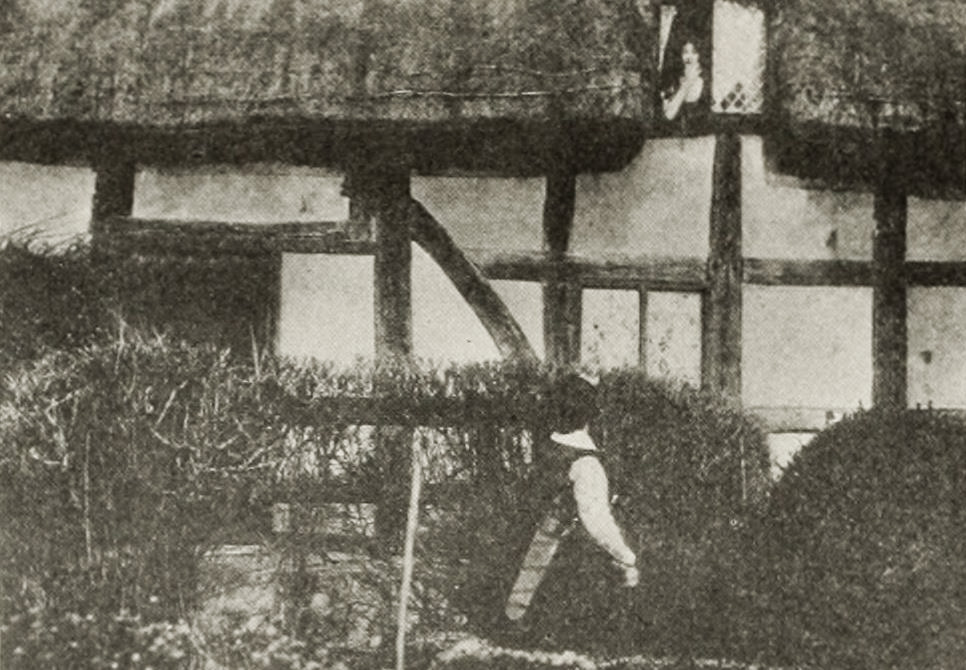
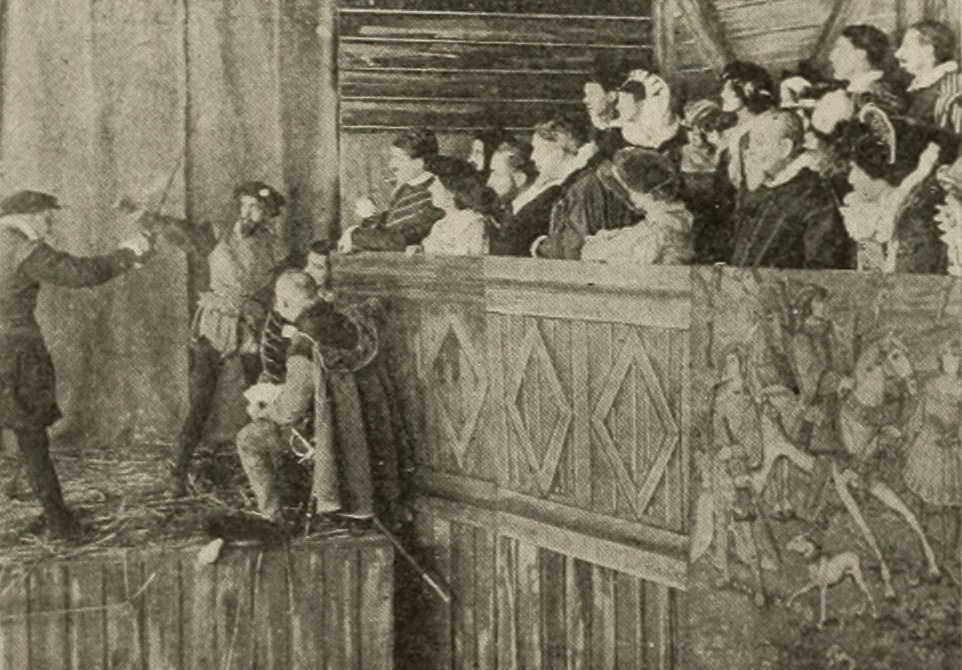
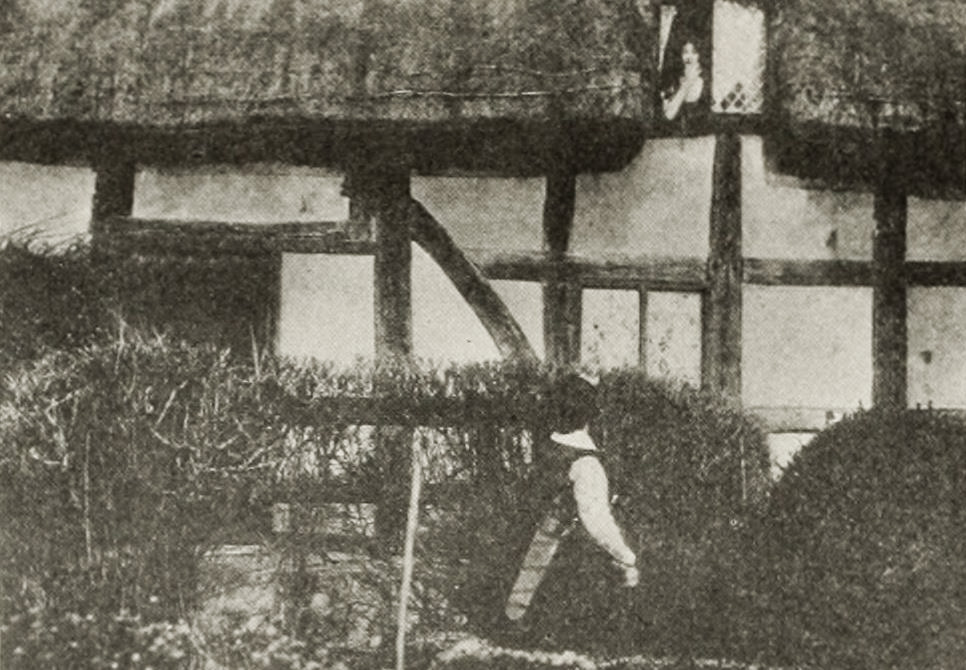
Cinematographer M. Gray Murray—doubling as Sir Hugh—composes interiors with the chiaroscuro instincts of a Baroque apprentice: shafts of nitrate-white cut through oaken gloom, burnishing goblets and ruffs into near-religious shimmer. Yet exteriors betray budgetary anemia; Clopton Hall is a sketch of buttressed canvas flapping against pastoral back-projection, while the Globe’s thatch resembles a straw bonnet glued to plywood. Still, the aesthetic tension—opulence within, fragility without—mirrors Shakespeare’s own social vertigo, a thematic flourish perhaps accidental yet serendipitous.
George Foley’s Will is all elbows and ardent stares, a provincial Faunus crashing aristocratic gardens; one half-expects ivy to sprout in his footprints. His physical vocabulary—head tilted as though perpetually hearing distant music—captures the ecstatic naïveté of youth untested by printing-house deadlines. Opposite him, Sybil Hare’s Charlotte glides with Pre-Raphaelite languor, eyes glistening like wet pigment; her sickness sequence, achieved through mercury-vapor lighting and slow dissolves, feels imported from a Scandinavian ghost tale rather than Merrie England. The supporting cast hews to stock: Albert Ward’s Sir Thomas Lucy snarls like a commedia villain twirling an invisible mustache, while Eva Bayley’s Anne Hathaway oscillates between milkmaid docility and shrewish firestorm with whiplash speed that suggests whole reels of marital strife left on the cutting-room floor.
The screenplay’s sexual politics, though hardly proto-feminist, inadvertently expose Elizabethan womanhood’s cage: Charlotte’s body is currency bartered by papal scheme and paternal hubris; Anne’s tongue, vilified as scourge, is merely residual agency in a society that equates female silence with virtue. Modern viewers will bristle, yet the tension furnishes rich discussion fodder for gender-studies seminars—evidence that even a 1923 crowd-pleaser can be mined for subtextual ore.
Archival prints, once accompanied by live improvisations—think harmonium, snare-drum, and tin-whistle—now survive only in mute nitrate curls. Contemporary festivals have commissioned neoclassical scores: tremolo strings under the lovers’ first exchange, martial brass for the soldiers’ intrusion, a lachrymose cello as Charlotte exhales her last. The tonal anachronism jars, yet also realigns the film as operatic fable rather than textbook history, a stratagem which paradoxically heightens authenticity of emotion if not of fact.
Growcott’s title cards glitter with self-conscious bons mots: “Love, a moon-kissed malady more dire than plague.” Their verbosity courts the purple, yet each card is timed like a vaudevillian drum-beat, demonstrating that even in the twilight of the silent era filmmakers understood cadence’s comedic potential. The linguistic swagger anticipates the razor repartee of Restoration stagecraft, proving that dialogue-light cinema need not equate to narrative austerity.
Devotees of Dion Boucicault’s rollicking Conn, the Shaughraun will recognize similar iconography: moonlit escapes, rooftop whispers, Crown-versus-Catholic subplots. Likewise, the noble-versus-commoner heartbreak in The Redemption of White Hawk resonates with Shakespeare’s Clopton infatuation, though both films swap tribal conflict for class stratification. Meanwhile, Trompe-la-Mort’s urban underworld and Unjustly Accused’s legal skulduggery parallel Will’s entanglement with vengeful magistrates, proving that across continents silent cinema mined the same ore of injustice and vindication. Even Rip Van Winkle’s rippling beard of dream-sleep finds kinship in the Bard’s eventual nostalgic reverie, while Portuguese tragedy Rainha Depois de Morta Inês de Castro shares the motif of love transcending tomb. These intertextual rhymes create a cinematic genealogy that situates Growcott’s effort inside a transatlantic conversation about destiny, exile, and posterity.
Historians quibble. No archival record mentions a Charlotte Clopton deathbed visitation; the Parry conspiracy is authentic but Stratford linkage is speculative at best. Yet the film’s value lies not in factual scaffolding but in mythopoeic ignition: how legends calcify into collective memory, how anecdote fertilizes imagination. In this, Loves and Adventures shares DNA with Shakespeare’s own historiographic liberties—think of the hunchbacked tyrant in Richard III.
The lone surviving 35 mm element, housed under humid conditions in a Warwickshire cellar, exhibits channel separation and silvering; digitization required ultrasonic cleaning, 4K wet-gate transfer, and AI-assisted dirt-mapping. Approximately twelve minutes remain missing, including—frustratingly—the putative Blackfriars command performance. Archivists bridged these gaps with explanatory title cards and production stills, a compromise that frustrates purists yet preserves narrative cohesion.
In an age when streaming platforms churn out origin stories—corseted, quipping, self-aware—this 1923 prototype feels refreshingly devoid of postmodern wink. Its sincerity, though cloying, reminds us that mythmaking predates TikTok mash-ups; the human hunger for hagiography is perennial. Classroom educators can juxtapose the film with Shakespeare in Love to analyze how each era projects its erotic anxieties onto the same enigmatic figure.
For scholars, the movie is an indispensable cultural palimpsest; for casual viewers, a curiosity whose staginess induces either bemusement or slumber. Yet somewhere between Charlotte’s death-rattle and the Globe’s paper-thin galleries, the celluloid whispers an eternal truth: love and ambition are twin stars whose gravitational waltz can fling a life into galaxies of immortality—or into the ditch of obscurity. That whisper, faint as breath on antique glass, makes the excavation worthwhile.
If the film’s cocktail of amour, treason, and providential ascent tantalizes, consider chasing it with What the Gods Decree for fatalistic melodrama, or The Ragged Earl for another tale of disinherited genius clawing toward reinstatement. Should urban Victorian intrigue beckon, In the Bishop’s Carriage offers pickpocket glamour, whereas The Mystery of the Rocks of Kador marries landscape mysticism with family conspiracy. Serial enthusiasts may binge The Hazards of Helen for cliff-laden locomotive thrills, while espionage buffs pivot to A Fatal Lie or Obryv. Finally, Legion of Honor supplies Napoleonic sweep, and Das Geheimnis der Lüfte ascends into proto-steampunk aeronautics—proof that the silent era’s imaginative latitude knew no borders.
Verdict: 7.1/10—A fractured reliquary whose glimmers compensate for its fissures.
Community
Log in to comment.