Summary
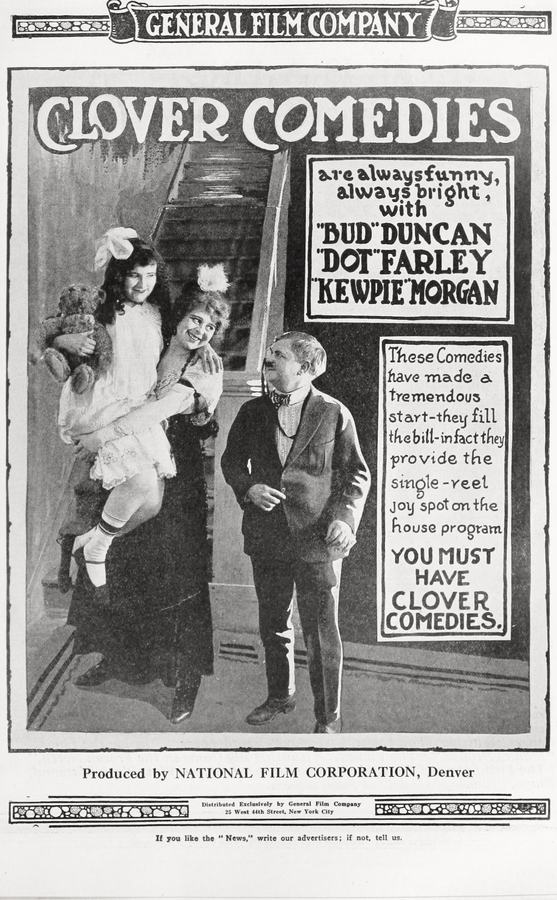
In the vibrant tapestry of early cinematic romantic comedies, 'Love's Lucky Day' unfolds as a delightful, if occasionally anarchic, exploration of serendipity and true affection amidst the clamor of material ambition. Our protagonist, Buster, portrayed with an endearing blend of wide-eyed optimism and perpetual clumsiness by Bud Duncan, is a struggling inventor whose latest contraption, a whimsical 'luck-enhancing' device, seems to generate more misfortune than fortune. He finds himself irrevocably smitten with Daisy, a spirited socialite brought to life by Dot Farley, whose vivacious charm is matched only by her disdain for superficial suitors. Daisy's formidable, though ultimately bumbling, uncle, Magnus (Kewpie Morgan), epitomizes the societal pressures of the era, relentlessly attempting to steer his niece towards a financially advantageous, albeit emotionally barren, union with a pompous industrialist. The narrative's comedic engine ignites when a seemingly innocuous mix-up involving a winning lottery ticket, inadvertently swapped by Buster with a discarded grocery list, sets off a chain of increasingly preposterous events. Magnus, determined to expose Buster as an impecunious charlatan, orchestrates elaborate schemes that invariably backfire with spectacular, slapstick consequences. As the film hurtles towards its climactic charity ball, the truth about the elusive lottery ticket, the unexpected efficacy of Buster's peculiar invention, and the true measure of character are all unveiled, culminating in a joyous affirmation of love's triumph over circumstance and the delightful chaos of fate.
Review Excerpt
"
Unveiling the Enduring Charm of 'Love's Lucky Day'
In the grand, often chaotic, tapestry of early cinema, where narratives frequently pivoted on broad strokes of character and circumstance, 'Love's Lucky Day' emerges as a particularly effervescent example of the era's romantic comedic sensibilities. This silent-era confection, while perhaps not enjoying the same widespread recognition as some of its contemporaries, nonetheless offers a poignant and utterly delightful glimpse in..."