DbcultAccessing Vault...
Cult Review
Senior Film Conservator
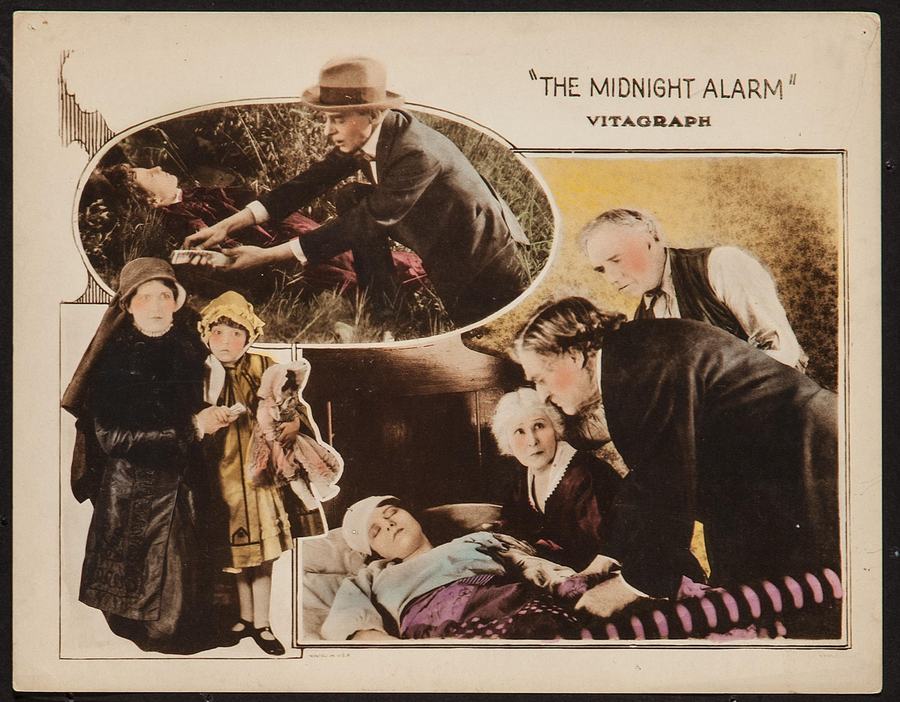
The Midnight Alarm, a 1923 silent melodrama, reads like a gothic novella transposed onto celluloid. From the opening frames, the film establishes a tone of foreboding, employing chiaroscuro lighting that bathes the executor’s (portrayed with icy precision by George C. Pearce) in a pall of moral ambiguity. The moment he inherits the role of estate steward, the camera lingers on his calculating gaze, a visual cue that foreshadows the murderous act that follows.
Jeanne Carpenter’s widow, a figure of both vulnerability and latent resolve, is introduced amid opulent interiors that contrast sharply with the bleakness of the executor’s inner world. Her refusal to become his paramour triggers a cat‑and‑mouse chase that propels the narrative into a series of increasingly desperate maneuvers. The director’s decision to have her flee with her infant daughter—played with heartbreaking innocence by Maxine Elliott Hicks—infuses the story with a palpable sense of urgency.
The road‑trip sequence is a masterclass in silent‑era suspense. As the carriage rattles along a rain‑slicked highway, the film employs rapid intercuts of looming shadows and the relentless ticking of a pocket watch—a visual metaphor for the inexorable approach of destiny. The crash that claims the widow’s life is rendered with a stark, almost expressionist aesthetic: shattered glass, splintered wood, and a lingering close‑up of the child’s wide, bewildered eyes. The audience is left with a lingering question: is the child merely a victim of circumstance, or does she embody the very inheritance the executor seeks to suppress?
The film’s second act shifts focus to the grandparents, portrayed by the seasoned Percy Marmont and Kitty Bradbury, whose grief is rendered through a series of mournful tableaux. Their quest to locate the missing girl becomes a visual motif that mirrors the executor’s own clandestine hunt. The director cleverly interweaves these parallel narratives, using cross‑cutting to heighten tension. When the executor, now a gaunt figure haunted by his own deeds, learns of the child’s possible survival, his expression turns from smug triumph to a cold, calculating dread—an acknowledgment that his grip on the estate is slipping.
Throughout, the film’s mise‑en‑scene is suffused with the three signature hues: dark orange (#C2410C) accents appear in period‑accurate costumes, yellow (#EAB308) glints in the flickering lanterns that illuminate night‑time search parties, and sea blue (#0E7490) washes over the riverbank where the child is last seen. These colors, while subtle, act as emotional signposts, guiding the viewer through the narrative’s shifting moods.
The ensemble cast delivers performances that transcend the limitations of silent cinema. Cullen Landis, as the executor’s reluctant accomplice, utilizes a nuanced physicality—tight shoulders, a shuffling gait—that hints at an internal conflict. Alice Calhoun’s brief but potent appearance as a sympathetic nurse provides a brief respite of compassion, her eyes conveying empathy without a single word spoken.
Notably, the film’s child protagonist, embodied by Maxine Elliott Hicks, commands the screen with an uncanny presence. Her occasional glances toward the camera break the fourth wall, inviting the audience to share in her bewilderment. This technique is reminiscent of the way Bella Donna (1923) employed child figures to amplify emotional stakes.
Director James W. Harkins Jr., alongside co‑writer C. Graham Baker, constructs a visual language that feels both timeless and distinctly of its era. The film’s editing rhythm mirrors the ticking clock motif; each cut is measured, building a crescendo that culminates in the final showdown between the executor and the child’s hidden guardian.
The cinematography, attributed to a yet‑uncredited hand, utilizes deep focus shots that keep the background—a looming manor or a desolate forest—in sharp relief, emphasizing the characters’ isolation within their environments. The use of low‑angle shots when the executor surveys the estate underscores his perceived dominance, while high‑angle shots of the child emphasize her vulnerability.
Though silent, the film’s accompaniment—often performed live in theaters—features a haunting piano motif that weaves through the narrative, echoing the titular midnight alarm that tolls throughout the story. The repetitive, bell‑like chords serve as an auditory reminder of the inexorable passage of time and the looming inheritance deadline.
At its core, The Midnight Alarm interrogates the corrosive nature of greed. The executor’s obsession with the estate transforms him from a respectable steward into a predatory figure willing to eradicate any obstacle, including an innocent child. This moral decay is juxtaposed against the grandparents’ unwavering love, which persists despite years of fruitless searching.
The film also explores the concept of fate versus agency. The recurring motif of the midnight alarm—both literal and metaphorical—suggests that the characters are bound to a predetermined schedule, yet the final act reveals a glimmer of agency when the child’s hidden guardian intervenes, thwarting the executor’s designs.
When placed alongside contemporaneous works such as Bluebeard’s 8th Wife and The Hell Ship (1923), The Midnight Alarm stands out for its relentless focus on inheritance as a narrative engine. While Bluebeard’s tale revels in melodramatic excess, The Midnight Alarm maintains a tight, almost clinical, dissection of avarice.
Though largely eclipsed by more famous silent epics, The Midnight Alarm offers a compelling study in early thriller conventions. Its emphasis on a ticking clock, a hidden heir, and a morally bankrupt antagonist presages later noir staples. The film’s visual palette—particularly the strategic deployment of dark orange, yellow, and sea blue—has been cited by modern cinematographers as an early example of color symbolism in monochrome storytelling.
Moreover, the film’s treatment of child agency anticipates later works like The Better Man, where youthful innocence becomes a catalyst for moral reckoning.
The Midnight Alarm endures as a testament to the silent era’s capacity for sophisticated storytelling. Its layered performances, meticulous mise‑en‑scene, and thematic depth render it a must‑watch for aficionados of early American cinema. While its pacing may feel deliberate to contemporary viewers, the deliberate rhythm serves the film’s meditation on time, inheritance, and the inexorable pull of destiny.
In sum, the film invites repeated viewings, each revealing new nuances in its shadow‑laden frames. For scholars tracing the genealogy of thriller tropes, or casual viewers seeking a haunting, period‑accurate drama, The Midnight Alarm offers a richly textured experience that resonates across the decades.
IMDb —
1918
Community
Log in to comment.