DbcultAccessing Vault...
Cult Review
Senior Film Conservator
In the grand, often chaotic, tapestry of early cinema, where narratives frequently pivoted on broad strokes of character and circumstance, 'Love's Lucky Day' emerges as a particularly effervescent example of the era's romantic comedic sensibilities. This silent-era confection, while perhaps not enjoying the same widespread recognition as some of its contemporaries, nonetheless offers a poignant and utterly delightful glimpse into the societal mores and the burgeoning art of physical comedy that defined the silver screen’s nascent years. It’s a film that, despite the passage of a century, retains an undeniable sparkle, a testament to its ingenious plotting and the vivacious performances that anchor its whimsical premise.
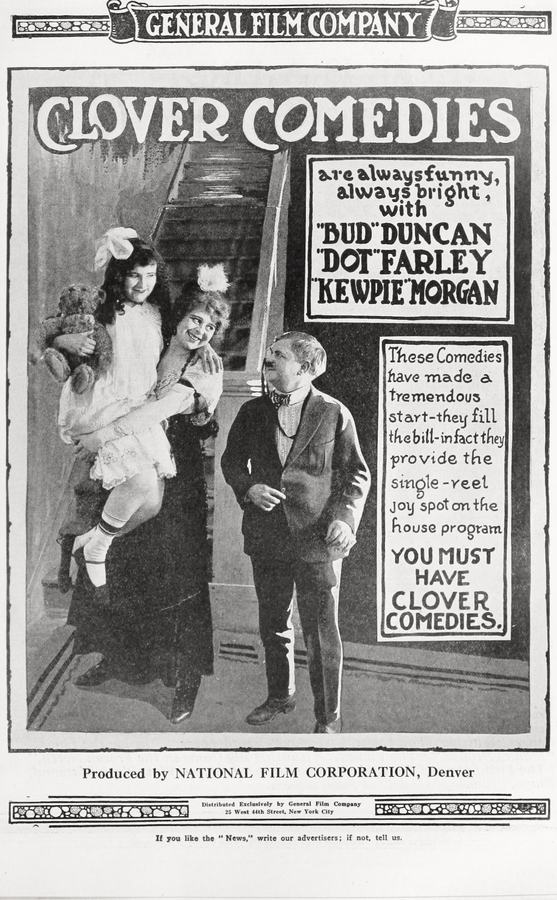
At its heart, 'Love's Lucky Day' is an earnest exploration of the age-old conflict between true affection and the superficial allure of material wealth, all wrapped in a wonderfully intricate comedic package. Our central figure, Buster, brought to life with an exquisite blend of guileless charm and an almost supernatural propensity for mishap by Bud Duncan, is an aspiring inventor. His latest creation, a contraption he optimistically dubs a 'luck-enhancing device,' proves to be a source of more comedic calamity than genuine fortune, a running gag that underscores the film’s playful cynicism towards the very concept of engineered serendipity. Duncan's physical dexterity and expressive pantomime are crucial here, allowing the audience to empathize with his character's plight even as they chuckle at his latest predicament. He embodies the archetype of the well-meaning underdog, a character familiar to audiences of the time and still resonant today.
His romantic foil is Daisy, a character imbued with vibrant spirit and an engaging defiance by Dot Farley. Daisy is no demure damsel in distress; she's a socialite with a refreshing disdain for the parade of fortune-hunting suitors who inevitably cross her path. Farley imbues Daisy with a spirited independence that feels remarkably modern, making her an active participant in her own destiny rather than a passive object of affection. Her reactions to Buster's clumsy advances and her uncle's overbearing machinations are a masterclass in silent-era comedic timing, often conveying more through a raised eyebrow or a subtle smirk than pages of intertitles ever could. The chemistry between Duncan and Farley is palpable, a charming push-and-pull that forms the emotional core of the film, elevating it beyond mere slapstick.
The primary antagonist, or perhaps more accurately, the comedic obstacle, comes in the form of Magnus, Daisy's gruff, overprotective, and hilariously misguided uncle, portrayed with robust bluster by Kewpie Morgan. Morgan, a veteran of numerous shorts, brings a delightful, almost cartoonish, villainy to Magnus. He is the embodiment of the societal expectation of financial security, determined to marry Daisy off to a pompous, wealthy industrialist, utterly blind to the genuine spark between his niece and the seemingly penniless Buster. Magnus's elaborate schemes to expose Buster as a fraud are a continuous source of escalating comedic chaos, each meticulously planned stratagem backfiring with increasingly spectacular and often painful results for Magnus himself. This dynamic, of the well-intentioned but misguided elder attempting to control the younger generation's romantic choices, is a timeless comedic trope, here executed with admirable flair.
The central comedic device that propels 'Love's Lucky Day' into its most uproarious sequences is a simple yet profoundly effective one: a winning lottery ticket. In a stroke of narrative genius, Buster inadvertently swaps this life-changing piece of paper with a discarded grocery list, setting off a chain reaction of misunderstandings, mistaken identities, and frantic pursuits. This single plot point serves as a magnificent MacGuffin, driving the characters into increasingly absurd situations. The film expertly leverages the audience's knowledge of the ticket's true value against the characters' ignorance, creating a delicious tension that fuels the humor. This kind of structural ingenuity, where a seemingly minor object becomes the fulcrum of the entire plot, demonstrates a sophisticated understanding of comedic pacing and audience engagement, a quality often underestimated in silent cinema.
The ensuing chase for the lottery ticket, which often involves Buster's 'luck-enhancing device' inadvertently complicating matters further, allows for a showcase of the physical comedy that defined the era. Doors are slammed, pies are thrown (metaphorically, if not literally), and characters find themselves in increasingly precarious positions. This energetic pursuit echoes the spirit of other chase-driven comedies of the period, such as the delightful mayhem seen in In Pursuit of Polly, where the relentless pursuit of an object or person generates much of the humor. However, 'Love's Lucky Day' differentiates itself by intertwining this physical comedy with a genuine romantic yearning, ensuring that the stakes, while comedic, always feel emotionally significant.
The performances by Dot Farley, Bud Duncan, and Kewpie Morgan are the very sinews of this film's enduring appeal. Bud Duncan, with his expressive face and agile physicality, crafts a Buster who is both sympathetic and uproariously funny. He manages to convey a depth of character that goes beyond mere pratfalls, allowing the audience to truly root for his success in love. His portrayal is a masterclass in understated pathos mixed with overt physical comedy, a balance that many silent comedians strove for but few achieved with such natural ease. One can draw parallels to the earnest devotion seen in Loyalty (1917), where character integrity, though in a more dramatic context, forms the bedrock of the protagonist's journey, much like Buster's unwavering sincerity here.
Dot Farley, on the other hand, is a revelation as Daisy. Her performance is vibrant and nuanced, showcasing a comedic timing that is both sharp and subtle. She avoids the trap of making Daisy merely a prize to be won, instead presenting a woman of agency and wit. Her reactions to the escalating absurdity around her are often the most genuinely funny moments in the film, her expressions conveying exasperation, amusement, and burgeoning affection with remarkable clarity. Farley’s ability to project intelligence and resilience makes Daisy a truly memorable character, a testament to the strong female leads that occasionally graced the silent screen, challenging the more passive portrayals sometimes seen.
Kewpie Morgan’s Magnus is a force of nature, a magnificent comedic foil. His bulk and boisterous manner are perfectly utilized for slapstick, but Morgan also imbues Magnus with just enough humanity to prevent him from becoming a one-dimensional caricature. His frustration, though often self-inflicted, is genuinely felt, and his eventual, grudging acceptance of Buster is all the more satisfying for it. Morgan's performance is a delightful blend of physical comedy and a nuanced understanding of the archetypal meddling relative, making Magnus both formidable and utterly ridiculous. The film’s manipulation of Magnus's schemes, leading to his own undoing, could be whimsically compared to the intricate, if more sinister, machinations portrayed in Marionetki roka, albeit here for purely comedic effect, where characters are unwittingly pulled by strings of fate and circumstance.
The direction of 'Love's Lucky Day,' though uncredited in the prompt, clearly demonstrates a keen understanding of silent film aesthetics and comedic pacing. The use of intertitles is judicious, never overwhelming the visual storytelling, allowing the actors' expressions and physical actions to carry the narrative weight. The cinematography, typical of the era, focuses on clear, well-composed shots that facilitate the sight gags and convey emotional states without relying on complex camera movements. There's an innate rhythm to the editing, accelerating during chase sequences and slowing down for moments of romantic tenderness, effectively guiding the audience's emotional response. The film’s ability to maintain a brisk pace while allowing its comedic situations to fully develop is a testament to its efficient and effective direction.
The themes explored are surprisingly timeless. Beyond the obvious romantic comedy elements, 'Love's Lucky Day' subtly critiques the superficiality of wealth and societal expectations. Buster, despite his lack of fortune, possesses an integrity and an inventive spirit that ultimately prove more valuable than any inheritance. Daisy's rejection of the wealthy industrialist in favor of Buster is a powerful statement about choosing genuine connection over material security. This theme resonates even today, underscoring the enduring human desire for authentic relationships. The film also playfully grapples with the concept of luck itself; is it a random force, or do our actions, however clumsy, ultimately shape our destiny? Buster's 'luck-enhancing device,' while a source of physical comedy, also serves as a metaphorical representation of our attempts to control the uncontrollable, only to find that true fortune often arrives in unexpected, messy ways.
The climax, set at a grand charity ball, brings all these threads together in a wonderfully satisfying conclusion. The truth about the lottery ticket is revealed, Buster’s invention inadvertently (and comically) saves the day in an unforeseen manner, and Magnus finally acknowledges Buster's intrinsic worth, paving the way for the joyful union of Buster and Daisy. This grand finale, a staple of silent comedies, is executed with panache, providing both emotional catharsis and a final flurry of physical humor. It’s a culmination that reminds us that sometimes, the greatest luck is simply finding someone who truly understands and appreciates you, flaws and all.
'Love's Lucky Day' stands as a charming artifact from an era of cinematic innovation, a film that, despite its brevity and perhaps its relative obscurity, offers a rich viewing experience. It's a testament to the power of simple, well-executed storytelling, where character, circumstance, and comedic timing converge to create something truly special. For enthusiasts of silent cinema, or indeed anyone with an appreciation for the foundational elements of romantic comedy, this film is a delightful discovery. It reminds us that laughter, love, and the unpredictable twists of fate are universal themes, masterfully explored even in the earliest days of moving pictures. The film doesn't just entertain; it illuminates the enduring human quest for connection and the often-hilarious journey we undertake to find our own lucky day.
In its gentle absurdity and heartfelt sincerity, 'Love's Lucky Day' carves out its own niche. It doesn't aim for the epic scale of a Napoleon, nor the gritty realism of a crime drama, but rather a focused, intimate comedic narrative. Yet, within its seemingly modest scope, it achieves a profound resonance, capturing the essence of human aspiration and the delightful chaos that often accompanies the pursuit of happiness. It's a film that, with its vibrant characters and engaging plot, continues to charm and amuse, proving that some stories, like true love, are simply timeless. The subtle nods to the absurd and the unexpected turns of fortune could even draw a fleeting, if lighthearted, comparison to the enigmatic and slightly surreal elements sometimes found in films like The Hypnotic Violinist, where unseen forces or peculiar devices orchestrate events, albeit here for purely delightful, rather than mysterious, ends.
This film is more than just a historical curiosity; it is a vibrant, living piece of cinematic art that speaks to the joy and ingenuity of its creators. It invites us to step back in time, to a period when the magic of the movies was still fresh and untamed, and to revel in a story where good humor and genuine affection ultimately win the day. 'Love's Lucky Day' is, without reservation, a film that deserves to be rediscovered and celebrated for its enduring charm and its masterful execution of silent-era comedy.
IMDb 6.4
1931
Community
Log in to comment.