DbcultAccessing Vault...
Cult Review
Senior Film Conservator
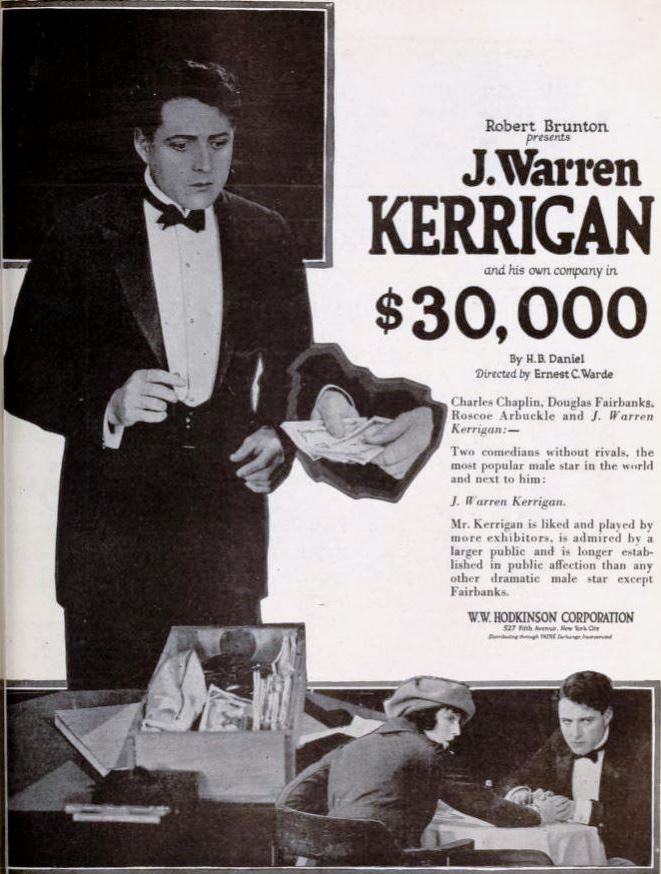
In the bustling, often chaotic, landscape of early 20th-century cinema, where narratives were conveyed through the eloquent dance of gesture, expression, and the occasional intertitle, a film like '$30,000' emerges not merely as a relic, but as a surprisingly potent exploration of human folly, serendipity, and the often-unforeseen paths to redemption. This isn't just a plot; it's a meticulously crafted moral crucible, a silent symphony of choices and consequences that resonate with an enduring power. Released in an era when cinema was still finding its voice, or rather, perfecting its visual language, this particular feature, with its seemingly straightforward title, belies a narrative complexity and a thematic richness that demands closer inspection.
At its core, '$30,000' introduces us to John Trask, portrayed with a compelling blend of earnestness and burgeoning ambition by Tom Guise. Trask is not yet the titan of jurisprudence he aspires to be; he is, instead, a man on the precipice, striving to carve out his niche in a competitive world. His initial encounter with Christine Lloyd (Fritzi Brunette), a woman shrouded in an air of mystery and palpable desperation, sets the entire intricate mechanism of the plot into motion. Christine’s proposition is simple, yet laden with peril: retrieve a stolen necklace, a family heirloom purloined by her gambling-addicted brother, Sydney (J. Warren Kerrigan), to appease his mounting debts. The sum offered for this delicate retrieval is, as the title suggests, a staggering thirty thousand dollars – a fortune that promises to elevate Trask from the ranks of the struggling to a position of secure prosperity. One might draw parallels to the moral quandaries faced in The Crucible, albeit in a dramatically different context, where characters are forced to make choices under immense pressure, often involving reputation and financial ruin.
Trask, ever the pragmatist, accepts the assignment. His decision to secrete the considerable sum behind a painting in his office, a seemingly innocuous act of temporary safekeeping, becomes the fateful pivot around which the entire narrative swivels. This act, born of a desire for security, inadvertently creates the vacuum into which fate, in the form of human frailty, inexorably rushes. The film, in its silent eloquence, manages to convey the weight of this decision, the silent calculations behind Trask's eyes, and the unspoken hopes that ride on the successful execution of this unusual legal task.
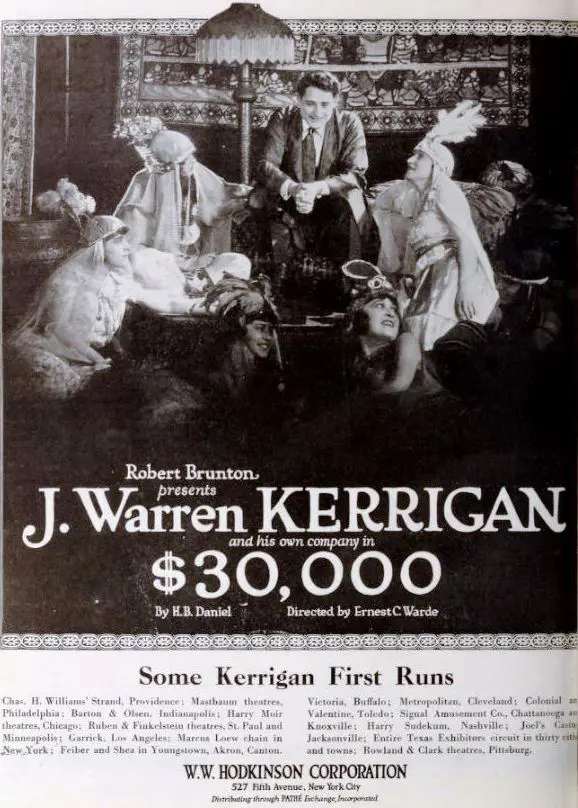
The narrative then introduces us to Annester Norton (Frank L. Gereghty), the building's janitor, a figure often relegated to the background of societal notice, yet here he becomes an accidental protagonist in his own right. His discovery of the hidden money during his routine rounds is a moment of profound temptation, a silent internal struggle played out on Gereghty's expressive face. The film masterfully portrays the quiet desperation that can drive an ordinary man to an extraordinary act of transgression. Norton's absconding with the money is not presented as an act of pure malice, but rather as a desperate grab at a chance, a sudden, unexpected windfall that promises an escape from the grinding monotony of his existence. This human element, the temptation that can sway even the most unassuming individual, is a timeless theme, explored in various forms across cinematic history, perhaps even touching upon the societal pressures hinted at in films like Jan Vermeulen, der Müller aus Flandern, where economic circumstances often dictate moral boundaries.
The following day, the plot thickens with the arrival of Aline Norton (Gertrude Valentine), Annester's daughter. Her entrance into Trask's office, bearing the necklace, is a masterstroke of dramatic irony. She is an unwitting pawn, a conduit through which the stolen goods are returned, yet entirely oblivious to the tangled web of deceit and theft that has ensnared her father and now implicates Trask. Gertrude Valentine's portrayal of Aline is subtle, conveying an innocence that stands in stark contrast to the shadowy dealings surrounding her. Her presence is a quiet catalyst, a moral compass that, though initially unnoticed, will ultimately guide Trask's journey.
The discovery that the thirty thousand dollars has vanished sends Trask spiraling into a desperate quest. His journey takes him to the very heart of the underworld – the casino, the den where Sydney's debts were incurred and where the real necklace presumably resides. This segment of the film is particularly intriguing, showcasing Trask's transformation from a meticulous lawyer to a man of action, driven by an urgent need to rectify a rapidly deteriorating situation. In an astonishing turn of events, Trask, against all odds, finds himself miraculously winning precisely the sum of thirty thousand dollars at the casino. This stroke of pure, unadulterated luck is a classic silent film trope, a deus ex machina that, while convenient, serves a crucial narrative purpose. It underscores the unpredictable nature of fortune, a theme that echoes through countless tales of chance and destiny, from ancient myths to modern thrillers. This isn't just about money; it's about the arbitrary nature of fate, a force that can both strip one bare and elevate one to unexpected heights. One might compare this unexpected turn of fortune to the unpredictable twists in serials like Beatrice Fairfax Episode 9: Outside the Law, where protagonists frequently find themselves in impossible situations, only to be saved by a timely, if improbable, intervention.
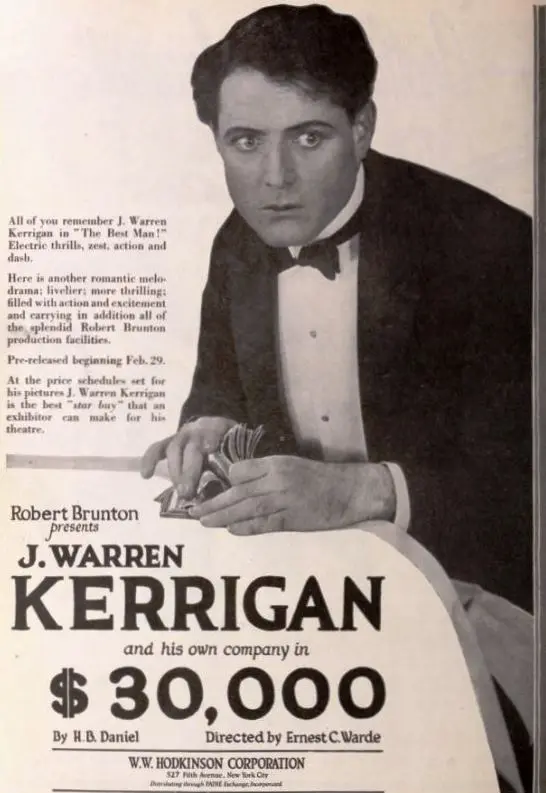
With the money in hand, Trask purchases the necklace from the gamblers, believing his mission accomplished. However, the narrative delivers another sharp twist: the necklace he holds is a fake, a cleverly crafted imitation. This moment of realization, conveyed through Guise's silent agony, is a powerful depiction of betrayal and renewed urgency. The stakes are raised, and Trask's initial professional detachment gives way to a more visceral, personal investment in the outcome. He is no longer just an attorney fulfilling a contract; he is a man entangled, deeply and irrevocably, in a web of deceit that threatens to unravel his reputation and his nascent career.
Driven by a potent cocktail of indignation and determination, Trask ventures back into the shadowy gambler's den, this time not to purchase, but to reclaim. This confrontation, though silent, is fraught with tension. The film, through its visual storytelling, conveys the danger and the sheer audacity of Trask's actions. His successful retrieval of the genuine necklace and its restoration to Christine Lloyd marks a turning point, a triumph of justice over deception. But the film isn't content with a mere resolution of the central mystery.
Parallel to Trask’s pursuit of justice, Annester Norton undergoes his own journey of moral awakening. Plagued by guilt and remorse, he returns the stolen thirty thousand dollars. This act of repentance is crucial, transforming him from a figure of opportunistic weakness into one capable of moral restitution. It highlights the film's nuanced understanding of human character, suggesting that even those who stumble can find their way back to rectitude. This theme of redemption, often hard-won, is a recurring motif in cinema, much like the profound moral introspection found in dramas where characters confront their past actions and strive for atonement.
Perhaps the most poignant and unexpected development in '$30,000' is Trask's realization of his love for Aline Norton. This romantic subplot, initially simmering beneath the surface of the primary narrative, blossoms in the aftermath of the chaos. Aline, the innocent daughter of the repentant janitor, represents a purity and an honesty that contrasts sharply with the world of legal maneuvering and clandestine gambling. Her quiet strength and unassuming nature seem to awaken something profound within Trask, shifting his focus from purely material ambition to a deeper, more human connection. This unexpected romance, born out of shared adversity and a burgeoning understanding, provides the film with its emotional anchor and its ultimate sense of fulfillment. It’s a testament to the power of human connection to emerge from the most unlikely circumstances, reminiscent of the developing relationships in films like Telefondamen or Madame Peacock, where social barriers are often overcome by genuine affection.
In the silent era, acting was a highly stylized art form, relying heavily on exaggerated facial expressions, grand gestures, and precise body language to convey emotion and narrative. Tom Guise, as John Trask, navigates this requirement with commendable skill. His initial portrayal of a striving attorney is marked by a certain contained intensity, which gradually gives way to a more frantic, desperate energy as the plot's complications mount. His silent frustration, his determined pursuit, and ultimately his gentle realization of love are all communicated with a clarity that transcends the absence of dialogue. Gertrude Valentine, as Aline Norton, offers a more subdued but equally effective performance. Her quiet demeanor and expressive eyes convey her innocence and inherent goodness, making her a compelling counterpoint to the film’s more tumultuous elements. Frank L. Gereghty's Annester Norton is a masterclass in silent pathos, his struggle with temptation and subsequent remorse vividly etched on his features.
The direction, while adhering to the conventions of the time, demonstrates a keen understanding of pacing and dramatic tension. The use of intertitles is judicious, providing necessary exposition without bogging down the visual flow. The camera work, though often static by today's standards, effectively frames the action, drawing the viewer's eye to key emotional moments. The film's ability to maintain suspense and engage the audience without a single spoken word is a testament to the craftsmanship of its creators, Jack Cunningham and H.B. Daniel, whose narrative vision breathes life into this intricate plot. They understood the power of visual storytelling, a craft that, even in its nascent stages, could weave complex tales of morality and human nature, much like the thoughtful narrative construction seen in films exploring human nature and societal impact such as Weltbrand, despite its grander scale.
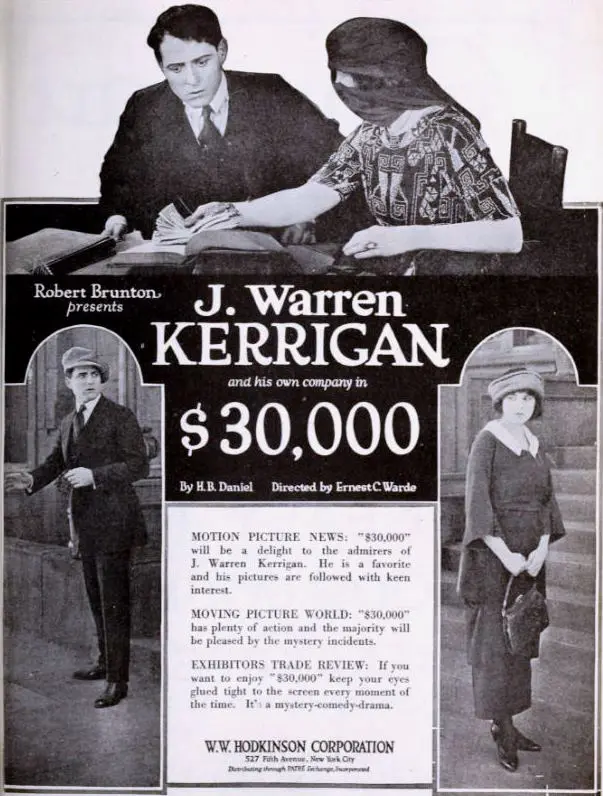
What makes '$30,000' particularly compelling for contemporary audiences, beyond its historical significance, is its exploration of universal themes. The film delves into the corrupting influence of money, the thin line between desperation and criminality, the capriciousness of fate, and the redemptive power of honesty and love. It’s a narrative that, despite its silent presentation and period setting, feels remarkably current in its psychological insights. The moral ambiguities, the unexpected turns of fortune, and the ultimate triumph of integrity over deceit resonate deeply. Trask's journey is not just about retrieving a necklace; it's about finding his own moral compass, about understanding that true wealth lies not in monetary gain, but in honesty and genuine human connection. The film, in its quiet way, challenges us to consider what we value, what we are willing to risk, and what truly defines a successful life.
In an era that often glorified melodrama, '$30,000' offers a narrative that, while dramatic, maintains a grounded sense of human reality. It's a reminder that even in the absence of sound, cinema possessed an extraordinary capacity to tell stories that provoked thought, stirred emotion, and offered profound insights into the human condition. It stands as a testament to the ingenuity of early filmmakers and the timeless appeal of a well-told story, demonstrating that a compelling plot, nuanced characterizations, and resonant themes are the true currency of cinematic excellence, regardless of technological advancements. This film, much like a hidden gem, continues to shine, inviting viewers to appreciate its intricate narrative and its enduring messages, affirming the power of silent cinema to capture the imagination and stir the soul, much like a profound literary work such as The Land of Long Shadows might do, or even the subtle character studies found in The Spark Divine.
Ultimately, '$30,000' is more than just a crime drama; it's a character study, a romance, and a meditation on the unpredictable journey of life. It reminds us that sometimes, the greatest treasures are found not in what we seek, but in the unexpected connections we forge and the moral clarity we attain. Its legacy lies not just in its plot mechanics, but in its eloquent portrayal of the human spirit's capacity for both error and redemption, an enduring narrative that speaks volumes even in its profound silence.
IMDb —
1919
Community
Log in to comment.