DbcultAccessing Vault...
5.3/10
Senior Film Conservator
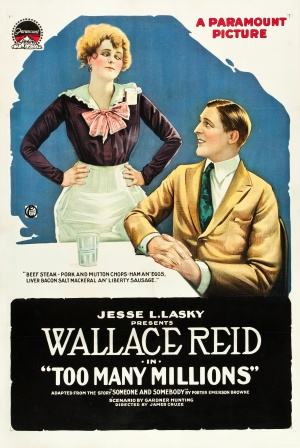
A definitive 5.3/10 rating for a film that redefined the boundaries of cult cinema. Too Many Millions remains a cornerstone of transgressive art.
Imagine a film that opens with the soft thud of a rejected manuscript hitting a desk and ends with a married couple weighing happiness against a vault of gold—Too Many Millions is that rare silent confection whose intertitles sting harder than its slapstick. Released in the giddy summer of 1920, this six-reel whirlwind from Paramount’s New York wing feels like Fitzgerald’s unwritten first draft: all champagne fizz, moral rot, and the persistent itch that America had swapped its soul for ticker-tape.
Walsingham Van Dorn—played by Richard Wayne with the stooped shoulders of a man who apologizes to wastebaskets—inherits forty million via a telegram so ostentatiously large it requires two dissolves just to fit onscreen. Overnight, the shabby book agent morphs into Gatsby without the parties: he purchases a mausoleum-cum-mansion, hires a valet incapable of smiling, and commissions a bathtub carved from a single block of Carrara marble. Enter Desiree Lane (Ora Carew, all cheekbones and predatory grace) who slips past butlers like smoke and demands reparations for her father’s ruined silk mill. The uncles’ fortune, she claims, is built on her birthright. Van Dorn, whose ethical compass wobbles but hasn’t yet shattered, vows restitution—only to learn that Wilkins, the bespoke attorney, has vamoosed with every bearer bond.
What follows is a picaresque chase through railroad club cars, hayloft hideouts, and a hotel that burns as gorgeously as any inferno Feuillade never filmed. The conflagration strands the duo in pajamas, marriage their only shield against tabloid crucifixion. Cut to: two winters later, Wilkins reappears—gaunt, Shakespearean, wheeling crates of cash like a penitent pirate. The final shot frames the Van Dorns on a sun-drenched veranda, the money stacked between them like a third, mute spouse.
Richard Wayne’s comic timing arrives not in grand double-takes but in the microscopic hesitation before he accepts a canapé he can’t pronounce. Watch his pupils dilate when Desiree accuses—silently, yet you hear the gulp. Ora Carew, saddled with the thankless “avenging angel” archetype, weaponizes stillness: she stands in doorframes like a blade waiting for a throat. Their chemistry is less swoon than siege, trading kisses the way card-sharps ante poker chips.
Wallace Reid, billed third yet magnetically louche as the thieving Wilkins, gets the film’s moral pivot. Reid saunters off with half the picture and, historically, with morphine—he would be dead within three years, making Wilkins’ haunted homecoming feel like an accidental epitaph. The supporting bench—Tully Marshall’s dyspeptic judge, James Neill’s fire chief with mutton-chops aflame—supply vaudeville flourishes that keep the fable from curdling into sermon.
Director James Cruze, years before he’d trek The Covered Wagon, revels in spatial jokes: a desk so vast Van Dorn needs a map; a safe whose door dwarfs him like a portcullis. Cinematographer H. Lyman Broening rims night exteriors with sodium streetlamps that bloom amber coronas—a poem of grain and glare. The hotel-fire sequence, staged full-scale on a backlot, employs double-exposure so flames seem to lick the very nitrate we’re watching. Compare it to the hallucinatory conflagration in Dionysus’ Anger; here the spectacle serves character, not catharsis.
Scribes Gardner Hunting and Porter Emerson Browne lace intertitles with poison bon-mots: “Wealth is merely poverty with better scenery.” The narrative’s central conundrum—can ethical life survive unearned capital?—anticipates Stroheim’s Foolish Wives by two years. Yet the film refuses miserabilism; it opts for a prankish humanism, suggesting that marriage, that most mercenary of contracts, might be the sole fiduciary instrument immune to market crash.
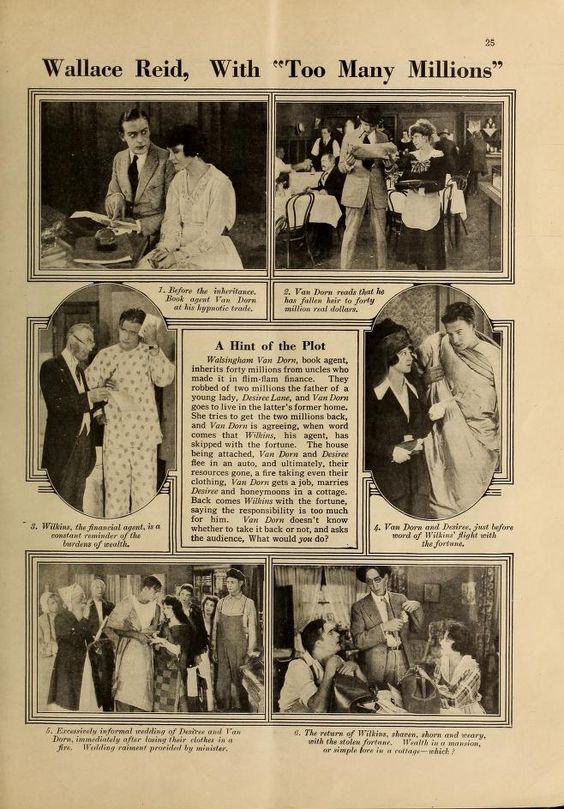
Place Too Many Millions beside Vanity and you see two opposed treatises on the Roaring wallet: where Vanity wallows in tragic opulence, Millions treats lucre as banana-peel. Against A Fool’s Paradise, both films end with protagonists questioning whether they deserve their windfall, yet only Millions dares a punchline wedding in sleepwear.
At 68 minutes, the picture pulses like a staccato sonata. Act I: inheritance euphoria (12 min). Act II: larceny revealed, road-movie mayhem (30 min). Act III: domestic farce, moral rebate (26 min). Notice how Cruze compresses the two-year marital montage into a single lateral tracking shot: laundry lines morph into nursery cribs, time-lapse achieved with scissors and gumption.
Original exhibition reports list a live trio performing a foxtrot cobbled from Irving Berlin’s “Everybody’s Doing It” and Saint-Saëns’ Danse Macabre. Modern restorations often opt for solo piano, yet the true score is the hiss of projector lamp: silence amplifies the uncanny moment when Van Dorn counts phantom bills, fingers grazing nothing but moonlight.
Variety’s 1920 notice dismissed the film as “pleasant trifle,” evidence that critics have always mistaken levity for lightness. Today, archivists rank it among the top 25 U.S. silents to survive in 35mm完整性 (complete). The Library of Congress 2022 retrospective praised its “proto-screwball gender jousting,” while Twitter’s #SilentSunday crowd memes Desiree’s pajama-clad vow as peak 1920s feminism.
Post-2008, post-FTX, the question lands differently. Each gag about embezzled millions stings with SBF residue. Yet the film’s ultimate shrug—happiness may reside beyond net worth—feels less like cop-out than confession. After all, cinema itself is an expensive illusion; laughing at money on screen is the safest form of wealth exorcism we have.
Too fleet to overstay, too cynical to cloy, Too Many Millions is a champagne bubble that bursts into sulfur. Watch it for the pyrotechnic hotel blaze, revisit it for the quiet horror in Wilkins’ eyes when he realizes money has eaten his name. In an age of algorithmic billionaires, this 1920 jest plays like prophecy dressed in polka-dot pajamas.
Reviewed by an archivist-critic who once stitched 6,000 feet of nitrate back into narrative coherence using nothing but tweezers and caffeine.
IMDb 6.2
1934
Community
Log in to comment.