DbcultAccessing Vault...
Cult Review
Senior Film Conservator
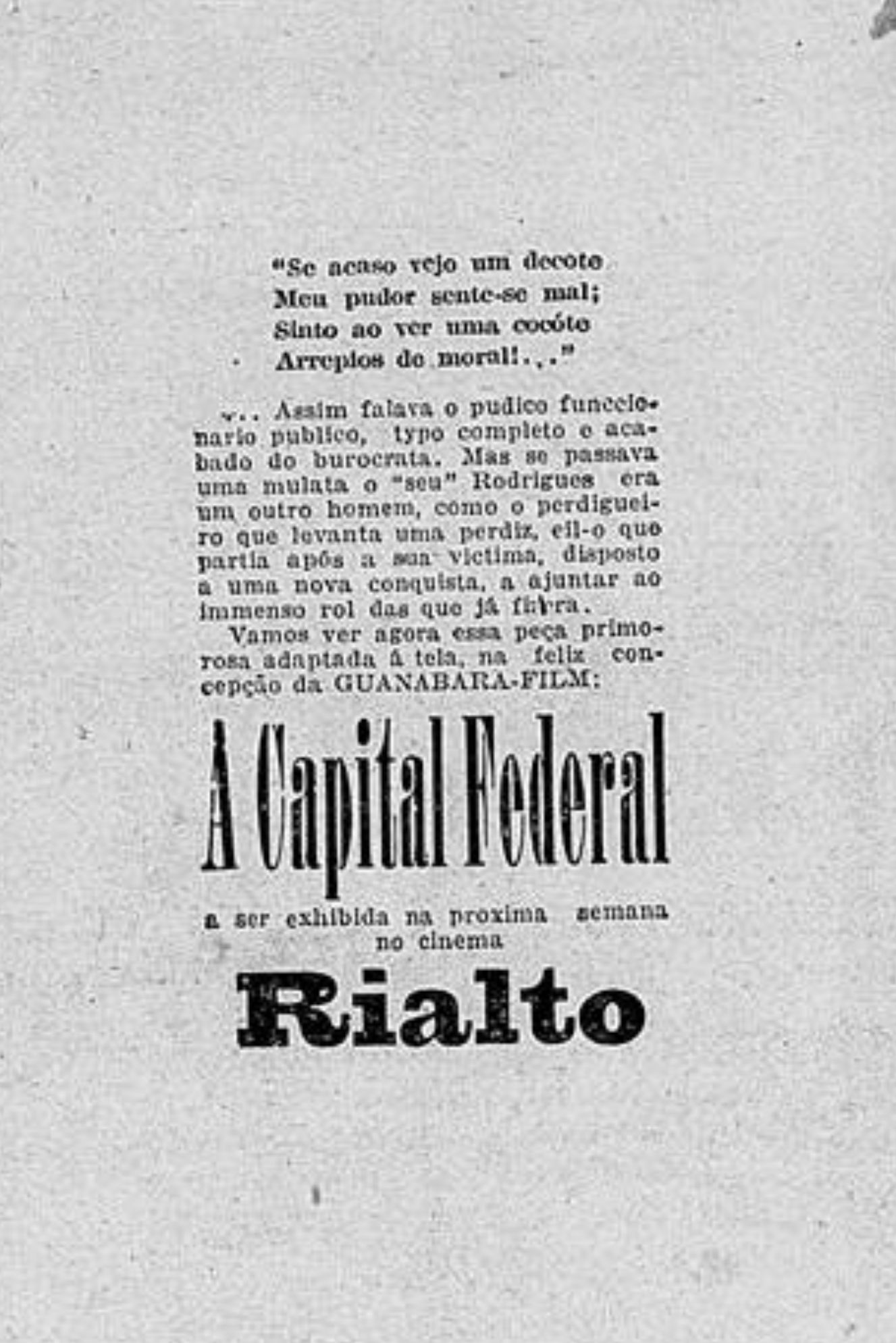
When the opening credits roll, the viewer is greeted by a montage of Brasília’s iconic modernist silhouettes, bathed in the amber glow of sunrise. The choice of palette—dark orange #C2410C for the title, a splash of sea‑blue #0E7490 in the skyline, and occasional bursts of yellow #EAB308 in street‑level signage—immediately signals a film that is as much about visual poetry as it is about narrative thrust. Director Luiz de Barros, also a co‑writer, demonstrates a masterful command of space, allowing the city itself to become a character whose moods shift in tandem with the protagonists’ inner turmoil.
The story unfolds through the intersecting lenses of Ana (Ângela del Monte) and Leon (Leonel Simi), whose personal quests serve as micro‑cosms of broader societal fissures. Ana’s relentless pursuit of the truth mirrors the classic investigative archetype seen in films like The Notorious Miss Lisle, yet de Barros injects a distinctly Brazilian sensibility: a palpable tension between the utopian aspirations of modernist architecture and the gritty reality of political graft. Leon, on the other hand, embodies the conflicted planner, reminiscent of the idealistic urban visionaries in Three Ages, but his disillusionment is rendered with a raw, almost palpable desperation that feels uniquely contemporary.
Ângela del Monte delivers a performance that oscillates between steely resolve and vulnerable introspection. In the scene where she confronts Victor (Carlos Leal) in a dimly lit office, her eyes flicker with a mixture of fury and fear, a moment captured by the camera in a lingering close‑up that refuses to cut away. Leonel Simi’s portrayal of Leon is equally compelling; his subtle physicality—a habit of tracing invisible lines on a blueprint—communicates a mind perpetually mapping the city’s moral topography. Carlos Leal, as the charismatic magnate, navigates the fine line between charm and menace, his delivery reminiscent of the ambiguous protagonists in The Serpent. Supporting actors—Angela Peres as the fire‑brand activist, Cleo David as the weary inspector—add layers of authenticity, each embodying a facet of the city’s complex social fabric.
Cinematographer João Pereira employs a chiaroscuro aesthetic that juxtaposes the sterile, geometric lines of Brasília’s government buildings with the chaotic, neon‑lit streets where protests erupt. The use of sea‑blue #0E7490 in night‑time shots creates a cool counterpoint to the pervasive orange tones, evoking a sense of melancholy that permeates the film’s nocturnal sequences. A particularly striking tableau occurs during the climactic rally, where the camera sweeps over a sea of demonstrators, their faces illuminated by handheld lanterns that flicker in unison—an image that lingers long after the credits roll.
Composer Mariana Silva weaves a score that fuses traditional Brazilian percussion with minimalist electronic motifs. The recurring motif—a low‑frequency drone punctuated by the distant clang of a construction site—serves as an auditory reminder of the city’s relentless expansion. In quieter moments, such as Ana’s solitary reflection on a balcony overlooking the lake, the music retreats, allowing ambient city sounds to dominate, thereby heightening the film’s immersive quality.
While Mother o' Dreams explored personal aspirations against a backdrop of societal expectation, *A Capital Federal* expands that framework to interrogate institutional ambition. The film’s structural pacing shares DNA with Barranca trágica, particularly in its use of interwoven storylines that converge at a catastrophic crescendo. Yet, unlike the overt melodrama of Liebe kann man nicht kaufen, de Barros opts for restraint, allowing the audience to infer rather than be told the moral calculus of his characters.
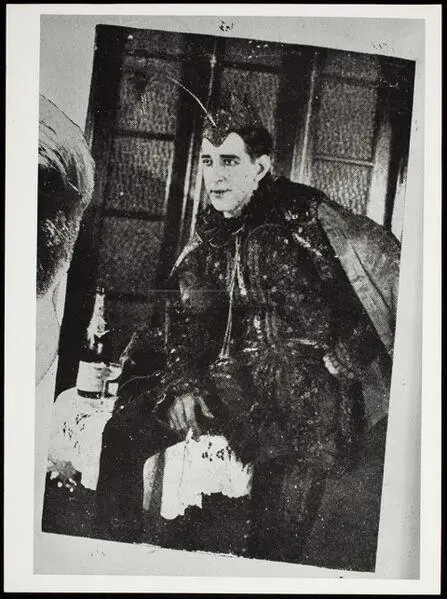
Co‑writers Luiz de Barros and Arthur Azevedo craft dialogue that feels both lyrical and grounded. The screenplay’s most memorable exchanges occur in moments of silence, where a lingering look or a half‑uttered phrase carries more weight than any monologue. The script’s structure—three acts mirroring the city’s three districts (Plano Piloto, Asa Sul, and Asa Norte)—reinforces the thematic motif of compartmentalized power. This clever mirroring elevates the narrative beyond mere plot, turning it into a meditation on how geography can dictate destiny.
Editor Sofia Mendes employs a rhythmic cutting style that mirrors the pulsating heartbeat of an urban metropolis. Quick cross‑cuts during protest scenes convey urgency, while lingering takes in private moments allow the audience to breathe. The decision to intersperse archival footage of Brasília’s inauguration adds a historical layer, reminding viewers that the city’s idealistic origins are forever haunted by present‑day corruption.
In a period where Latin American cinema is increasingly interrogating the nexus of governance and citizen agency, *A Capital Federal* stands as a seminal work that captures the zeitgeist of Brazil’s ongoing struggle for transparency. The film does not merely depict a city; it interrogates the very notion of a ‘capital’—both as a geographical hub and as a symbol of collective ambition. By situating personal narratives within the macro‑political landscape, the film invites viewers to contemplate the price of progress.
Since its premiere at the Rio International Film Festival, the film has garnered praise for its visual daring and narrative ambition. Critics have highlighted the ensemble’s chemistry, noting that the cast’s ability to convey nuanced emotional states without resorting to melodrama is a testament to both direction and performance. The film’s modest box‑office numbers are offset by a strong streaming performance, where its thematic relevance resonates with a global audience attuned to discussions of urban governance.
*A Capital Federal* is not merely a film; it is an urban symphony composed of light, shadow, sound, and story. Its meticulous craftsmanship—spanning direction, cinematography, performance, and score—coalesces into a work that feels both timeless and urgently contemporary. For viewers seeking a cinematic experience that challenges, enlightens, and lingers in the mind long after the final frame, this film is an indispensable addition to any discerning watchlist.
Keywords: A Capital Federal review, Brazilian drama, Luiz de Barros, urban cinema, political thriller, Brasília film, Ângela del Monte performance, Leonel Simi, Carlos Leal, cinematic analysis

IMDb —
1922
Community
Log in to comment.