DbcultAccessing Vault...
Cult Review
Senior Film Conservator
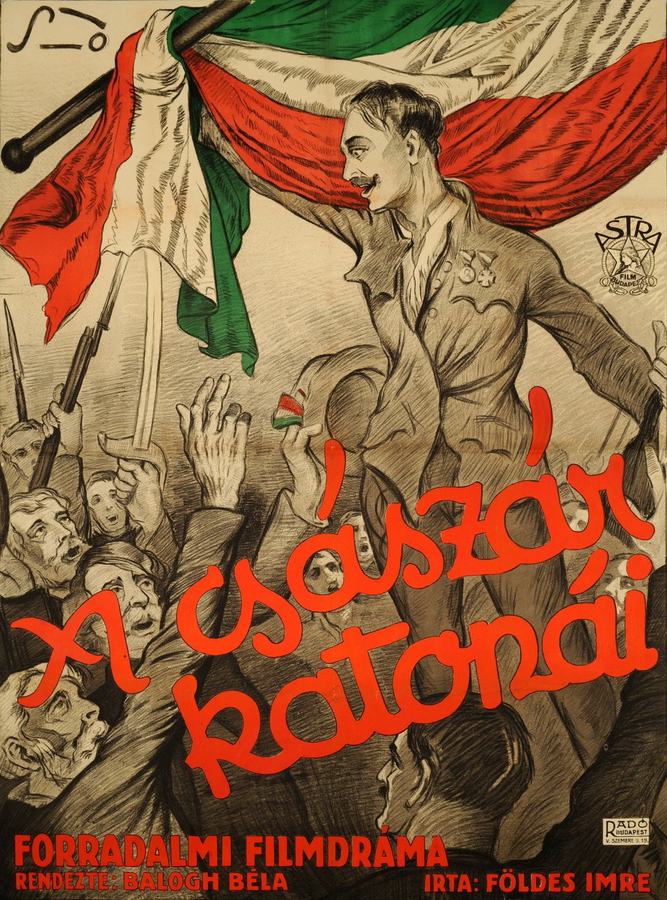
In the annals of silent cinema, where grand narratives often vied with intimate human dramas, 'Soldiers of the Emperor' emerges not merely as a historical artifact but as a searing, timeless examination of the human condition under duress. This film, a product of an era still reeling from the cataclysm of global conflict, possesses an astonishing prescience, dissecting the psychological toll of war with a nuanced depth that belies its early origins. It stands as a testament to the power of visual storytelling, employing a stark, often poetic aesthetic to convey the profound anguish and disillusionment that permeate every frame. Far from a jingoistic paean to military might, it is a mournful elegy for lost innocence and the crushing weight of imperial ambition.
The film’s genius lies in its ability to universalize a specific historical moment, transforming the Austro-Hungarian experience into a lament for all soldiers, all epochs, caught in the gears of conflict. Lajos Szõke, as Ferenc, delivers a performance of remarkable vulnerability and gradual hardening. His initial portrayal of a wide-eyed country boy, brimming with an almost naive patriotism, is heartbreakingly authentic. We witness his transformation not through overt melodrama, but through the subtle shifts in his posture, the deepening shadows in his eyes, and the gradual erosion of his youthful exuberance. Szõke’s face becomes a canvas for the film’s central themes, reflecting the external brutality and the internal struggle. It’s a masterclass in understated acting, particularly potent in the silent era where exaggerated gestures often prevailed. His journey, from the idyllic fields he leaves behind to the desolate trenches he eventually inhabits, is a visceral representation of a generation's sacrifice.
Paul Lukas, in a role that foreshadows his later Hollywood gravitas, imbues Captain Kovács with a chilling blend of cynicism and weary resignation. Kovács is not a villain, but a man irrevocably broken by the very system he upholds. His harshness towards the recruits, especially Ferenc, stems not from malice but from a profound understanding of the brutal realities awaiting them. Lukas’s performance is a study in controlled intensity, his eyes conveying volumes of unspoken trauma. He is the ghost of wars past, a living embodiment of what Ferenc is destined to become, offering a grim mirror to the protagonist's future. The dynamic between Szõke and Lukas forms the emotional core of the film, a tragic mentorship where lessons are learned through suffering, and wisdom is born from despair. Their interactions are often wordless, yet they convey a profound understanding of the unspoken bonds and resentments forged in the crucible of military life.
Lya De Putti, a name that would later grace the marquees of European and American cinema, brings a luminous, fragile grace to Ilona. Her presence, though often separated from Ferenc by distance, remains a potent symbol of the life and love he leaves behind. De Putti is not merely a romantic ideal; she represents the profound human cost of war on the home front, the waiting, the anxiety, the slow erosion of hope. Her scenes, often suffused with a melancholic beauty, serve as poignant counterpoints to the grim realities of military life. The visual juxtaposition of her serene, if sorrowful, existence against the chaos of the barracks and battlefields amplifies the film's emotional impact, reminding us of the profound rupture war creates in the fabric of society and individual lives. Her longing, expressed through subtle gestures and yearning gazes, is a powerful reminder of what is truly at stake.
The direction, which skillfully navigates between sweeping panoramas of military spectacle and intimate close-ups of human suffering, is remarkably sophisticated for its time. The use of light and shadow is particularly striking, often employing chiaroscuro to emphasize the starkness of the soldiers' existence and the moral ambiguities they face. The training sequences, for instance, are staged with a stark, almost balletic precision, highlighting the dehumanizing regimentation of military life. The visual language speaks volumes, depicting the transformation of individuals into cogs in a colossal, indifferent machine. One might draw a thematic parallel to the stark social commentary found in films like 'Les Misérables', where the individual's struggle against an overwhelming societal or institutional force is central. Both films explore the crushing weight of systemic oppression, albeit in different contexts.
The film’s thematic ambition extends beyond a simple anti-war message. It delves into the very nature of loyalty, duty, and patriotism, questioning whether blind adherence to these ideals is truly virtuous when it leads to such immense suffering. It explores the class divisions inherent in imperial armies, where the lives of common soldiers are deemed expendable in the pursuit of abstract geopolitical objectives. This socio-political critique, subtly woven into the personal narrative, gives the film an intellectual heft that elevates it beyond mere sentimentality. It implicitly critiques the grand narratives of heroism often propagated by the state, exposing the grim, unromantic truth of the battlefield. This exploration of systemic injustice and the individual's powerlessness against it finds echoes in films like 'The Prison Without Walls', which similarly scrutinizes the confines of human agency within restrictive structures.
While the film’s narrative unfolds with a deliberate, almost mournful pace, it is never sluggish. Each scene contributes to the gradual build-up of tension and the inexorable march towards its tragic conclusion. The pacing mirrors the slow, grinding nature of trench warfare, emphasizing the weariness and monotony that precede moments of intense, terrifying violence. The film avoids gratuitous depictions of gore, instead relying on the psychological impact of war, portraying the devastation through the faces of its protagonists and the desolate landscapes they inhabit. This artistic choice amplifies the horror, making it more internal and resonant. The sound design, though absent in a literal sense, is masterfully evoked through the visual rhythm and the powerful, emotive performances, allowing the audience to 'hear' the thunder of cannons and the cries of the wounded in their minds.
The film’s legacy is significant, not just as an early example of Hungarian cinema, but as a universal statement on the futility of conflict. It belongs to a lineage of films that dared to challenge the prevailing romanticism of war, paving the way for later, more explicit anti-war statements. Its influence can be seen in subsequent cinematic explorations of the psychological scars of battle, and its commitment to humanistic storytelling remains a powerful benchmark. In an era where many films focused on spectacle, 'Soldiers of the Emperor' chose to focus on the soul, a decision that grants it enduring relevance. The film’s nuanced portrayal of character and its unflinching look at the consequences of war resonate profoundly, making it a compelling watch even today.
The supporting cast, though given less screen time, contributes significantly to the film's rich tapestry. István Ihász and Mihály Ihász, for instance, embody the diverse array of personalities found within a company of soldiers – from the boisterous to the terrified, the cynical to the stoic. Their collective presence creates a convincing sense of camaraderie and conflict, illustrating the microcosm of society that forms within military units. Géza Erdélyi and Iván Györkönyi further flesh out this ensemble, providing distinct characterizations that prevent the background from blurring into a monolithic entity. These performances, often relying on physical presence and expressive glances, are crucial in grounding the larger narrative in relatable human experiences. They are the faces in the crowd, the unsung individuals whose fates are inextricably linked to the grander, more destructive machinations of empire.
The writers, Imre Földes and Richárd Falk, must be commended for crafting a narrative that is both epic in scope and deeply intimate in its focus. Their screenplay, even in its silent form, is rich with subtext and poignant irony. They understand that the greatest tragedies of war are not always the grand battles, but the quiet moments of despair, the shattered dreams, and the incremental loss of self. The dialogue, conveyed through intertitles, is spare yet impactful, delivering crucial emotional beats and philosophical reflections without ever feeling didactic. The narrative structure, moving from the pastoral to the brutal, from hope to resignation, is meticulously constructed, guiding the audience through Ferenc’s emotional landscape with remarkable precision. This thoughtful approach to storytelling elevates the film, making it more than just a historical reenactment; it is a profound meditation on human nature itself. One could argue its contemplative nature shares a kinship with the introspective quality found in 'In the Shadow', where internal struggles and moral dilemmas drive the narrative as much as external events.
Visually, the film is a masterclass in early cinematic artistry. The cinematography, though lacking the sophisticated camera movements of later eras, utilizes compelling compositions and evocative set designs to create a powerful sense of place and atmosphere. The contrast between the sun-drenched Hungarian countryside and the grim, muddy trenches is particularly effective, underscoring the stark chasm between peace and war. The costume design is meticulously researched, adding to the film’s historical authenticity without ever feeling like a mere period piece. Every uniform, every piece of equipment, tells a story, contributing to the overall verisimilitude. The attention to detail in the mise-en-scène is commendable, immersing the viewer fully in the world of the film. This commitment to visual storytelling, where every element on screen contributes to the narrative and thematic depth, is a hallmark of truly great cinema, even in its nascent forms. It paints a picture of an empire’s final, desperate throes, echoing the grandeur and eventual decay seen in other historical dramas.
The ending of 'Soldiers of the Emperor' is not one of triumphant victory or facile resolution. Instead, it offers a stark, haunting conclusion that lingers long after the final frame. It is a testament to the film’s artistic integrity that it refuses to sugarcoat the realities of war, choosing instead to confront its audience with the devastating consequences of conflict. This uncompromising vision is what grants the film its lasting power and its status as a significant work of early cinema. It is a film that demands reflection, urging viewers to consider the profound human cost of geopolitical ambition. Its message, delivered with such visual eloquence and emotional sincerity, remains as relevant today as it was in the tumultuous years following the Great War. It’s a somber reminder that while empires rise and fall, the human spirit, though often broken, continues to grapple with the enduring questions of existence, duty, and the elusive pursuit of peace. The film's unflinching gaze into the darker aspects of human experience and societal systems aligns with the critical lens found in films such as 'Bought and Paid For', which dissects the harsh realities and moral compromises inherent in specific societal structures.
In examining the narrative arc, one cannot overlook the subtle yet pervasive sense of fatalism that permeates 'Soldiers of the Emperor'. From the moment Ferenc is conscripted, there's an almost predetermined trajectory to his suffering. The film masterfully builds this atmosphere, not through heavy-handed foreshadowing, but through the cumulative weight of small moments: the resignation in the eyes of older soldiers, the weary commands of officers like Kovács, and the stark, unyielding landscape of the training grounds. This fatalism is not disempowering; rather, it underscores the immense forces at play that transcend individual will. It suggests that once the machinery of war is set in motion, individuals become mere components, their destinies largely predetermined by the grander, more destructive designs of the state. This theme, of individuals caught in an inescapable system, might draw comparisons to the existential dread explored in films like 'The Common Law', where characters grapple with societal expectations and the limitations of personal freedom. The film's ability to evoke such profound emotional and philosophical questions without explicit dialogue is a testament to its masterful visual storytelling.
The production design, while perhaps not as opulent as some contemporary epics, is meticulously crafted to serve the narrative. The barracks are authentically spartan, the uniforms worn and practical, and the simulated battlefields convey a tangible sense of desolation. This commitment to realism grounds the film, preventing it from veering into theatricality. Every prop, every backdrop, contributes to the overall authenticity, immersing the viewer in the grim reality of military life. The attention to detail, from the soldiers' equipment to the period-specific architecture, speaks volumes about the filmmakers' dedication to historical accuracy and their desire to create a believable world. This granular approach to world-building enhances the emotional impact, making the characters' struggles feel more immediate and resonant. The film does not merely tell a story; it transports the audience into a specific historical moment, allowing them to witness the unfolding tragedy firsthand. The meticulous historical detail and immersive setting might evoke a similar appreciation for craft as seen in 'The Life and Passion of Jesus Christ', where historical and cultural context are paramount to the narrative's impact.
Ultimately, 'Soldiers of the Emperor' is a powerful, melancholic masterpiece that transcends its historical context to deliver a universal message about the enduring cost of war. It is a film that challenges simplistic notions of heroism and patriotism, opting instead for a raw, unflinching portrayal of human suffering and resilience. Its visual artistry, compelling performances, and profound thematic depth ensure its place as a significant work in the history of cinema. For those willing to engage with its somber beauty and its poignant critique of imperial ambition, it offers a deeply rewarding and thought-provoking experience. It reminds us that behind every grand conflict are countless individual stories of loss, courage, and the quiet, desperate struggle to retain one's humanity amidst the chaos. The film’s impact is not fleeting; it resonates with a quiet power, leaving an indelible mark on the viewer's consciousness. It’s a film that speaks to the heart, prompting reflection on the past and offering a cautionary tale for the future. Such a profound and enduring impact is a characteristic shared by other timeless dramas that delve into the human spirit, such as 'Szulamit' or even the fantastical elements of 'Edelsteine - Phantastisches Drama in 4 Akten', though their genres diverge, the core exploration of human experience remains a common thread. The film leaves an audience with a sober understanding of the fragility of peace and the immense sacrifice demanded by the pursuit of power, a truly unforgettable cinematic experience.
IMDb 4.9
1930
Community
Log in to comment.