DbcultAccessing Vault...
5.8/10
Senior Film Conservator
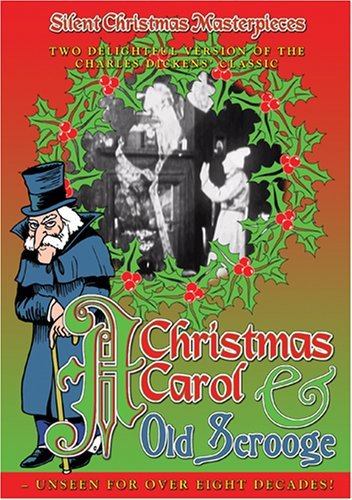
A definitive 5.8/10 rating for a film that redefined the boundaries of cult cinema. A Christmas Carol remains a cornerstone of transgressive art.
To delve into the 1922 silent adaptation of Charles Dickens' immortal 'A Christmas Carol' is to embark on a fascinating archaeological dig into the very bedrock of cinematic storytelling. Before the advent of spoken dialogue, before the grand orchestral scores became inextricably linked with the holiday season's most poignant narrative, there existed a profound visual language, a ballet of exaggerated expressions and carefully crafted mise-en-scène, tasked with conveying the profound emotional arc of Ebenezer Scrooge. This particular rendition, featuring Russell Thorndike in the titular role, stands as a testament to the era's ingenuity, a raw, unvarnished interpretation that, despite its technical limitations by modern standards, captures an almost primal essence of Dickens' social critique and spiritual redemption tale. It is a film that demands a different kind of engagement, one that asks the viewer to meet it halfway, to interpret the nuances of a glance, the tremor of a hand, the silent scream of a soul in torment.
The portrayal of Scrooge himself is, naturally, the lynchpin. Thorndike's performance is a masterclass in silent film acting, relying on a meticulous combination of physical posture, facial contortions, and the stark contrast of light and shadow to articulate the miser's entrenched bitterness. His initial appearance is one of profound discomfort, a man shrunken by his own avarice, his features perpetually pinched, his movements stiff and unwelcoming. The very air around him seems to thicken with his disdain for humanity, a palpable chill emanating from the screen. This isn't merely a character; it's an embodiment of the era's anxieties about industrialization and the stark divide between wealth and poverty. We see his disdain for the carolers, his curt dismissal of his nephew Fred's good cheer, and the cold, transactional nature of his dealings with Bob Cratchit. These moments, devoid of spoken words, gain an almost mythic quality, the visual cues becoming universal symbols of human greed and isolation.
The spectral visitations, central to the narrative, are handled with a blend of early cinematic trickery and atmospheric staging that, for their time, must have been genuinely unsettling. Jacob Marley's ghost, a translucent, ethereal presence, appears through rudimentary but effective double exposures, his chains clanking with an unseen weight that reverberates through the viewer's imagination. This visual representation of a tormented soul, bound by the very greed he practiced in life, is remarkably potent. The silent medium forces a focus on the visual metaphor: the chains are not just a sound effect but a tangible manifestation of spiritual burden. One can draw parallels to the dramatic visual storytelling employed in other silent films of the era, where the lack of dialogue often necessitated a more heightened, expressionistic approach to conveying internal states. For instance, the psychological weight explored in films like The Third Degree, while different in plot, shares a reliance on visual cues to communicate profound stress and moral conflict.
The journey through time with the Ghosts of Christmas Past, Present, and Yet to Come is where the film truly shines in its ability to condense and convey complex emotional landscapes without a single line of dialogue. The Ghost of Christmas Past, often depicted as a gentle, guiding light, here becomes a conduit for a rapid-fire montage of Scrooge's formative years. We witness his lonely childhood, the warmth of Fezziwig's generosity, and the heartbreaking dissolution of his engagement to Belle, all conveyed through brief, poignant scenes that rely heavily on the actors' emotive capacity. The brevity of these flashbacks, characteristic of early cinema's narrative economy, paradoxically intensifies their impact, leaving much to the audience's interpretation and emotional projection. The sheer speed at which Scrooge's past flashes before his eyes, a whirlwind of joy and regret, underscores the urgency of his spiritual awakening.
The Ghost of Christmas Present, a figure of jovial abundance and stark reality, guides Scrooge through the bustling streets, revealing the simple, unadorned joys of the Cratchit family and the genuine warmth of his nephew's Christmas gathering. These scenes are infused with a quiet humanity, a stark contrast to Scrooge's own desolate existence. The juxtaposition of the Cratchits' meager feast with their overflowing love is a powerful visual statement on the true meaning of richness, a theme that resonates deeply within Dickens' original work. The film, through its visual grammar, emphasizes the communal spirit, the shared human experience that Scrooge has so willfully denied himself. The pathos surrounding Tiny Tim, conveyed through his frail physicality and the loving glances of his family, achieves a heartbreaking resonance, even without spoken pleas or declarations.
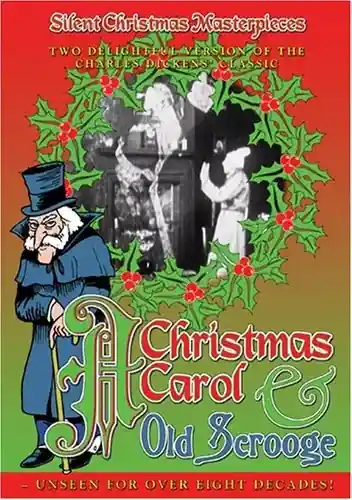
Perhaps the most chilling and effective segment is the encounter with the Ghost of Christmas Yet to Come. This silent, shrouded figure, moving with an inexorable, terrifying certainty, guides Scrooge through a desolate future where his death is met with indifference, his possessions plundered, and his grave unmarked. The stark black-and-white cinematography of the era lends itself perfectly to this segment, creating an atmosphere of profound dread and isolation. The long shadows, the barren landscapes, and the starkness of the tombstones amplify the terror of a life unlived and a death unmourned. This vision, more than any other, serves as the ultimate catalyst for Scrooge's transformation. The fear is not just for his own soul but for the complete erasure of his legacy, for the utter pointlessness of his miserly existence. This existential dread is a universal emotion, transcending the silent film format, and is conveyed with remarkable clarity.
The technical aspects of a film from 1922 naturally invite a historical perspective. The cinematography, while lacking the sophisticated camera movements of later eras, utilizes static shots and intertitles to advance the narrative and provide crucial dialogue or exposition. These intertitles, far from being a mere crutch, become an integral part of the film's rhythm, punctuating the visual drama with Dickensian prose. The editing, though perhaps rudimentary by modern standards, is effective in maintaining a narrative flow, particularly during the rapid transitions between Scrooge's past, present, and future. One might compare the straightforward, almost theatrical blocking and staging to other films of the period, where the camera often acted as a static observer to scenes unfolding on a stage-like set, much like one might observe the clear narrative progression in Faith Endurin' or The Happy Warrior, where the dramatic arc is paramount.
The enduring power of 'A Christmas Carol' lies in its timeless message of redemption and the transformative power of empathy. This silent adaptation, stripped of dialogue and modern special effects, forces the viewer to confront these themes in their purest form. Thorndike’s Scrooge, through his silent agony and eventual joyous awakening, becomes a universal symbol of humanity’s capacity for change. His transformation, from a hunched, resentful figure to one radiating genuine warmth and generosity, is conveyed through a remarkable physical shift. The sudden lightness in his step, the genuine smile that finally breaks through the years of hardened cynicism, are all the more impactful for their silent articulation. It is a powerful reminder that true wealth lies not in accumulation but in connection and compassion.
Considering the film in the broader context of early cinema, it offers valuable insights into how filmmakers grappled with complex literary adaptations. The challenge of translating Dickens' rich prose and intricate characterizations into a purely visual medium was immense, yet this film largely succeeds. It demonstrates a sophisticated understanding of visual storytelling, using everything from costume design to set decoration to convey character and mood. The grimness of Scrooge's counting-house, the festive chaos of Fezziwig's ball, the humble warmth of the Cratchit home – each setting is carefully rendered to amplify the narrative's emotional beats. This attention to detail in world-building, even in the absence of sound, speaks to the burgeoning artistry of the medium.
The film's legacy, while perhaps overshadowed by more famous sound adaptations, is significant. It represents an early, earnest attempt to bring a beloved literary classic to the nascent silver screen, demonstrating the universal appeal of Dickens' story and the nascent power of cinema to convey profound human drama. It serves as a historical artifact, a window into the aesthetic sensibilities and technical capabilities of filmmaking nearly a century ago. For enthusiasts of silent cinema, it is a fascinating case study in how emotional depth and narrative complexity were achieved without the aid of spoken words. The very limitations of the medium in 1922 often forced a greater reliance on visual metaphor and symbolic imagery, elements that can feel incredibly potent and deliberate to a modern viewer accustomed to more explicit forms of communication. The film, in its own way, is a beautiful, melancholic dance between the shadows of Scrooge's past and the radiant promise of his future, a testament to the fact that some stories are so powerful, they transcend the need for a voice.
Ultimately, this silent 'A Christmas Carol' is not merely a historical curiosity but a compelling piece of cinema that continues to resonate. It invites contemplation on the nature of generosity, the specter of regret, and the profound capacity for human change. The performances, particularly Thorndike’s, transcend the technical limitations of their time, delivering a message that remains as relevant today as it was when Dickens first penned it. It reminds us that the spirit of Christmas, indeed the spirit of humanity, can be communicated through a shared glance, a silent tear, or a sudden, joyous leap. The film, with its stark visuals and powerful emotional core, is a poignant reminder of the enduring power of storytelling, and the remarkable ability of early cinema to capture the very essence of the human condition. It is a quiet triumph, a film that speaks volumes without uttering a single word, urging us to consider our own chains, both visible and invisible, and the paths we might choose to forge anew.
IMDb —
1928
Community
Log in to comment.