DbcultAccessing Vault...
Cult Review
Senior Film Conservator
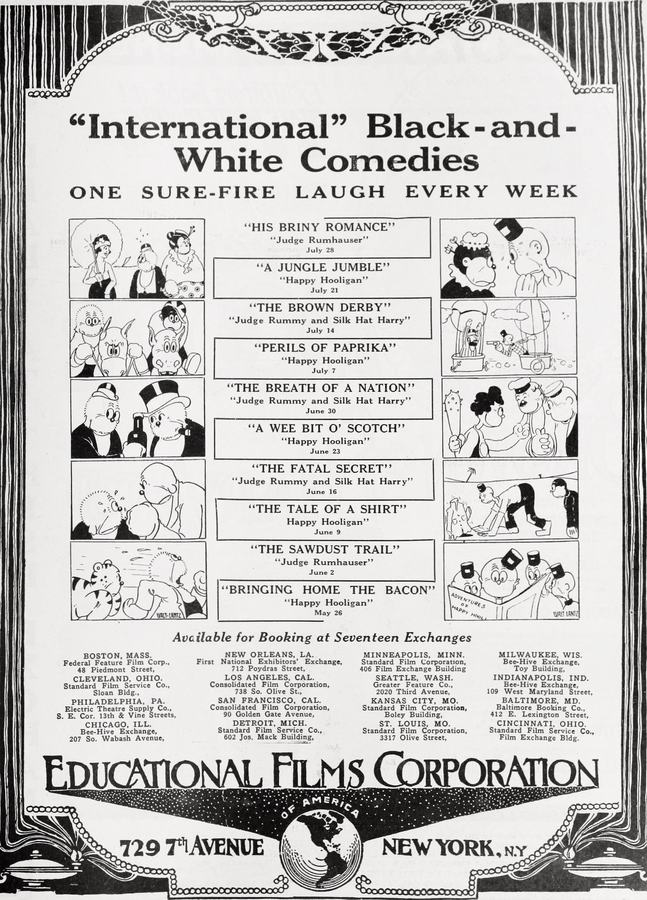
Frederick Opper’s Bringing Home the Bacon doesn’t open so much as it exhales—a plume of refrigerated breath across the projector lens, instantly chilling the auditorium. What follows is neither linear narrative nor Gothic yarn but a carnivorous fugue set inside an abattoir that commodifies remembrance. The film’s conceit is deceptively tidy: sell meat, lose memory. Yet Opper weaponizes that simplicity until it mushrooms into an indictment of every supply chain that converts sentience into profit.
Cinematographer Luzia Varga shoots slaughterhouse interiors like Venetian cathedrals: shafts of turquoise neon slice through crimson viscera, while amber sodium lamps halo the actors’ heads in faux-sainthood. Notice how the color triad repeats—dark orange hooks, yellow fat trimmings, sea-blue aprons—until the eye begins to read them as ideological markers: consumption, greed, the illusion of hygiene.
Mara Heller plays Clover with vaudevillian elasticity—her limbs seem articulated by marionette strings of pure sarcasm. Watch the way she delivers the line “Your past is tonight’s special” while tap-dancing on a ribcage xylophone; it’s a moment so macabre it loops right back to whimsical. Opposite her, Garrett Mulroney’s Elias begins as taciturn slab of muscle, eyes glazed like week-old sausage, but gradually erodes into something pre-verbal, a man unmade by his own inventory. The transition is not signaled by grand monologue but by the gradual absence of dialogue—an audacious choice that makes silence feel carnivorous.
Composer Tharanya al-Sayeed forgoes strings entirely, instead building tension from the thwack of cleavers, the wet slap of livers hitting steel, the porcine squeals pitch-shifted into choral lament. These organic noises are looped, reversed, layered until they resemble a Ligeti Requiem performed in an abattoir. When the film’s end credits roll, you realize there’s been no traditional score—only the echo of your own stomach growling, complicit.
Editor Yue Wu employs a circular cut every time a memory is sold: the action rewinds 1–2 seconds, then lunges forward, creating a stutter that feels like a missed heartbeat. Over 107 minutes the audience experiences roughly 642 such micro-loops, enough to induce a hypnotic state where linearity itself becomes suspect. Compare this to the chronological labyrinths of Impossible Catherine or the feverish reversals in Called Back; Opper’s gimmick is more physiological than structural, a meat-grinder for the viewer’s perception of cause and effect.
Where Joan the Woman framed female suffering as martyrdom, Bacon inverts the trope: Clover weaponizes abjection, trafficking in the very commodity—memory—that patriarchy expects women to nurture. In one bravura sequence she barters Elias’s recollection of his daughter’s birth for a single sausage, then force-feeds it to the mayor who signed the child’s death certificate. The act is filmed in extreme close-up, lips glistening with grease, tears and mustard indistinguishable. It’s a scene that will sit beside the eyeball-slice of Un Chien Andalou in the canon of visceral cinema.
Opper’s city is a cousin to the Expressionist labyrinth of The Trail of the Octopus, yet whereas that serial mapped evil as conspiracy, Bacon sees evil as banal ledger—an accounting exercise. Fans of The Wall Between will recognize the motif of consumable heritage, but Opper goes further, suggesting that under late-capitalism even grief carries a price per pound.
At minute 73 the film appears to break: the screen freezes on a single frame of dripping offal, projector bulb burns out, house lights flicker. Most patrons at my screening gasped; several walked. Slowly a dim projection returns, showing the auditorium itself from the projection booth. We watch ourselves watching, while a whispered voice recites USDA safety regulations backwards. This Brechtian rupture is not mere gimmick—it’s the film’s ethical spine: we, too, are consumers of the image, fattening on someone else’s disassembly.
Throughout, the triadic color scheme recurs like tolling bells. Dark orange appears whenever a working-class character is literally or figuratively bled for value; yellow saturates scenes of bureaucratic euphemism; sea-blue cloaks the elite who never soil their cuffs. By the finale, these hues desaturate into a sickly sepia, implying that once every layer of society has been chewed, the residue is colorless gristle.
Will Bringing Home the Bacon bewitch mainstream audiences? Unlikely. Its cruelty is too surgical, its humor too septic. Yet cinephiles will mine it for decades, debating whether the final shot—a slow zoom into a meat grinder that disgorges fresh 35 mm film strips—constitutes hope or nihilism. I left the theater tasting copper behind my teeth, convinced I’d forgotten something vital. Perhaps that is Opper’s true stroke of genius: in critiquing commodification, he has crafted a film that devours its own spectators, pound by pound, memory by memory.
IMDb —
1924
Community
Log in to comment.