DbcultAccessing Vault...
Cult Review
Senior Film Conservator
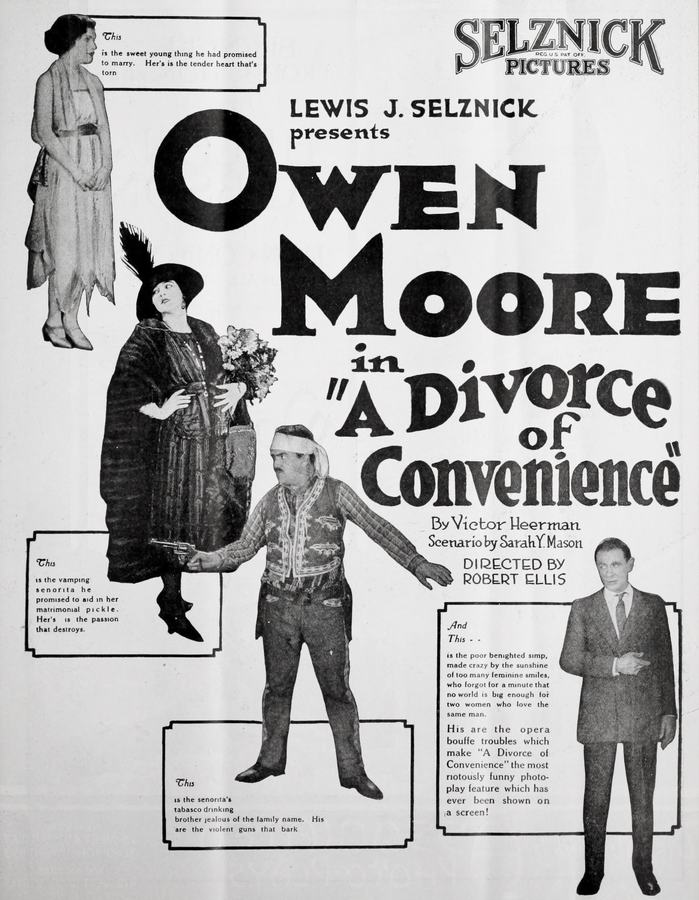
In the vibrant tapestry of early 20th-century cinema, where narratives often hinged on grand gestures and melodramatic twists, Victor Heerman's and Sarah Y. Mason's screenplay for A Divorce of Convenience emerges as a particularly piquant example of societal satire wrapped in a comedic farce. This 1921 silent film, a forgotten gem for many, offers a fascinating glimpse into the moral ambiguities and social charades of its era, all while delivering a thoroughly entertaining spectacle. From its opening frames, the picture plunges the viewer into a world where personal desires collide with public decorum, and where the pursuit of freedom can lead to an elaborate, almost theatrical, web of pretense. It’s a narrative that, even a century later, still resonates with a certain timeless charm, reminding us that the complexities of human relationships and the lengths people will go to achieve their ends are perennial themes.
At the heart of this intricate plot is Tula Moliana, brought to life with captivating allure by the inimitable Nita Naldi. Naldi, renowned for her vampish roles and exotic beauty, embodies Tula not merely as a character but as a force of nature—a Spanish coquette whose every glance and gesture is imbued with a calculated charm. Tula’s predicament is delightfully scandalous: she is, against all societal norms, entangled in two marital bonds. One of these unions is with the formidable Senator Wakefield, a man whose public standing makes any domestic scandal anathema. Tula's primary objective is clear: to sever ties with the Senator. Her method, however, is anything but conventional. Rather than a straightforward legal process, she opts for a dramatic scheme, one that requires a willing, if unwitting, participant.
Enter Jim Blake, portrayed by the earnest Owen Moore. Moore, known for his handsome leading-man appeal, brings a commendable blend of naiveté and burgeoning exasperation to Jim. He is, initially, a man of good intentions, engaged to Helen, the Senator’s daughter (played with a delicate grace by Katherine Perry). Tula, with a Machiavellian elegance, convinces Jim to play the role of her co-respondent, an act designed to create the necessary grounds for her divorce. This decision, seemingly simple in its inception, quickly spirals into a dizzying array of compromising situations for Jim. His life, once predictably structured around his engagement to Helen, becomes a chaotic whirlwind of clandestine meetings, suspicious encounters, and increasingly transparent excuses. The film excels in portraying Jim’s mounting discomfort and his desperate attempts to maintain his innocence in the face of overwhelming circumstantial evidence. It’s a masterclass in comedic tension, reminiscent of the predicaments faced by characters in other silent era farces where mistaken identities and compromising situations were the bread and butter of the narrative, perhaps even more acutely than in a simpler tale like The Idler, which, while focusing on domestic drama, lacked the sheer audaciousness of this film's premise.
The narrative’s genius lies in its relentless escalation. Jim finds himself in an ever-tightening net of deceit, forced to concoct ever more elaborate explanations for his frequent, and often intimate, encounters with Tula. What starts as a mere agreement transforms into a full-blown charade that threatens to unravel his engagement and reputation. The writing by Heerman and Mason is particularly sharp here, crafting scenarios that are both farcical and surprisingly believable within the film's heightened reality. The dynamic between Naldi's manipulative allure and Moore's flustered sincerity provides much of the film's comedic backbone. This kind of calculated manipulation by a female protagonist, albeit with different motives, can be seen echoed in films like The Savage Woman, where characters navigate complex personal landscapes with strategic intent, though the comedic tone here offers a distinct contrast.
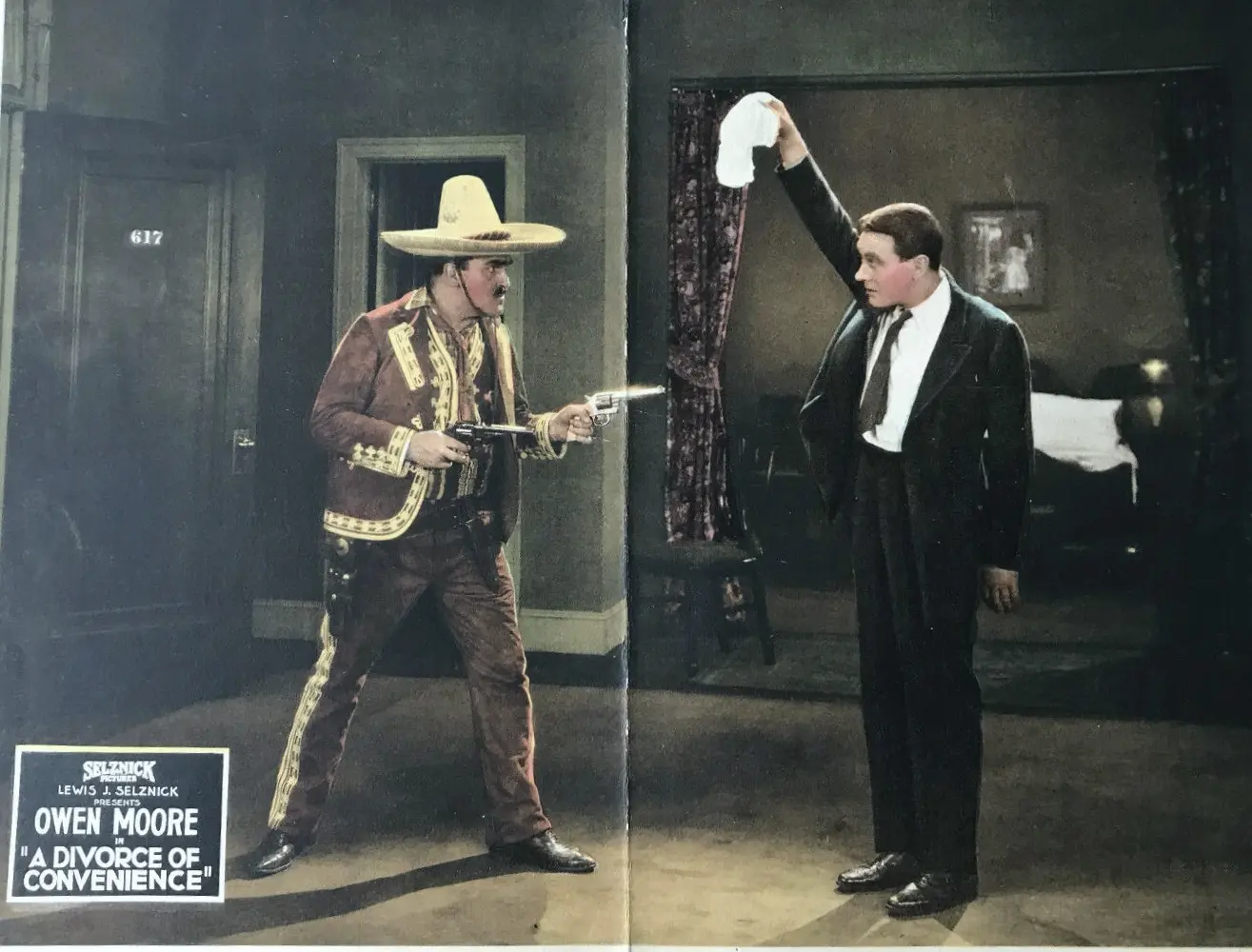
The plot takes a darker, yet still comically charged, turn with the introduction of one of Tula’s jealous admirers, played with a menacing edge by Matthew Betz. This character, whose patience has worn thin with Tula's dalliances, perceives Jim as a genuine rival and issues a chilling threat against his life. This moment, rather than plunging the film into pure drama, serves to amplify the farcical elements, pushing Jim to his absolute limit. His response to this existential threat is one of the film’s most memorable sequences: he invites his would-be assailant to dinner. This audacious move sets the stage for a brilliantly choreographed scene, where Jim attempts to maintain a semblance of normalcy, hosting both the enraged admirer and his unsuspecting fiancée, Helen, at the same table. The dinner is a masterclass in comedic timing, with Jim frequently excusing himself to attend to Helen, all while trying to keep the volatile situation from erupting into violence. The tension is palpable, yet the absurdity of the situation keeps the audience on the edge of laughter. It’s a scene that showcases the directorial prowess of Heerman, who expertly balances suspense with humor, a skill that would have been vital in a medium devoid of spoken dialogue.
The ensemble cast, under the direction of Victor Heerman, delivers performances that are both nuanced and perfectly suited to the demands of silent cinema. Nita Naldi, as Tula, is an absolute revelation. Her expressive eyes, subtle gestures, and commanding screen presence convey a character who is complex, alluring, and utterly in control, even when her schemes teeter on the brink of collapse. She avoids caricature, instead crafting a woman whose motivations, while self-serving, are rooted in a desire for personal agency. Her performance here might even be seen as a precursor to the more overt femme fatale roles that would dominate later cinematic periods, demonstrating a similar kind of captivating danger explored in films like The Pool of Flame, which also features strong, enigmatic female characters.
Owen Moore, as Jim Blake, provides the necessary grounding for Naldi's theatricality. His bewildered expressions and frantic physicality perfectly capture the essence of a man caught in a situation far beyond his control. He is the audience's surrogate, navigating the absurdity with a mixture of fear and determination. The chemistry between Naldi and Moore, though unconventional given their characters' dynamic, is undeniable, adding another layer of intrigue to the film. Supporting roles by Katherine Perry as the sweet, unsuspecting Helen, and George Lessey as the dignified Senator Wakefield, contribute effectively to the film’s narrative integrity. Matthew Betz's portrayal of the jealous admirer is particularly noteworthy; he manages to be genuinely threatening without overstepping into cartoonish villainy, a delicate balance crucial for the film's comedic tone.
Victor Heerman's direction is precise and inventive. Heerman, a prolific director and writer, demonstrates a keen understanding of cinematic rhythm, utilizing close-ups, wide shots, and intelligent editing to convey emotion and advance the plot without the aid of spoken dialogue. The pacing of A Divorce of Convenience is brisk, ensuring that the audience remains engaged throughout the unfolding chaos. The visual storytelling is strong, relying on expressive performances and well-crafted scenarios rather than excessive intertitles, a mark of skilled silent film direction. The film's ability to maintain a delicate balance between outright farce and genuine character stakes is a testament to Heerman's vision and the robustness of the screenplay by himself and Sarah Y. Mason. Their writing is witty, intelligent, and surprisingly modern in its exploration of marital discord and personal autonomy. The cleverness of the plot, which twists and turns with delightful unpredictability, sets it apart from more straightforward melodramas of the period, such as Love Never Dies, which, while emotionally resonant, followed a more conventional dramatic arc.
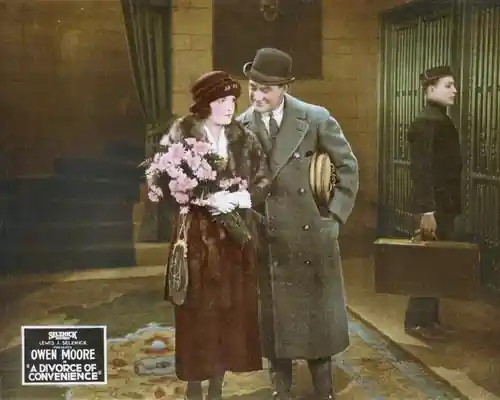
The resolution of the film is as satisfying as it is logical within its own absurd framework. Jim, through a combination of quick thinking and sheer luck, manages to disarm his assailant, bringing the immediate danger to a close. This act of bravery, coupled with his persistent efforts to protect Helen from the truth, ultimately leads to a heartfelt and well-earned reconciliation with his fiancée. The film cleverly avoids a simplistic 'happily ever after' for everyone involved. Tula, the instigator of all this delightful mayhem, returns to the Senator. Her decision is presented not as a defeat, but rather as a pragmatic choice, perhaps having achieved her desired outcome of stirring the pot, or simply recognizing the limits of her charade. Her enigmatic return leaves the audience to ponder her true motivations and the nature of her relationship with the Senator, adding a layer of sophisticated ambiguity to her character. This kind of complex character resolution is a hallmark of more mature storytelling, transcending the often clear-cut morality presented in other films of the era like A Victim of the Mormons, which, while impactful, delivered a more didactic message.
A Divorce of Convenience stands as a testament to the sophistication and enduring appeal of silent cinema. It’s a film that masterfully blends elements of romantic comedy, farce, and social commentary, all without uttering a single word. The expressive power of the actors, particularly Naldi and Moore, carries the narrative with an energy and charisma that transcends the limitations of the medium. The film’s exploration of deceit, the pressures of societal expectations, and the unpredictable nature of love and desire feels remarkably current. It reminds us that human foibles and the pursuit of happiness, however convoluted the path, are universal themes that resonate across generations and technological advancements in filmmaking. The ability of silent films to convey such intricate plots and emotional depth through purely visual means is truly remarkable, showcasing the artistry and innovation of early filmmakers.
For anyone interested in the evolution of cinematic storytelling, or simply in search of a delightful and surprisingly complex silent film, A Divorce of Convenience is an essential watch. It offers more than just historical curiosity; it provides a genuinely engaging and often hilarious experience. The film’s ability to craft such a convoluted yet coherent narrative, to develop characters with distinct personalities, and to elicit genuine laughter and suspense without dialogue is a profound achievement. Its themes of social manipulation and the quest for personal freedom, even at the expense of conventional morality, offer rich ground for discussion, making it more than just a relic but a vibrant piece of cinematic art. This kind of layered storytelling, where appearances are deceiving and motives are complex, can be found in a different vein in films like Secret Sorrow, though the comedic approach here offers a refreshing contrast. The film's cleverness and character depth truly elevate it beyond a simple period piece.
The film's legacy, though perhaps not as widely celebrated as some of its contemporaries, is undeniable among silent film aficionados. It showcases the talents of its cast and crew at a time when the language of cinema was still being forged. The intricate plotting, the vibrant performances, and the sharp wit embedded in every scene make it a compelling example of what early Hollywood was capable of achieving. It’s a reminder that even in the absence of sound, stories could be told with immense power, humor, and emotional resonance. The film doesn't just entertain; it invites contemplation on the nature of convenience, commitment, and the societal masks we all wear. It is a cinematic experience that, despite its age, feels remarkably fresh and relevant, proving that true artistry transcends temporal boundaries.
In essence, A Divorce of Convenience is a delightful journey into a world where scandal and wit dance hand-in-hand. It’s a film that deserves to be rediscovered and celebrated for its cleverness, its performances, and its enduring ability to charm and amuse. From the nuanced acting of Nita Naldi and Owen Moore to the sharp screenplay by Victor Heerman and Sarah Y. Mason, every element coalesces to create a memorable cinematic experience. It serves as a vibrant historical document, illustrating not only the narrative conventions of its time but also the universal human desire to navigate the tricky waters of love, ambition, and societal expectation. This film, much like a well-preserved antique, retains its luster and value, offering insights and entertainment that remain undimmed by the passage of time. Its brilliance lies in its ability to be both a product of its era and a timeless commentary on the human condition, making it a truly exceptional piece of silent film heritage.
IMDb —
1918
Community
Log in to comment.