DbcultAccessing Vault...
Cult Review
Senior Film Conservator
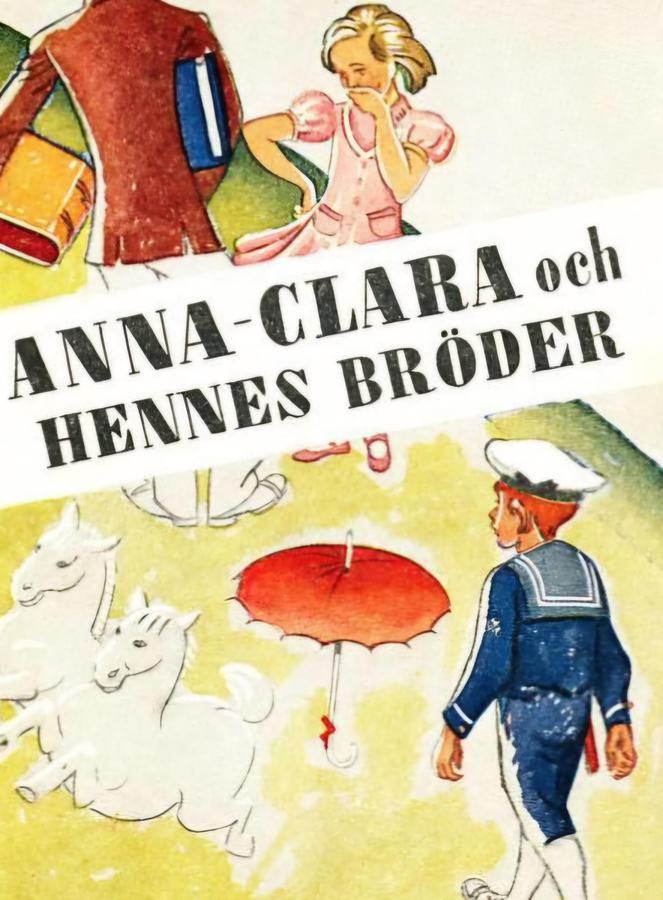
Stepping back into the annals of early Swedish cinema, one encounters a gem like Anna-Clara och hennes bröder, a film that, despite its silent era origins, speaks volumes through its nuanced characterizations and evocative imagery. Directed by Hjalmar Bergman and Hans Zetterström, this cinematic endeavor, born from Bergman's own literary prowess, delves into the tender, often tumultuous, landscape of a young woman's summer. It's a journey not of grand external conflict, but of profound internal shifts, mirroring the subtle yet powerful currents that shape nascent identities. The film, in its quiet contemplation, offers a window into the societal expectations and personal aspirations of its time, presenting a narrative that resonates with surprising contemporary relevance.

At its core, Anna-Clara och hennes bröder is a character study, a delicate exploration of its titular protagonist, Anna-Clara. Portrayed with an understated grace by Ann Britt Ohlson, Anna-Clara is not a heroine of dramatic pronouncements, but one whose story unfolds through fleeting glances, hesitant gestures, and the unspoken weight of her circumstances. Her summer, far from being a carefree idyll, becomes a crucible for self-discovery, a period punctuated by encounters and observations that subtly chip away at the innocence of youth, revealing the complexities of adulthood just beyond the horizon. The film avoids bombast, instead opting for a naturalistic portrayal that allows the audience to immerse themselves in Anna-Clara's evolving perspective.
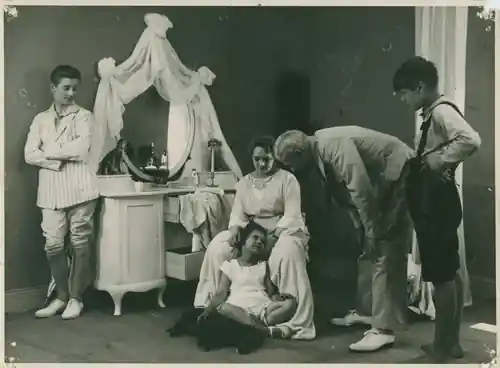
The ensemble cast surrounding Ohlson delivers performances that, even without spoken dialogue, convey significant emotional depth. Hilda Borgström, a towering figure in early Swedish cinema, brings a formidable presence to her role, her every movement and expression contributing to the film's rich tapestry. Similarly, Linnéa Hillberg and Carl Browallius, along with Karin Swanström, Margit Manstad, and Lill-Tollie Zellman, create a believable microcosm of familial and social dynamics. These actors, stalwarts of their era, understood the unique demands of silent film acting, where the eyes and body had to articulate what words could not. Their performances elevate the simple premise, transforming it into a compelling human drama. Sven Scholander and Stig Herlitz also contribute to the film’s authentic portrayal of community and connection.
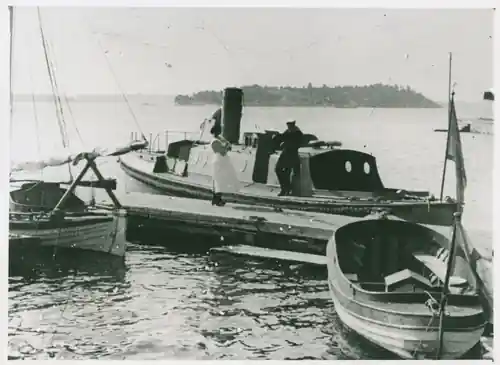
Hjalmar Bergman's influence, both as a writer and director, is palpable throughout the film. Known for his keen psychological insights and often melancholic yet deeply humanistic storytelling, Bergman imbues Anna-Clara och hennes bröder with a distinctive literary quality. The narrative, though simplified for the screen, retains his characteristic sensitivity to the intricacies of human relationships and the often-unseen struggles beneath placid surfaces. His collaboration with Hans Zetterström in directing ensures that the visual language complements the thematic depth, creating a cohesive and immersive experience. One might draw parallels to the introspective character studies found in later European cinema, where the internal world of the protagonist takes precedence over external plot machinations, a quality that makes this film feel remarkably ahead of its time.
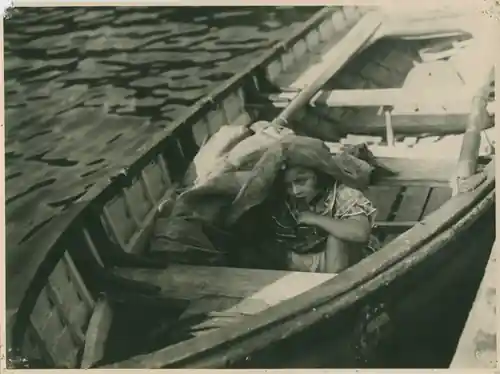
The film's cinematography, while perhaps not as overtly experimental as some of its contemporaries, is nonetheless effective in establishing mood and conveying narrative. The use of natural light, the framing of figures against sweeping landscapes, and the intimate close-ups of faces all contribute to a visual poetry that enhances the emotional resonance. The summer setting is not merely a backdrop; it is an active participant in Anna-Clara's journey, its warmth and light contrasting with moments of internal turmoil, its vastness mirroring her burgeoning sense of possibility and uncertainty. The subtle shifts in tone, from pastoral tranquility to moments of quiet apprehension, are masterfully handled through the interplay of performance and visual composition. This attention to visual detail allows the film to communicate complex emotions without relying on intertitles as heavily as some other silent features.
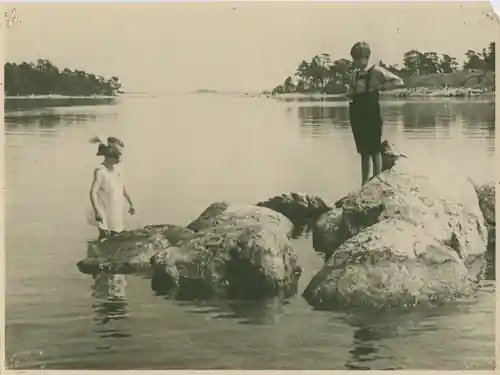
Themes of family, duty, and the search for individual autonomy are woven intricately into the fabric of the story. Anna-Clara's relationships with her brothers are central to her experience, each sibling representing a different facet of the male world she navigates. These dynamics are explored with a realism that eschews simple archetypes, instead presenting complex individuals with their own desires and flaws. The film subtly critiques the societal constraints placed upon women of the era, illustrating how Anna-Clara's choices, or lack thereof, are shaped by the expectations of her family and community. This exploration of gender roles and personal agency makes the film a valuable historical document, offering insight into the social currents of early 20th-century Sweden.
Comparing Anna-Clara och hennes bröder to other films of its period reveals both its unique qualities and its place within the broader cinematic landscape. While it lacks the overt melodramatic flair of something like The Perils of Divorce, its emotional depth is arguably more profound, relying on internal anguish rather than external spectacle. It shares a common ground with films that explore the intricacies of human relationships and societal norms through a feminine lens, akin to the quiet introspection sometimes found in narratives like Through Eyes of Men, though from a distinctly Swedish perspective. The focus on a young woman's awakening also brings to mind the youthful explorations seen in Bab's Matinee Idol, albeit with a more serious and less overtly comedic tone. The film's gentle unfolding of events, where character development takes precedence, contrasts sharply with the more action-driven or mystery-laden plots of contemporaries such as Seven Keys to Baldpate, highlighting its commitment to a different kind of cinematic storytelling.
The narrative's exploration of moral choices and their consequences, albeit subtle, also invites comparison to films that delve into the darker aspects of human nature or societal pressures. While not as explicit as the cautionary tales found in something like Cocain or the transactional relationships depicted in The Price of a Good Time, Anna-Clara och hennes bröder subtly hints at the difficult decisions and compromises that often accompany the transition into adulthood. The film’s quiet contemplation of emerging desires and the social structures that govern them gives it a timeless quality, allowing viewers to connect with Anna-Clara’s internal struggles regardless of the era. The portrayal of family bonds, both supportive and constraining, resonates with the themes explored in films like Pals First, albeit with a focus on sibling dynamics rather than platonic friendship.
IMDb —
1924
Community
Log in to comment.