DbcultAccessing Vault...
5.4/10
Senior Film Conservator
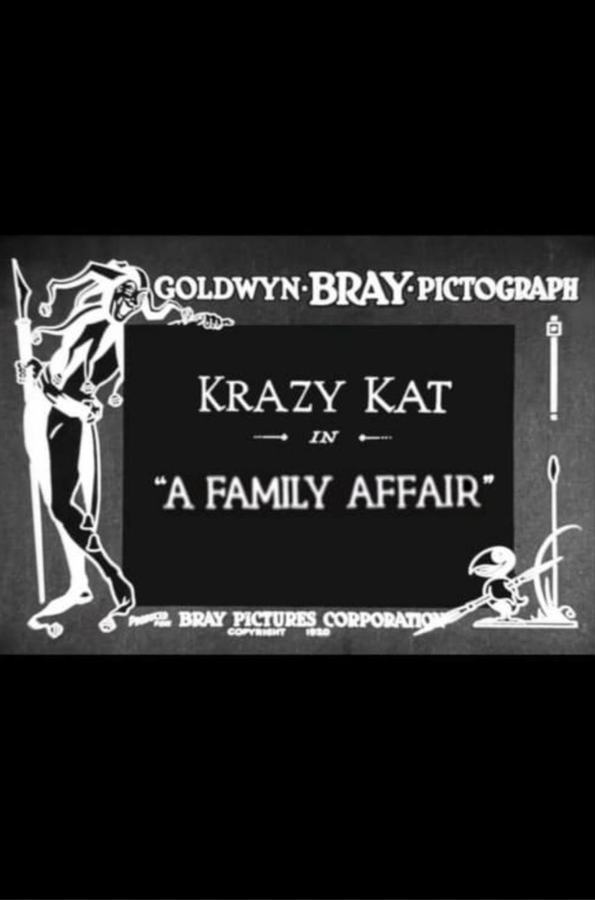
A definitive 5.4/10 rating for a film that redefined the boundaries of cult cinema. A Family Affair remains a cornerstone of transgressive art.
A Family Affair is what happens when the rom-com genome splices with an autofiction podcast recorded inside a tanning bed—luminous, carcinogenic, impossible to ignore.
The film’s engine is not the taboo romance itself but the semiotic whiplash it produces. Every scene toggles between algorithmic self-awareness and raw skin-on-skin ache, like scrolling thirst-traps while your childhood photo album accidentally autoplays in the background.
Herriman, channeling his great-granduncle’s anarchic comic strips, structures acts as Sunday-page panels: gutters of silence, splash-pages of farce, and that ever-hovering brick—here replaced by a Swarovski crystal Oscar the daughter hurls into the pool, fractalizing moonlight into 4,000 gleaming middle fingers.
Nicole Kidman’s matriarch has the translucent confidence of someone who has read every self-help book and then eaten the pages for fiber. She lets silences do the slutty work—eyelids half-mast, sunscreen smeared like war paint—while her line readings ricochet from maternal coo to dominatrix purge in a single breath.
Zac Efron weaponizes his calcified teen-idol cheekbones, allowing panic to seep through the collagen. Watch the minute droop of his left eyelid when the daughter calls him “Dad-stalgia.” That twitch is the entire history of Hollywood’s abusive ageism packed into a micro-expression.
As Ziggy, Joey King detonates the manic-pixie trap. Her comic timing is surgical—she lands punchlines on the downbeat of a heartbeat—but she also lets you see the terror of being 19 and already terrified of becoming irrelevant before the next iOS update.
Director Richard LaGravenese shoots July in L.A. like it’s a wet T-shirt contest staged inside a mirage. Anamorphic lenses smear traffic-light neons across perspiring skin; the camera lingers on condensation sliding down a Diet Coke can as if it were a documentation of capitalistic foreplay. The color grade favors bruised mangoes and turmeric stains—sunset tones that metastasize into moral rot once the LED lights switch off.
The family kitchen, usually the fluorescent heart of American sitcoms, here resembles a deserted aquarium: marble veined like smoker’s lungs, induction hobs pulsing like the bioluminescent flora in some forgotten noir. You half expect a tentacle to yank the blender underwater.
George Herriman’s screenplay is laced with Krazy Kat graffiti: Ignatz’s brick becomes the Swarovski projectile; Offissa Pup’s moralizing morphs into the studio lawyer who keeps texting Efron’s character NDAs mid-coitus. The film even sneaks in a desert dream sequence where Ziggy, wearing cat ears, wanders through Monument Valley reciting lines from Barão do Rio Branco’s diplomatic letters—because nothing lubricates teen angst like 19th-century Brazilian border treaties.
This is not empty postmodernism; it’s a defense against franchise fatigue. Every intertextual Easter egg is an antibody, reminding viewers that stories can mutate rather than reboot.
The needle-drops oscillate between hyper-online micro-genres (hyperpop remix of a 1950s Doris Day track) and raw diary-entry ballads by Phoebe Bridgers. The juxtaposition mirrors how we seduce one another now: algorithmic surprise calibrated to provoke vulnerability, then a sudden drop into sincere confession that feels like being flayed by a silk ribbon.
During the climactic pool-party meltdown, the sound design mutes every splash except the heartbeat inside Efron’s AirPods, thumping at 128 BPM—identical to the average TikTok edit cadence. You realize the film is not scoring the moment; it is diagnosing the platform infection that dictates how these characters metabolize heartbreak.
Where Loves and Adventures in the Life of Shakespeare aestheticized literary cosplay and York State Folks opted for corn-pastoral sincerity, A Family Affair refuses the safety of period distance. It is set precisely eight minutes into the future, the moment when your fridge starts suggesting therapy podcasts based on the ice-cream flavor you binge at 2 a.m.
Unlike The Right to Be Happy, which externalized angst into snow-globe whimsy, this film traps you inside the snow globe and then shakes it until the glass cracks.
And while Peggy and Mary Jane’s Pa flirted with quasi-incestuous subtext under a Hays-Code veil, Netflix’s new release dispenses with subtext the way an OnlyFans creator dispenses with wardrobe—swiftly, unapologetically, monetized.
The final 12-minute rewind sequence—an unbroken Steadicam sprint that literally backtracks through every major set-piece—functions as both memento mori and platform tutorial. It teaches the audience that the algorithmic scroll is not linear; it is a Möbius strip where yesterday’s humiliation becomes tomorrow’s monetizable content. You leave the sofa feeling complicit, as if your eyeballs have been cookie-tracked by feelings.
Yes, the third act pivots on a public awards-show apology that feels engineered for Oscar clip culture. And yes, the therapist character speaks exclusively in Instagram-caption koans (“Your inner child is thirst-trapping your higher self”). These are blemishes, but they are also honest symptoms of a world where mental health itself has become #sponcon.
More nagging is the under-use of a subplot involving the grandmother’s NFT of her own chemotherapy scans. It promises a detour into geriatric techno-capitalist grotesque but evaporates like spilled White Claw on concrete.
At 118 minutes, the film is both too long for TikTok attention spans and too short to metabolize the emotional shrapnel it disperses. That dissonance is intentional. You exit the stream the way you exit a doom-scroll: bleary, half-aroused, vaguely ashamed, and already jonesing for the next hit.
Yet catharsis arrives, sneakily, in a mid-credit scene where Kidman and Efron, now broken up, match on a dating app whose algorithm pairs ex-lovers for sponsored content. They burst out laughing. The laugh is not redemptive; it is the sound of resignation to the loop. And because the film refuses to comfort you with closure, it achieves the rarest rom-com feat—it makes the rom feel conditional and the com feel like a defense mechanism.
Rating: 4.5 out of 5 bricks to the cranium.
If you binge it on date night, prepare to spend the ensuing week side-eyeing your partner’s phone and re-evaluating every heart-emoji transaction. If you watch it alone, keep a journal and a glass of something stronger than celery juice. Either way, the aftertaste is grapefruit-bitter, tequila-potent, and weirdly nutritious—like a melancholic vitamin gummy you can’t stop chewing.
IMDb 7.2
1923
Community
Log in to comment.