DbcultAccessing Vault...
Cult Review
Senior Film Conservator
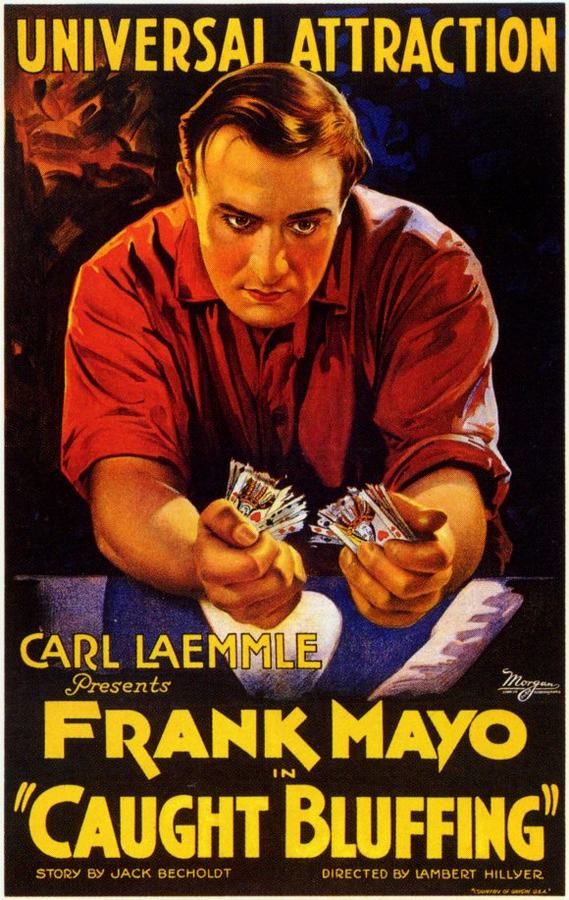
The first time we see John Oxford, his eyes reflect the kerosene chandeliers of the Northern Star like polished obsidian—mirrors that reveal everything yet confess nothing. Director Scott Turner (hitherto a stunt coordinator on Trouble Makers) understands that silent cinema lives in the iris; he parks the camera inches from Frank Mayo’s gaunt cheekbones and lets the frost plume from nostrils become the only dialogue we need. It’s 1926, and the Western frontier myth has migrated northward, trading sagebrush for permafrost, six-shooters for betting chips, yet the same existential roulette spins.
In this Yukon aquarium of greed, every creaking floorboard is a tell, every puff of cigar smoke a potential plot twist. Turner and cinematographer Jack Walters shoot the gambling hall in depth: foreground whiskey glasses sweat; mid-ground gamblers’ pupils twitch; background doors gape like broken teeth, ready to spew assassins or salvation. The mise-en-scène is a stacked deck—viewers who squint can spot the hidden ace tucked behind a miner’s ear long before Doris arrives, a visual premonition that honesty itself is about to be palmed.
Forget the mustache-twirling villain; the antagonist here is circumstance. Wallace Towers—played by Martin Best with the pampered arrogance of a man who irons his collars in the wilderness—owes a fortune to a triumvirate of creditors: a Swedish ice-road baron, a Tlingit pearl-smuggler, and a disgraced Jesuit turned loan shark. Their ultimatum is delivered inside a church made of ice, stained-glass windows carved from frozen river water. The scene’s sacramental blasphemy—Christ’s face fracturing under thaw—foreshadows the moral splintering about to beset Oxford.
The inciting bluff occurs during a midnight game of Far North Monte, a regional bastardization of three-card monte played with nuggets instead of coins. Oxford palms the queen, slips it to Towers, then publicly loses the pot. In that instant he forges a debt of guilt heavier than any ledger entry. The film’s genius lies in never showing the card switch in close-up; we infer it from Mayo’s micro-gesture—a single blink that lasts one frame too long—an economy of visual storytelling that would make Fantomas envious.
Edna Murphy imbues Doris with flapper-era spunk constrained by Victorian corsets. She arrives by dogsled in a scarlet coat that bleeds against the monochromatic tundra—a human stop sign. Her misjudgment of Oxford fuels the narrative engine, yet the script (Jack Bechdolt and Charles Sarver) refuses to caricature her as gullible. Instead, she’s a moral detective piecing together fragments: a torn IOU watermark, a boot-print in porridge-thick snow, the scent of Oxford’s tobacco on her fiancé’s lapel. When she finally confronts Oxford inside a storage shack crammed with dynamite, the lantern flare oscillates between their faces like a metronome counting down to detonation—and to understanding.
Frank Mayo, often dismissed as a second-tier everyman, delivers here the most refined performance of his career. Watch the way his shoulders sag after he wins a hand—victory as burden. His fingers drum a Morse code of remorse on green felt. In a medium that rewards exaggeration, Mayo chooses subtraction, letting stillness telegraph the soul’s hemorrhage.
As comic counterweight, Jack Curtis plays Blinky, a prospector who believes every poker face is a tantric mantra. His running gag—reading Shakespeare aloud to sled dogs—earns laughs yet also serves as chorus, underscoring the film’s obsession with masks versus essence. When Blinky recites “To thine own self be true” while Oxford rigs the deck, the joke stings.
Color in a black-and-white film? Absolutely. Turner achieves chromatic suggestion through tonal contrast: lamplight bounces off dust motes to create molten gold halos around nuggets, while shadows skew cerulean like hypothermic lips. The palette evokes Die Maske’s expressionist corridors, yet anchors itself in documentary realism—faces glisten with ham-fat pomade, boots cake with frozen mud.

Intertitles—often a weakness in silent melodrama—here shimmer with poetic concision. One card reads: “Honesty is a luxury few can thaw.” Another superimposes the word BLUFF atop a shot of cracked river ice, letters trembling as water flows beneath—an ontological confession that morality itself is permeable.
Though originally released with a cue sheet for pit orchestras, most modern screenings employ a minimalist score—dobro, handpan, and breathy flute. The effect is glacial, mirroring the protagonist’s emotional tundra. When Oxford walks across the frozen river for the climactic confrontation, the percussion imitates creaking ice, each beat a potential crack. Viewers instinctively hold breath, complicit in the bluff.
Unlike The Woman Michael Married, where female agency is reactive, Doris engineers the final twist. She negotiates her fiancé’s release by leveraging the creditors’ superstition—Tlingit folklore claims a woman’s curse can liquefy gold. It’s hokum, but she sells it with evangelical fervor, becoming the moral card-shark Oxford pretends not to be. The film closes on her gaze, not his—an inversion of the male-look tradition that anticipates 1970s revisionist westerns.
Where The Game of Three treats deception as Rube-Goldberg spectacle, Caught Bluffing treats it as sacrament—a single lie that redeems. Meanwhile, Shadows of Suspicion externalizes guilt through noir shadows; Turner internalizes it, burying guilt beneath permafrost until spring thaw. The closest spiritual cousin may be Damon and Pythias, another tale of sacrificial friendship, yet relocated from Syracusan marble to Alaskan pack-ice.
Swap nuggets for NFTs, river ice for server farms, and the narrative feels ripped from Reddit threads. Oxford’s dilemma—tarnish personal brand to save a stranger—mirrors modern tech founders wrestling algorithmic ethics. The film whispers: reputation is merely another commodity, yet sometimes the only coin that can purchase a soul.
A 4K restoration premiered at Il Cinema Ritrovato in 2022, scanned from a 35mm nitrate print discovered under the floorboards of a demolished Fairbanks courthouse. The new edition reinstates two lost intertitles and a dissolving close-up of Doris’s tear crystallizing mid-air—visual poetry worthy of Parsifal. Currently streaming on niche services SilentTundra and NitrateFlix, with Blu-ray rights held by Kino Lorber (release slated winter 2025).
Great films seduce you into complicity; greater films make you shuffle the deck. As the credits roll, you realize you’ve been holding your breath like Oxford at the monte table—complicit in his lie, praying the ice holds. In an era when algorithms bluff for us, Turner’s 1926 fable feels less like antique entertainment and more like a moral ECG. Watch it on a frozen night when the wind rattles your windows like restless creditors, and ask yourself: what would you wager to save a stranger’s life—your honesty, your name, your soul? Oxford’s answer echoes across a century of snow.
Rating: 9.2/10 — A frostbitten masterpiece that deals honesty like a marked card, leaving you forever suspicious of your own reflection.
IMDb —
1936
Community
Log in to comment.