Is
Sound Test for Blackmail worth watching today? Absolutely, if you're into film history or just curious about how truly _revolutionary_ sound was back then. It's a must-see for anyone fascinated by Alfred Hitchcock’s early work or the shift from silent to talkie films. If you're expecting a polished narrative or anything resembling modern cinema, you'll probably find it incredibly dull, maybe even a little silly. 😅 This isn't entertainment, really; it's more like a historical document that just happens to be moving pictures.
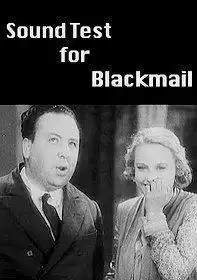
What you get is Alfred Hitchcock himself, looking a bit younger, standing right there. He’s telling actress Anny Ondra what to do, coaching her to speak clearly for the microphone. It’s _wild_ to see him in this role, less the master of suspense, more the patient, slightly awkward tech demonstrator.
Anny Ondra's voice, when it finally comes through, is… something else. It's high-pitched, a little nasal, and her accent is _very_ thick. You can tell she's struggling a bit with this new tech, trying to find her rhythm. There’s a moment she's asked to repeat lines, and you almost hear the crackle of the new equipment itself trying to keep up.
The whole thing feels so _raw_, like someone just pointed a camera and a mic at them and said, "Alright, talk!" The dialogue they come up with is pretty silly, too. They chat about getting arrested, a knife… just a tiny, humored snippet designed purely to test the recording. It's not a script, it’s just _words_ being tried out.
You notice little things. The way Hitchcock points, almost a bit stiff. The slight hesitation in Ondra's delivery, like she's still getting used to her own voice being amplified and recorded. It's such a quick, almost brutal shift from the silent era, and you feel that transition in every single frame.
This short clip really makes you _feel_ how much of a game-changer sound was. Before this, actors didn't have to worry about how their voice sounded on screen. Now, suddenly, it's everything, and you can almost sense the pressure of this new technology on their faces.
It's not really a movie in the way we think of movies. It's a _moment_. A snapshot of cinema figuring itself out, making that first, uncertain step. And that, I think, makes it _fascinating_. 🧐 It makes you appreciate how far we've come, and also how brave these early pioneers were, just winging it.
The "film" stops abruptly, of course. It’s not meant to have an ending, just a quick, almost mundane, experiment that changed everything. You watch it and think, "Wow, this is where it really clicked for them." And then you want to go watch
Blackmail again, just to hear how it all turned out in the actual picture.