DbcultAccessing Vault...
Cult Review
Senior Film Conservator
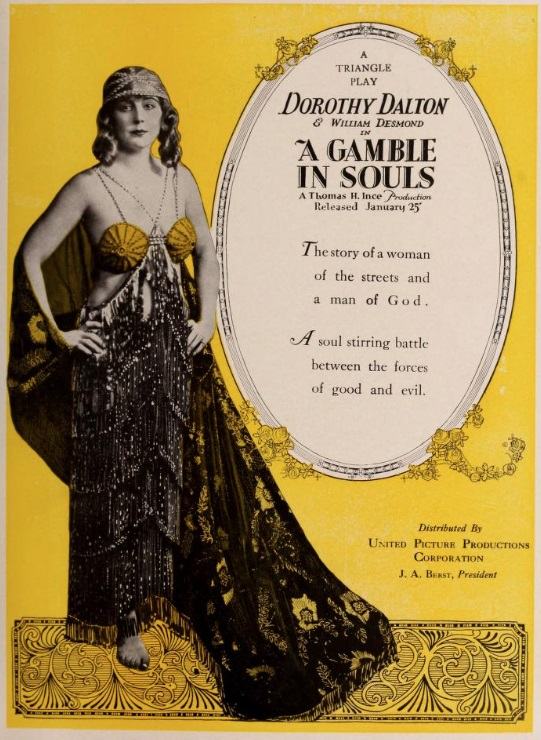
The silent era, a veritable treasure trove of cinematic exploration, frequently delved into the profound moral quandaries that define the human condition. Among its many compelling narratives, A Gamble in Souls, a 1920 release, stands as a fascinating testament to this artistic inclination. Directed with a keen eye for dramatic irony and psychological depth, this film, penned by Lanier Bartlett, presents a narrative that is both timeless in its exploration of love and faith, and distinctly a product of its time in its portrayal of societal mores. It's a journey from the gritty urban underbelly to the untamed wilderness, where the raw forces of nature strip away artifice, revealing the fundamental truths of the heart.
At its core, the film introduces us to Arthur Worden, portrayed with an earnest intensity by P. Dempsey Tabler. Worden is a figure of fervent conviction, dedicating his life to running a mission in the notorious Barbary Coast of San Francisco. This setting itself is a brilliant stroke of narrative design, a crucible of vice and desperation where spiritual salvation often feels like a distant, improbable dream. His mission is not merely a building; it is a battleground for souls, a beacon of hope against the encroaching darkness. Tabler imbues Worden with a certain gravitas, a rigidity that speaks to his unwavering belief, yet hints at a deeper, perhaps unexamined, vulnerability beneath the surface.
His foil, and ultimately his unexpected companion, is Freda Maxey, brought to vivid life by the remarkable Dorothy Dalton. Maxey is a chorus girl, a denizen of the very world Worden seeks to redeem. Her initial encounter with the preacher is one of sardonic amusement, a dismissive scoff at his invitation to attend services. Dalton’s portrayal of Freda is a masterclass in silent film acting, conveying a vivaciousness, a world-weary cynicism, and an underlying resilience through her expressions and body language. She is not merely a temptress or a 'fallen woman' stereotype; she is a woman who has navigated a harsh world on her own terms, her hardened exterior a defense mechanism against a society quick to judge. This initial clash sets a powerful precedent: two individuals from diametrically opposed worlds, each convinced of the righteousness or pragmatism of their own path, destined for an unforeseen collision.
The narrative truly ignites with their second, highly improbable meeting aboard a ship. This device, a classic of storytelling, serves to remove the characters from their familiar environments, stripping away the societal constructs that define them. Freda is bound for Europe, perhaps seeking a fresh start or new adventures, while Worden is en route to the Orient, a grander, more ambitious stage for his soul-saving endeavors. The vastness of the ocean, the enclosed space of the vessel, and the shared journey itself begin to subtly erode the initial antagonism, hinting at the shared humanity beneath their disparate roles. It’s a clever way to force proximity, to allow for observation and perhaps, grudging respect, before the true test begins.
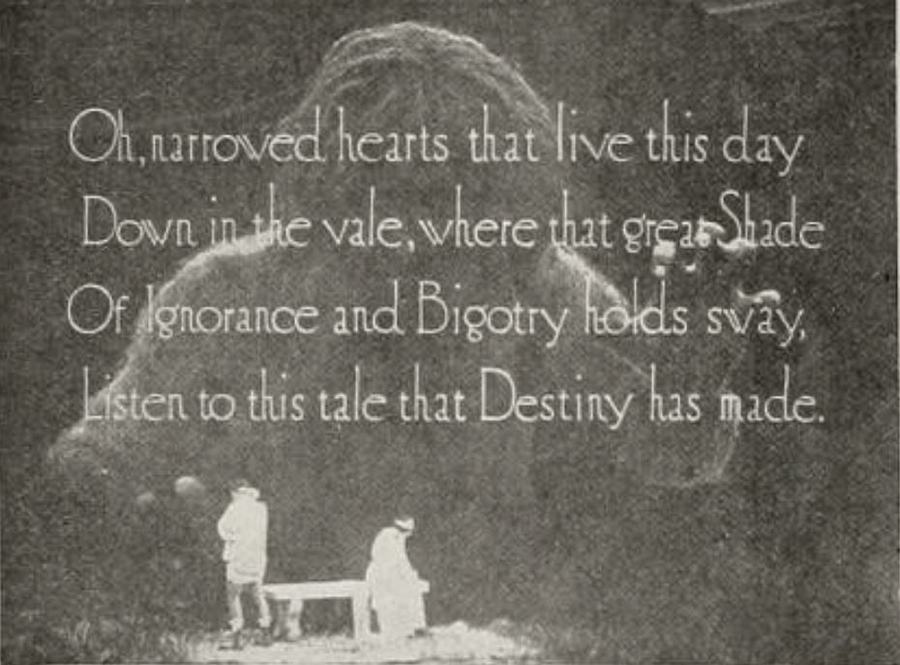
Then comes the pivotal event: the shipwreck. This is not merely a plot device; it is a profound metaphor. The sudden, violent destruction of the ship symbolizes the shattering of their established lives, their beliefs, and their social identities. Washed ashore on a distant, isolated island, they are reduced to their most primal selves. There are no Barbary Coast missions here, no European stages, no societal expectations. Only the raw, indifferent power of nature. This setting is crucial, transforming the film from a social drama into a survival tale, and more importantly, a psychological exploration of two souls stripped bare. The island becomes a Garden of Eden, a place of innocence and new beginnings, but also a wilderness where the veneer of civilization is peeled away.
The subsequent days of close companionship on this desolate isle are where the true magic of the film unfolds. The initial antagonism, born of societal prejudice and misunderstanding, slowly but surely dissipates. Survival necessitates cooperation, shared vulnerability fosters empathy, and the absence of external judgment allows for genuine connection. Freda, the brazen dancer, finds herself relying on the preacher’s practical skills and perhaps, his unwavering moral compass, while Worden, the self-righteous evangelist, is confronted by Freda’s resilience, her pragmatism, and perhaps, a deeper decency he had initially dismissed. It’s a beautiful, gradual unfolding, depicted through subtle glances, shared struggles, and moments of quiet understanding – hallmarks of effective silent film narration.
The blossoming of love between them is presented not as a sudden, inexplicable passion, but as an organic outgrowth of shared experience and mutual respect. This is where A Gamble in Souls truly shines, portraying affection as something forged in the crucible of adversity. However, for Arthur Worden, this nascent love is not a simple joy. It ignites an intense inward struggle. He, a man whose life has been defined by spiritual purity and the condemnation of earthly desires, perceives this burgeoning affection as nothing more than 'primitive passion.' His faith, once an unshakeable anchor, becomes a source of profound internal conflict. Is this love a sin? A test? A betrayal of his calling? This internal turmoil is eloquently conveyed by Tabler, whose performance captures the anguish of a man torn between his deeply ingrained beliefs and the undeniable stirrings of his heart. It's a thematic resonance found in films like The Inner Struggle, where characters grapple with profound personal and moral dilemmas.
Dorothy Dalton's Freda Maxey, in contrast, approaches this love with a more pragmatic, perhaps even healthier, acceptance. Having lived a life less constrained by rigid moral doctrines, she is more attuned to the genuine emotion, less burdened by guilt or spiritual reckoning. Her quiet strength and unwavering presence become a silent challenge to Worden's internal debate. She represents a different kind of truth, one rooted in human connection rather than divine dictate. The dynamic between them becomes a powerful exploration of the interplay between sacred and profane, spirit and flesh, societal expectation and individual truth.
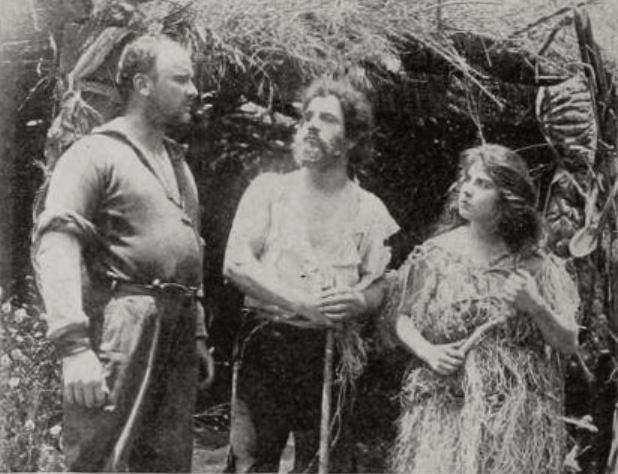
The arrival of another castaway serves as the narrative’s final, ingenious twist. This third party, an external presence, acts as a mirror, forcing Worden to see his relationship with Freda through new eyes. In the face of this outsider, perhaps perceiving a threat or simply a stark contrast to their isolated intimacy, Worden is compelled to defend, to claim, to protect his bond with Freda. This act of affirmation, born not of abstract theological reasoning but of visceral human instinct, shatters his self-imposed illusion. He realizes that what he had dismissed as 'primitive passion' is, in fact, a pure, profound love, one that transcends his former dogmas and perhaps, even enriches his understanding of spirituality itself. It’s a moment of profound recognition, a spiritual awakening born not in a mission hall, but on a desolate beach, under the indifferent gaze of the sea and sky.
The film’s exploration of moral transformation and the re-evaluation of deeply held beliefs finds echoes in other powerful silent narratives. One might draw parallels to The Manxman, where characters face intense moral and emotional trials, or even The Penitentes, which similarly delves into spiritual conflict and redemption. The raw emotionality and moral complexity are handled with a sensitivity that belies the common misconception of silent films as simplistic melodramas. Indeed, the very absence of spoken dialogue often forced filmmakers and actors to convey nuance and depth through visual storytelling, a skill beautifully demonstrated here.
The visual language of A Gamble in Souls is also noteworthy. The contrast between the dark, bustling streets of the Barbary Coast and the pristine, elemental beauty of the isolated island is striking. The cinematography, while perhaps not groundbreaking for its time, effectively serves the narrative, immersing the viewer in the characters’ changing circumstances. The close-ups on Dalton and Tabler are particularly effective in conveying their internal states, allowing the audience to witness the subtle shifts in their emotions – from disdain to curiosity, from fear to affection, from torment to acceptance. This reliance on facial expression and gesture is a hallmark of the era, and both lead actors deliver performances of considerable power.
Lanier Bartlett’s screenplay, despite the limitations of the medium, constructs a compelling psychological drama. The evolution of Arthur Worden, from a rigid, judgmental man of God to one capable of embracing a more expansive, humanistic form of love, is the film’s central triumph. It suggests that true spirituality might not lie in adherence to dogma, but in the capacity for genuine connection and empathy, even with those initially deemed 'unworthy.' Freda Maxey, too, undergoes a transformation, not necessarily one of moral conversion, but of finding a love that sees beyond her past, offering her a sense of belonging and acceptance she may never have known.
In conclusion, A Gamble in Souls is far more than a simple adventure romance. It is a thoughtful, emotionally resonant drama that tackles profound themes of faith, prejudice, redemption, and the transformative power of human connection. Its enduring appeal lies in its sophisticated portrayal of character arcs and its willingness to challenge conventional morality. For those interested in the rich tapestry of early cinema, particularly films that explore the depths of the human spirit amidst extraordinary circumstances, this silent gem offers a compelling and deeply satisfying experience. It reminds us that sometimes, the greatest spiritual awakenings occur not in sacred halls, but in the desolate corners of the world, forged by the most unexpected of companions.
IMDb —
1921
Community
Log in to comment.