DbcultAccessing Vault...
Cult Review
Senior Film Conservator
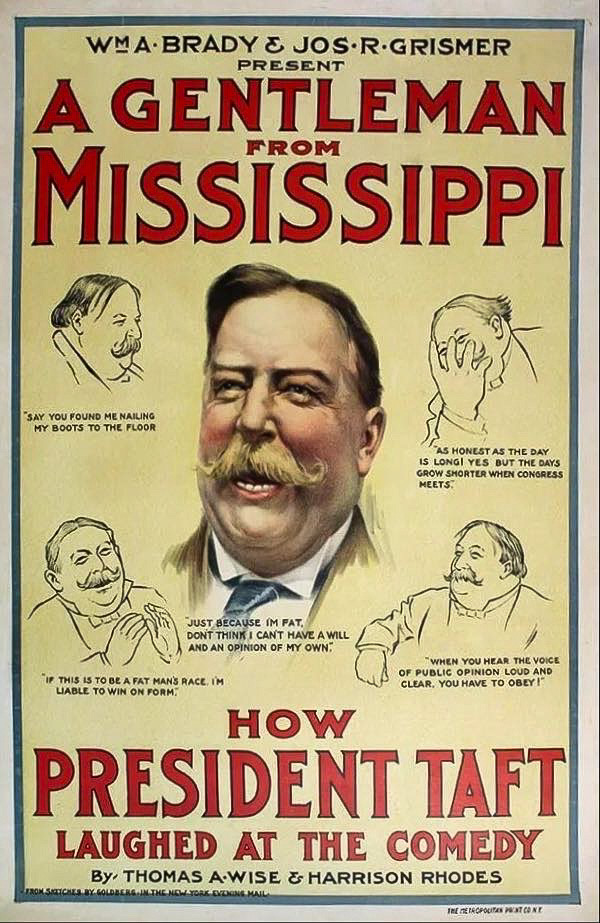
In the annals of early American cinema, where flickering images often told tales of grand adventure, burgeoning romance, or stark morality, certain films stand out for their audacious engagement with the intricate machinery of politics. Among these, the 1914 production, A Gentleman from Mississippi, emerges not merely as a historical artifact but as a surprisingly prescient and sophisticated commentary on the perennial struggle between probity and corruption within the halls of power. Directed by George L. Sargent and written by Thomas A. Wise and Harrison Garfield Rhodes, this silent drama, though perhaps less celebrated than some of its contemporaries, offers a compelling narrative rich with intrigue, character development, and a surprisingly nuanced resolution that transcends simplistic good-versus-evil dichotomies. It's a film that asks us to consider the price of integrity and the cunning required to uphold it in a world seemingly designed to compromise.
At the heart of this unfolding drama is William H. Langdon, portrayed with a captivating blend of earnestness and vulnerability by Thomas A. Wise. Langdon, a newly elected Senator from Mississippi, arrives in Washington, D.C., a figure of almost pastoral innocence. His life, having been largely confined to a plantation forty miles from the nearest railroad, has left him woefully unprepared for the sophisticated machinations that define the national capital. He is, in essence, a tabula rasa, a canvas upon which the city's seasoned political artists seek to paint their own self-serving masterpieces. This initial portrayal of Langdon as a well-meaning but utterly outmaneuvered neophyte is crucial, setting the stage for his dramatic transformation. His two daughters, Carolina and Hope, accompany him, embodying different facets of the Southern belle archetype, with Hope, in particular, playing a pivotal role in the narrative's resolution.
Almost immediately upon his arrival, Langdon's political education begins, albeit from an unexpected quarter. He hires "Bud" Haines, a sharp-witted newspaperman, as his secretary. Haines, played by Chester Barnett, represents a different kind of Washingtonian – cynical, observant, and possessing a streetwise acumen that contrasts sharply with Langdon's genteel credulity. Their initial dynamic is one of cautious respect, a symbiotic relationship where Langdon offers legitimacy and Haines provides a much-needed connection to the city's pulse. This relationship rapidly evolves into something far more significant as the plot thickens.
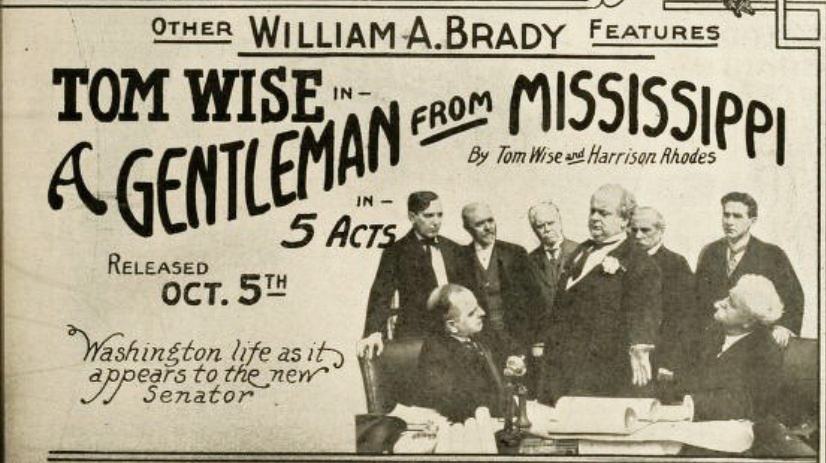
The true antagonists of the story are soon revealed: Congressman Charles Norton, also from Mississippi, and Senators James Stevens and Horatio Peabody from Pennsylvania. These seasoned politicos are embroiled in a classic land speculation scheme, a trope that resonates throughout American political history. Their plan is simple yet audacious: lobby for a naval station to be built in Altacola, Mississippi, a location where they have surreptitiously purchased all the surrounding land. The moment the bill passes, the government would be forced to buy their holdings at exorbitant prices, netting them a fortune. Langdon's support, as a Mississippi Senator, is vital to their success, and they set about securing it with a chilling blend of charm and coercion.
The film deftly illustrates the insidious nature of such corruption, showing how it ensnares even those tangentially connected. Norton, a particularly Machiavellian figure, not only induces Langdon's son to invest a substantial $30,000 in the Altacola project but also cunningly diverts the fortune left to Langdon's daughter by her mother into the same fraudulent scheme. The added layer of betrayal comes from Norton being Hope Langdon's accepted suitor, making his actions a profound personal affront to the family he purports to cherish. This familial entanglement elevates the stakes beyond mere political maneuvering, injecting a potent emotional core into the narrative. The viewer feels the weight of Langdon's impending personal and political ruin, a consequence of his trust in seemingly respectable figures.
As the conspiracy gathers momentum, Bud Haines, with his journalist's nose for a story and his secretary's access, begins to piece together fragments of the truth. He becomes a significant "thorn in the side" of the conspirators, his probing questions and astute observations threatening to unravel their carefully constructed façade. Recognizing the danger he poses, the crooked politicians resort to classic smear tactics. They report to each other that Haines has played false, investing in the land project himself, thus orchestrating an estrangement between him and the unsuspecting Senator Langdon. This moment of doubt and division is a testament to the conspirators' cunning, demonstrating their ability to manipulate perceptions and sow discord among potential adversaries.
However, the emotional heart of the film, and indeed the catalyst for the truth's ultimate emergence, lies in the burgeoning romance between Haines and Hope Langdon, played with understated grace by Evelyn Brent. Hope, deeply in love with Haines, cannot bear to see him unjustly maligned. In a pivotal scene, she reveals the full extent of the plot to him, confirming his suspicions and providing the crucial missing pieces of the puzzle. This act of trust and love not only rehabilitates Haines's reputation but also arms him and, by extension, her father, with the knowledge needed to fight back. It underscores the film's subtle suggestion that personal connections and genuine human relationships can often cut through the dense fog of political deception. The revelation is a turning point, transforming a political drama into a race against time for justice.
Upon learning the full extent of the duplicity, Senator Langdon and Bud Haines face a dire choice. Exposing the fraud directly would not only ruin the conspirators but also drag Langdon's family name through the mud, implicating his son and potentially tarnishing his daughter's inheritance. This moral quandary is where the film truly shines, moving beyond a simple narrative of good triumphing over evil. Langdon, despite his initial naiveté, demonstrates a profound strategic intellect. He realizes that a direct confrontation is a losing battle for his family. Instead, he devises a brilliant and audacious plan, a gambit that forces the conspirators into an unexpected corner.
Before his maiden speech in the Senate, Langdon confronts Stevens and Peabody. Through the sheer force of his newfound resolve and the credible threat of exposure, he compels them to cooperate with his revised narrative. The power dynamic shifts entirely; the hunters become the hunted, forced to participate in their own strategic undoing. This scene, though likely conveyed through intertitles and expressive acting in the silent era, must have been a tense and satisfying moment for contemporary audiences, showcasing a principled man outsmarting his corrupt adversaries at their own game.
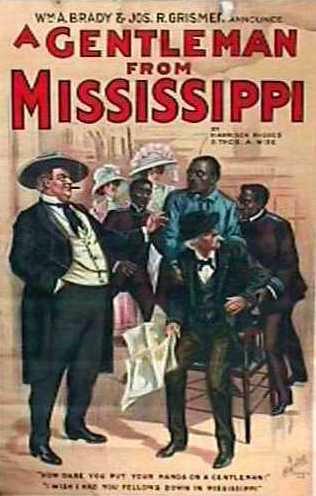
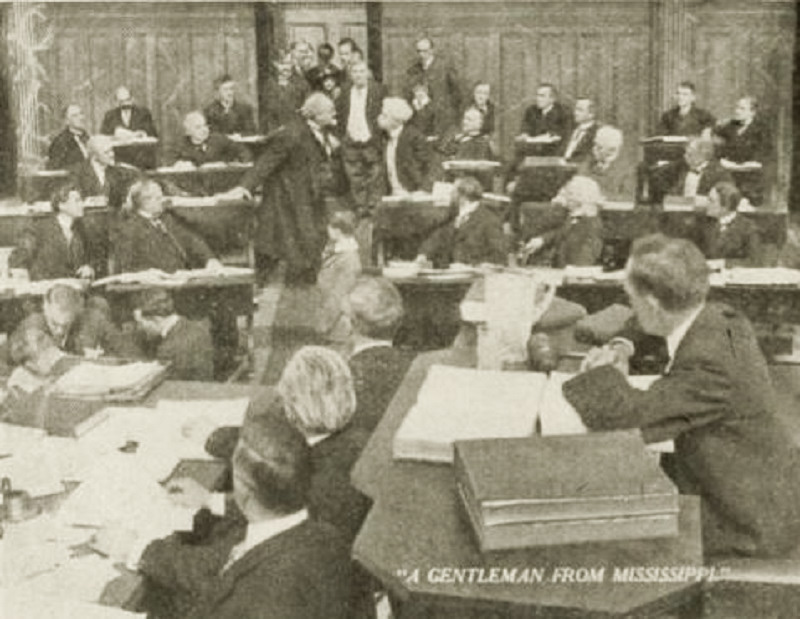
The climax arrives with Langdon's maiden speech. Instead of denouncing the conspirators, he delivers a stunning rhetorical flourish that would have left contemporary audiences gasping. He declares that he and the conspirators—now forced accomplices in his counter-scheme, their faces a mixture of fear and reluctant compliance—had themselves bought up the Altacola land. But not for personal gain; rather, to save the national treasury from being looted by an earlier, even larger conspiracy they had supposedly uncovered. This masterful stroke of political jujitsu transforms a personal act of corruption into a public act of patriotism. It’s a breathtaking twist, allowing Langdon to expose the fraud without destroying his family, while simultaneously forcing the very individuals who sought to exploit him into becoming unwilling heroes in his narrative. The sheer audacity of this move—to co-opt the very mechanism of their deceit and repurpose it for public good, albeit through a carefully constructed fabrication—speaks volumes about the film's sophisticated understanding of political theater and the art of the possible. Congressman Norton, lacking the leverage of the Senators and too deeply implicated to be salvaged, is disgraced and sent on his way, a clear casualty of Langdon's strategic brilliance, his downfall serving as a stark warning to other would-be opportunists.
Thomas A. Wise's portrayal of Senator Langdon is undoubtedly the anchor of the film. His journey from wide-eyed innocence to shrewd strategist is compelling, relying heavily on the expressive physicality and nuanced facial performances characteristic of the silent era. Wise manages to convey both the character's initial gullibility and his underlying moral fortitude, making his eventual triumph all the more satisfying. The subtlety with which he transitions from a man easily swayed by flattery and false promises to one capable of orchestrating a complex counter-scheme is remarkable. This isn't a sudden, unbelievable shift, but rather a gradual awakening, catalyzed by betrayal and fortified by the fierce loyalty to his family and the public trust he implicitly holds. The silent film medium, often reliant on exaggerated gestures, here finds moments of profound quiet intensity, allowing Wise's internal struggle and ultimate resolve to shine through.
Chester Barnett, as Bud Haines, provides an excellent foil. His quick movements, sharp gaze, and often cynical demeanor mark him as the quintessential urban newspaperman, a stark contrast to Langdon's Southern gentility. Evelyn Brent, as Hope Langdon, brings a quiet strength and emotional depth to her role, particularly in the scene where she reveals the plot to Haines. Her performance is crucial in bridging the gap between the personal stakes and the political machinations.
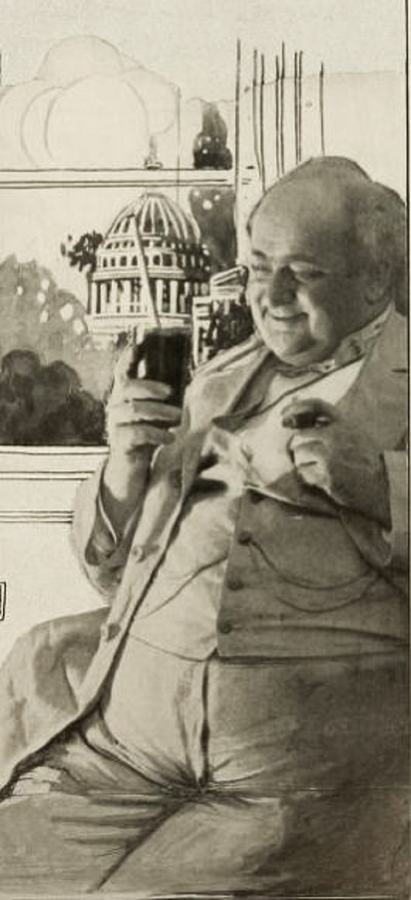
The writing by Wise and Harrison Garfield Rhodes is remarkably sophisticated for its time. The plot, with its intricate layers of deception, betrayal, and a brilliantly conceived counter-scheme, speaks to a keen understanding of both political maneuvering and dramatic storytelling. The pacing, though perhaps slower than modern audiences are accustomed to, allows for the gradual build-up of tension and the meticulous unveiling of the conspiracy. Intertitles would have been essential in conveying the complex financial and political details, and one can imagine them being crafted with clarity and impact to guide the audience through the narrative's twists and turns. The film, in its construction, demonstrates a growing maturity in cinematic language, moving beyond mere spectacle to engage with substantive social and political themes.
A Gentleman from Mississippi explores several enduring themes that remain relevant today. The most prominent is, of course, political corruption. The film critiques the self-serving nature of certain politicians who prioritize personal enrichment over public service. Yet, it also offers a glimmer of hope, suggesting that even in the most entrenched systems, integrity can, with enough cunning and courage, prevail. Langdon's journey is not just one of exposing corruption, but of understanding the intricate dance required to navigate and ultimately subvert it without sacrificing one's core principles or one's family's well-being.
The film also touches upon the role of the press. Bud Haines, as a newspaperman, embodies the watchdog function of journalism, diligently uncovering truths that those in power would rather keep hidden. His character is a powerful reminder of the importance of an independent and inquisitive press in a democratic society. The interplay between his journalistic instincts and his personal affections for Hope adds another layer to his character, demonstrating that professional duty and personal loyalty can, at times, converge to serve a greater good.
The film's exploration of political corruption resonated deeply with the American public of the early 20th century. This was an era marked by the Progressive movement, which sought to reform government and combat the pervasive influence of trusts and political machines. Scandals were not uncommon, and the public was acutely aware of the potential for elected officials to abuse their power for personal gain. A Gentleman from Mississippi, therefore, tapped into a very real societal anxiety and a widespread desire for accountability. It offered a narrative catharsis, demonstrating that even the most seemingly entrenched corruption could be outmaneuvered by a combination of moral integrity and strategic acumen. The depiction of Washington D.C. as a den of vipers, where an innocent like Langdon could easily be devoured, was likely a familiar, if exaggerated, reflection of popular sentiment regarding the capital. This adds a layer of social commentary to the film, making it more than just a personal drama but a reflection of a nation grappling with its own democratic ideals.
While direct comparisons to other films of its immediate era can be challenging given the nascent state of genre definition, one might consider how this film's thematic core resonates with later works. For instance, the theme of an outsider or a morally upright individual confronting a corrupt system is a recurrent one in cinema. While not a direct plot match, the spirit of a character like Langdon, initially naive but ultimately principled and effective, can be seen in the moral struggles depicted in films like John Barleycorn, which, though focusing on alcoholism, similarly tracks a character's journey through challenges to his integrity. The idea of societal corruption, and the fight against it, is a timeless cinematic subject.
Ultimately, A Gentleman from Mississippi concludes with a satisfying resolution. Haines is reinstated as Langdon's secretary and, more importantly, is engaged to wed Hope, signifying the triumph of both professional and personal integrity. The film doesn't shy away from depicting the messy realities of politics, but it ultimately champions the idea that honesty and strategic intelligence can prevail over cynical self-interest. It's a narrative that rewards careful attention, revealing itself as more than just a simple melodrama.
For modern viewers, revisiting such a film offers a fascinating glimpse into the early sophistication of American cinema and its capacity for political commentary. It reminds us that the issues of governmental transparency, ethical leadership, and the vigilance required from both citizens and the press are not new concerns, but rather foundational elements of democratic discourse that artists have explored for over a century. A Gentleman from Mississippi stands as a testament to the enduring power of storytelling to illuminate complex moral landscapes, proving that even in the silent era, films could speak volumes about the human condition and the enduring struggle for justice. It's a compelling argument for the preservation and re-evaluation of these early cinematic treasures, which often hold more depth and relevance than their historical distance might suggest.
IMDb —
1933
Community
Log in to comment.