DbcultAccessing Vault...
6.8/10
Senior Film Conservator
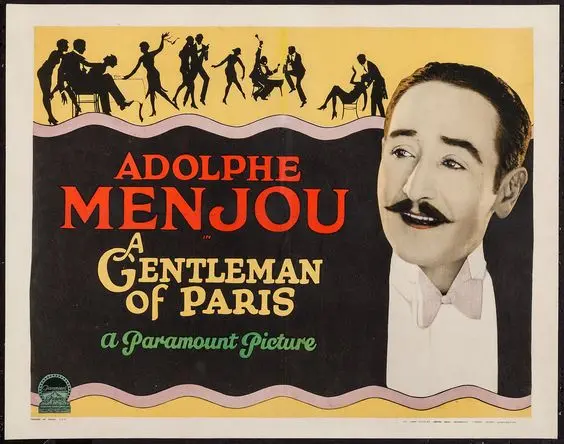
A definitive 6.8/10 rating for a film that redefined the boundaries of cult cinema. A Gentleman of Paris remains a cornerstone of transgressive art.
Is A Gentleman of Paris worth watching in the modern age? Short answer: yes, but with significant caveats. This 1927 silent film offers a fascinating window into early Hollywood's comedic sensibilities and the undeniable charisma of its lead, Adolphe Menjou.
It’s a film that will resonate most deeply with cinephiles, historians of early cinema, and those with an appreciation for the subtle art of silent acting. Conversely, audiences seeking fast-paced narratives, explicit dialogue, or overtly progressive themes might find its charm elusive and its pacing deliberate.
This film works because of Adolphe Menjou's magnetic performance, which transcends the lack of spoken dialogue, conveying a complex mix of roguish charm and eventual vulnerability. His physical comedy and nuanced expressions are a masterclass in silent-era acting.
This film fails because its narrative, while engaging for its time, relies heavily on a moral framework that can feel antiquated, particularly the swift forgiveness of a protagonist whose initial actions are less than honorable, and a valet's revenge plot that stretches credulity.
You should watch it if you appreciate the artistry of silent cinema, enjoy character-driven comedies, or are interested in the early career of a prolific writer like Herman J. Mankiewicz, who contributed to its screenplay. It’s a historical artifact that still entertains, if you meet it on its own terms.
At its heart, A Gentleman of Paris chronicles the last gasp of a bachelor’s libertine lifestyle. Our protagonist, a quintessential Parisian noble, finds himself on the precipice of a respectable, arranged marriage. His fiancée and her parents are en route, necessitating a rather awkward, yet comically urgent, series of farewells to his various mistresses scattered across the city.
This delicate balancing act, a performance of contrition and closure, is a testament to his social dexterity, if not his moral rectitude. The film then pivots, exploring the aftermath of his marriage, which is soon marred by a cunningly orchestrated gambling scandal.
The architect of this downfall is none other than his own valet, driven by a simmering, undisclosed resentment. This betrayal, a sharp turn from drawing-room comedy to domestic drama, threatens to shatter the fragile peace of his new marital life. Yet, in a climactic reversal, the valet confesses his scheme, prompted by a flicker of conscience or perhaps a renewed loyalty, ultimately clearing his master's name and paving the way for a somewhat abrupt, but undeniably romantic, reconciliation.
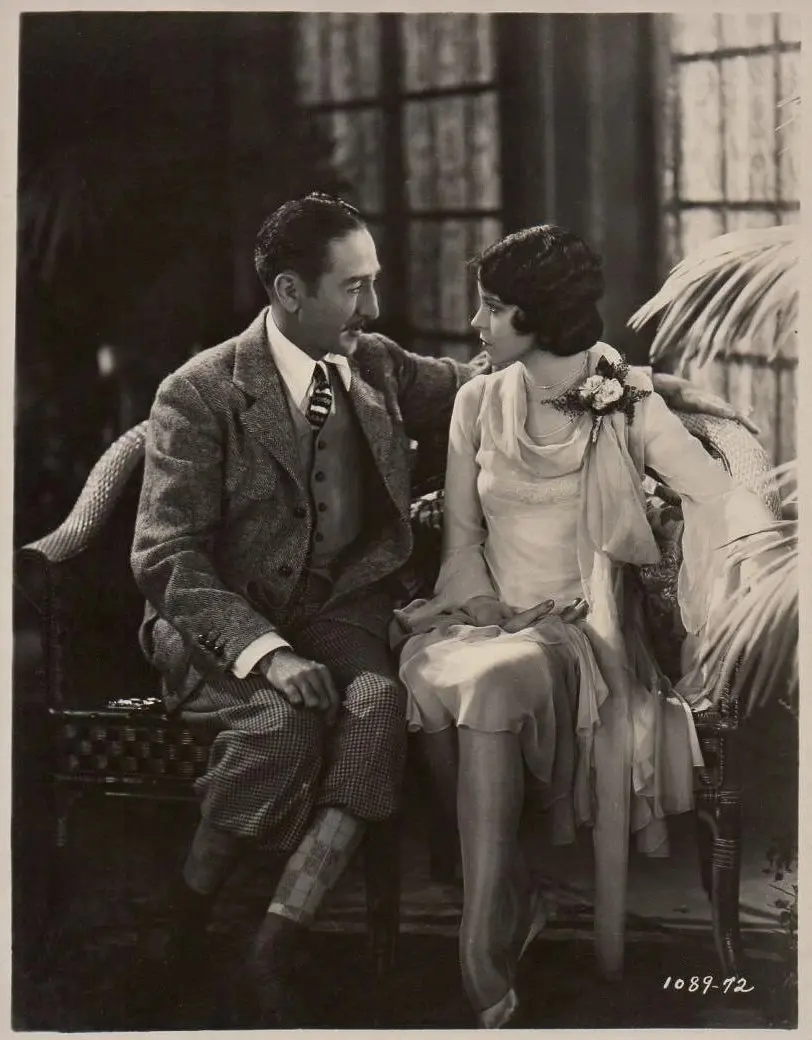
Adolphe Menjou, as the titular gentleman, is the undisputed anchor of this film. His performance is a masterclass in silent-era subtlety, proving that charisma and character depth don’t require spoken words. Menjou's ability to convey a gamut of emotions—from playful flirtation to genuine remorse, from dapper confidence to abject despair—through mere facial expressions and body language is truly remarkable.
Consider the scene where he bids farewell to his mistresses. Menjou doesn't just walk away; he performs a series of distinct, tailored goodbyes, each reflecting the specific nature of the relationship. With one, it's a tender, almost melancholic embrace; with another, a brisk, business-like handshake. This sequence, devoid of dialogue, speaks volumes about his character’s past and his present predicament, showcasing his versatility and comedic timing.
His transformation from a carefree philanderer to a man grappling with the consequences of his actions is not just believable but deeply engaging. Even when his character is at his most morally questionable, Menjou imbues him with a certain charm that prevents him from becoming entirely unlikeable. This is crucial for the audience’s investment in his eventual redemption.
The supporting cast, while not given the same depth, performs admirably within the silent film conventions. Shirley O'Hara, as the fiancée, embodies innocence and vulnerability, providing a stark contrast to Menjou's worldly character. Nicholas Soussanin, as the vengeful valet, manages to convey his simmering resentment and eventual guilt with a palpable intensity, making his sudden confession feel earned, if a little rushed.
While the provided context does not explicitly name the director, the film's style strongly suggests the 'Lubitsch Touch'—a sophisticated blend of wit, elegance, and understated eroticism that became a hallmark of early Hollywood comedies. This film exemplifies that touch with its deft handling of potentially scandalous material, presenting it with a lightness that makes it palatable and entertaining.
The pacing is brisk, especially in the opening acts, as our protagonist navigates his romantic entanglements. The editing effectively builds comic tension, particularly in scenes where he narrowly avoids discovery. The film understands the power of implication, relying on visual cues and the audience's imagination rather than explicit exposition. For instance, the sequence of the farewells is a masterclass in visual storytelling, where each interaction quickly establishes a mini-narrative.
The cinematography, though standard for the era, uses clever framing to emphasize character reactions and relationships. Close-ups are employed judiciously, often to highlight Menjou's expressive face during moments of internal conflict or sly amusement. The sets and costumes are lavish, contributing to the film's sophisticated Parisian atmosphere, grounding the romantic escapades in a believable, if idealized, reality.
The tone shifts from lighthearted romantic comedy to a more serious drama after the marriage and the valet’s scheme. This transition is handled with a commendable degree of fluidity, preventing the film from feeling disjointed. It's a delicate balance, and for the most part, the film maintains it, ensuring that the dramatic stakes feel real without sacrificing the underlying comedic spirit. The film’s ability to pivot without losing its footing is a testament to the directorial vision.
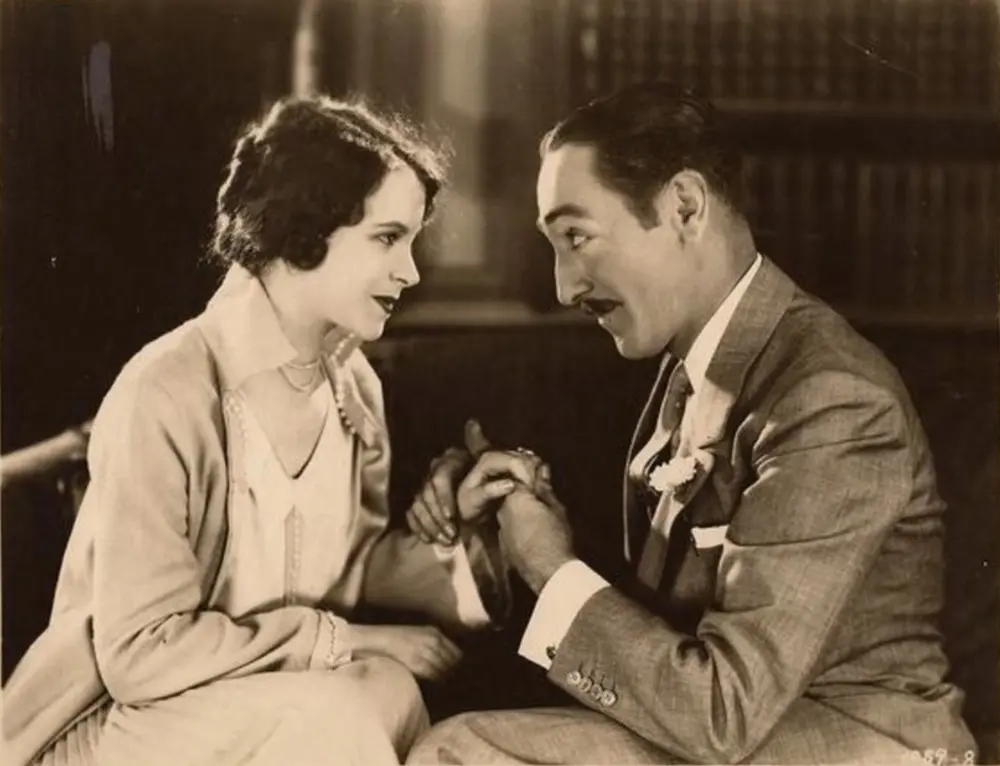
The screenplay, credited to Roy Horniman, Herman J. Mankiewicz, Chandler Sprague, and Benjamin Glazer, is a fascinating artifact given Mankiewicz's later legendary status. The script demonstrates a sharp understanding of character and comedic timing, even within the confines of silent film. The plot, while simple, is effective in setting up conflict and resolution, relying on classic tropes of mistaken identity, social decorum, and redemption.
One could argue that the valet’s sudden change of heart feels a little too convenient, a narrative device designed to neatly tie up loose ends rather than a fully organic character development. However, within the context of 1920s cinema, such resolutions were often accepted as part of the genre’s conventions. The dialogue cards, when used, are pithy and impactful, serving to advance the plot or highlight a character’s personality without bogging down the visual flow.
The strength of the writing lies in its ability to create distinct character voices and motivations, even when communicated non-verbally. The interplay between the noble and his valet, for instance, is subtly etched through their actions and reactions, hinting at a complex history long before the valet’s vengeful plot is revealed. This pre-Mankiewicz Mankiewicz shows flashes of the wit and structural ingenuity that would define his later work, making it a valuable piece for film scholars.
Beneath the surface of romantic comedy and light drama, A Gentleman of Paris offers glimpses of social commentary relevant to its era. It subtly critiques the double standards of aristocratic society, where a man's past indiscretions are easily overlooked for the sake of a respectable marriage, while a valet's personal grievances can lead to drastic, class-driven revenge.
The film touches upon themes of loyalty, betrayal, and the elusive nature of true redemption. The valet's plot, driven by an unstated past injury, speaks to the often-overlooked resentments simmering beneath the surface of rigid social hierarchies. His ultimate confession, rather than being a simple plot device, can be seen as a commentary on the burden of guilt and the surprising power of conscience, even in a supposedly 'vengeful' character.
It’s also an interesting study of masculinity in the 1920s, showcasing a protagonist who is both charmingly flawed and ultimately capable of growth. The film suggests that even a 'gentleman' must eventually confront his past and choose a path of responsibility, albeit one paved with a generous dose of forgiveness. This moral journey, however swift, provides the film with its enduring thematic resonance.
A Gentleman of Paris is more than just a historical curiosity; it’s a genuinely engaging piece of silent cinema. Its narrative, while occasionally showing its age, is elevated by a vibrant lead performance and a directorial touch that understands the power of suggestion and wit. It works. But it’s flawed.
Adolphe Menjou carries the film with an effortless grace, making his character's journey from rake to redeemed husband both believable and endearing. The film's charm lies in its elegant simplicity and its ability to convey complex emotions without a single spoken word. It’s a testament to the power of pure visual storytelling, a skill that feels increasingly rare in today's dialogue-heavy productions.
While its moral compass might seem a tad quaint by today's standards, and the valet's dramatic confession feels like a convenient wrap-up, these are minor quibbles in the face of its overall entertainment value. For those willing to immerse themselves in the unique language of silent film, A Gentleman of Paris offers a delightful and surprisingly sophisticated experience. It's a reminder that true cinematic charm can transcend eras and technologies, proving that some stories, and some performances, are simply timeless. It might not redefine cinema, but it certainly reaffirms the enduring appeal of a well-told tale.
IMDb 5.7
1936
Community
Log in to comment.