DbcultAccessing Vault...
Cult Review
Senior Film Conservator
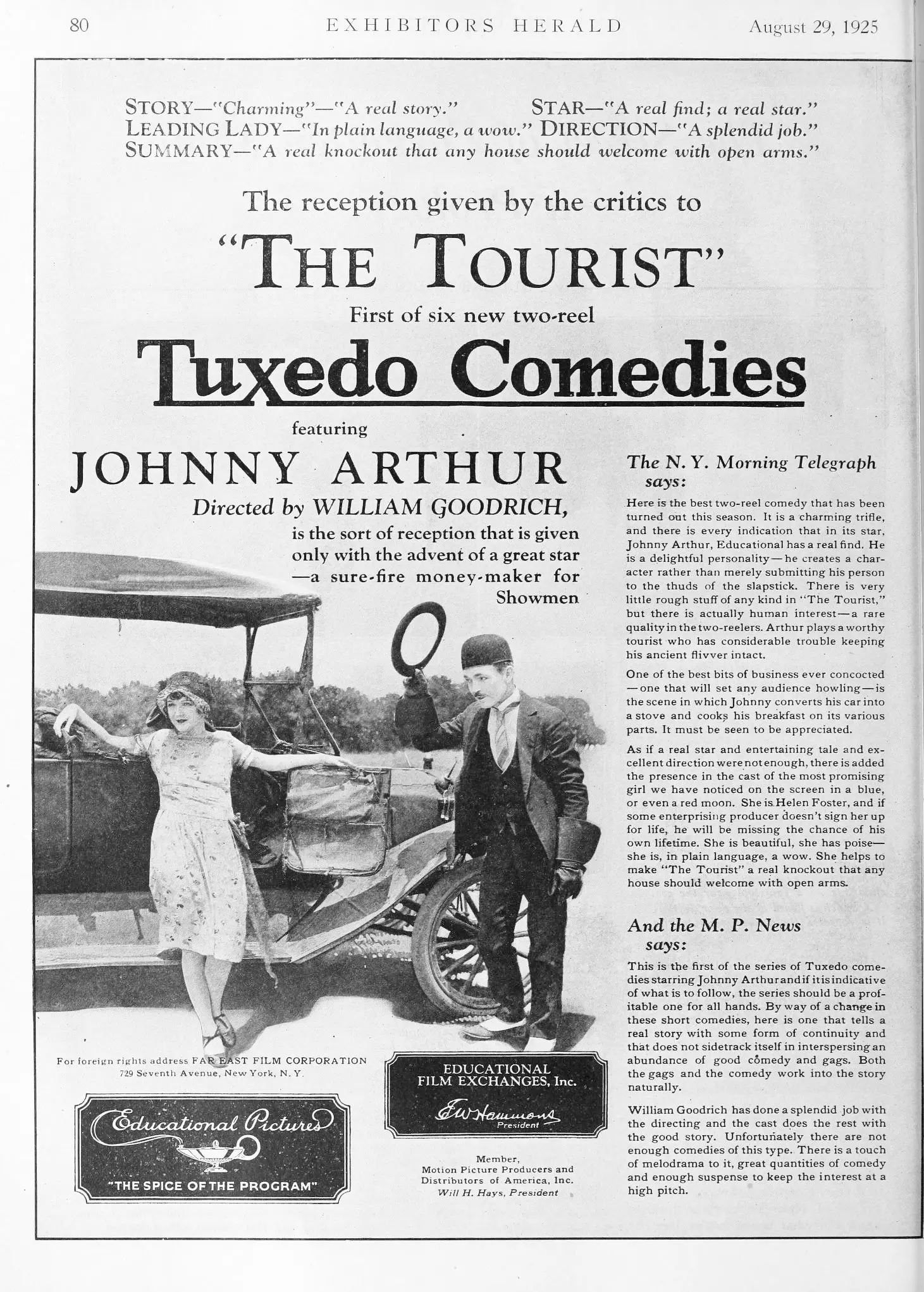
Short answer: yes, but mainly for those who appreciate the mechanical grit of silent-era slapstick and the directorial fingerprints of Roscoe Arbuckle. This film is a frantic, short-form burst of energy that prizes kinetic movement over deep character development.
This film is for enthusiasts of early physical comedy and those who enjoy the 'man-against-machine' tropes of the 1920s. It is NOT for viewers who demand modern pacing, high-fidelity sound, or narrative complexity beyond a binary 'good versus evil' conflict.
This film works because the final chase sequence utilizes the inherent fragility of the 'flivver' to create a genuine sense of mechanical peril that doubles as comedy.
This film fails because the middle section, particularly the dinner scene, feels like a static bridge between two much more interesting action set-pieces.
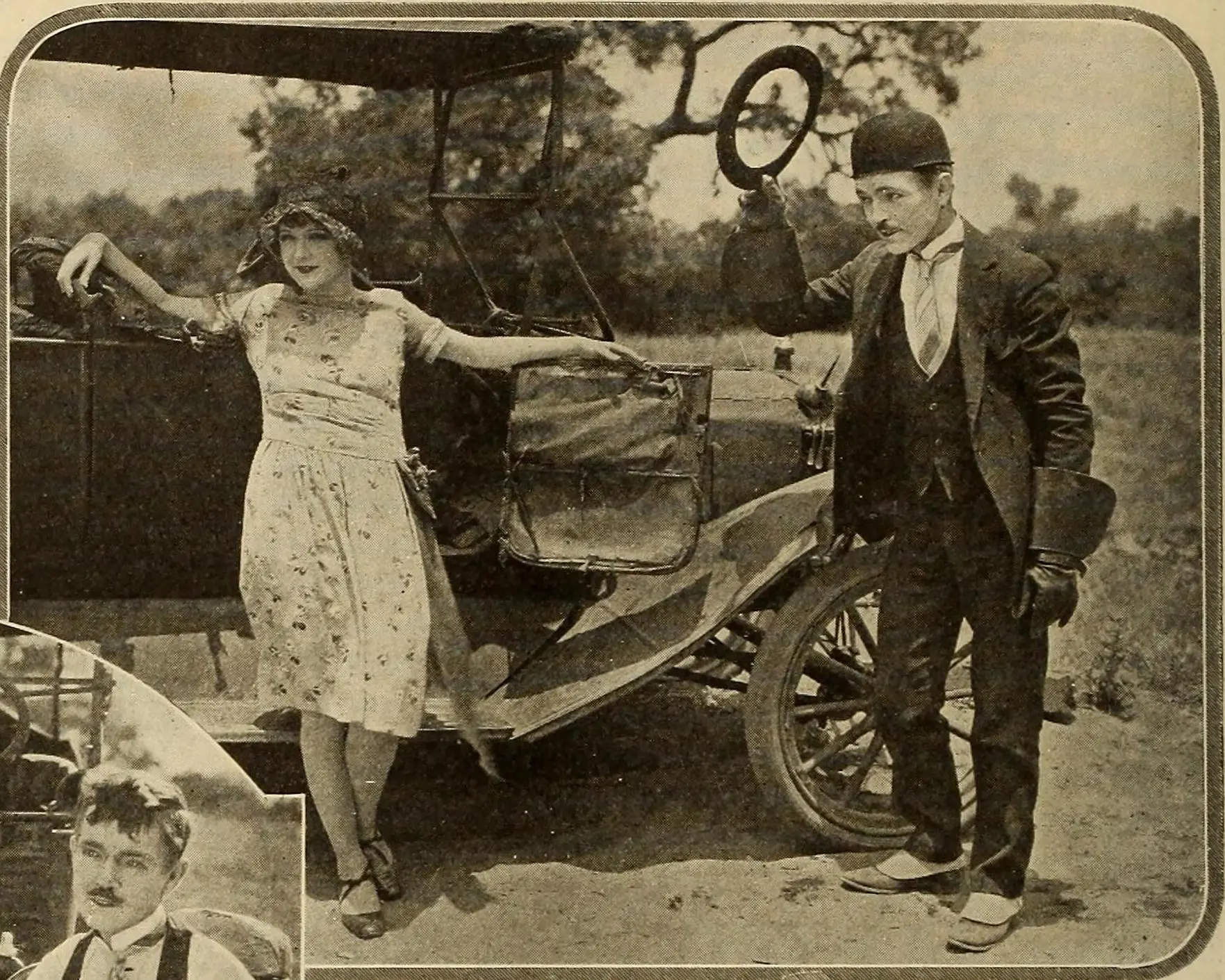
You should watch it if you want to see how Roscoe Arbuckle, directing under a pseudonym, managed to maintain a sense of comedic timing even while sidelined from the spotlight.
The Tourist belongs to a specific subset of 1920s comedy that treats the automobile not just as a prop, but as a primary antagonist. Johnny Arthur, playing the titular tourist, brings a nervous, twitchy energy to the screen that contrasts sharply with the stoic athleticism of Buster Keaton.
In the opening scenes, we see a world that is still adjusting to the presence of the motor car. When Johnny picks up Helen after her auto ride fails, there is a sense of social awkwardness that is perfectly captured through silent gestures. The film doesn't need dialogue to explain that Johnny is out of his depth; his frantic handling of the steering wheel says it all.
The plot, involving a 'valuable well' and 'unpaid taxes,' is a standard melodrama trope of the era. We’ve seen similar high-stakes property battles in films like The House Built Upon Sand, but here, the weight of the drama is secondary to the physical comedy. The stakes are just an excuse to get two cars on a dusty road.
Though credited to William Goodrich, the directorial hand of Roscoe 'Fatty' Arbuckle is visible in the framing of the gags. Arbuckle had a penchant for using the entire frame, and in The Tourist, the background action often informs the humor as much as the foreground.
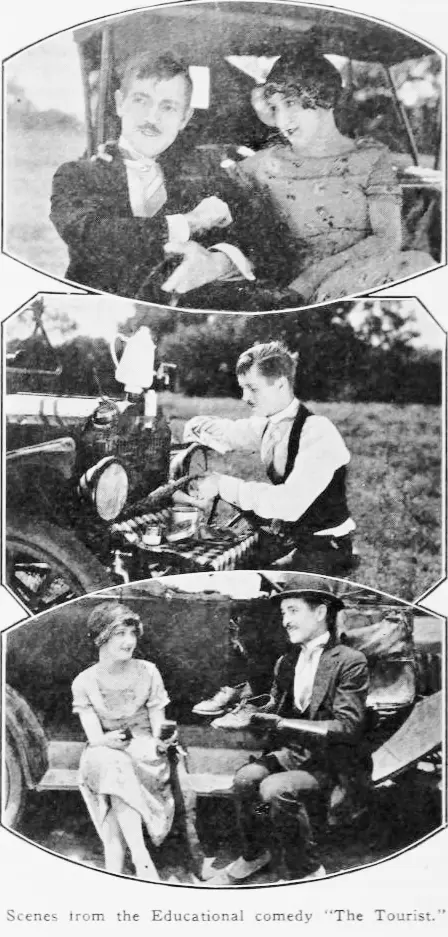
Take the scene where the crooks are dining with the family. The way the camera captures the villains’ realization of the well's value is efficient and punchy. It lacks the poetic nuance of I promessi sposi, but it understands the economy of short-film storytelling.
The pacing is relentless once the race begins. Arbuckle understood that a 'flivver' (a slang term for a cheap, old car, usually a Model T) was inherently funny because of how much it shook. He leans into this, making the car feel like it might disintegrate at any moment. It works. But it’s flawed.
Johnny Arthur is the heart of the film. Unlike the suave leading men in A Man and His Money, Arthur’s character is defined by his inadequacy. He is a tourist in every sense of the word—unfamiliar with the terrain, the local politics, and the mechanics of his own vehicle.
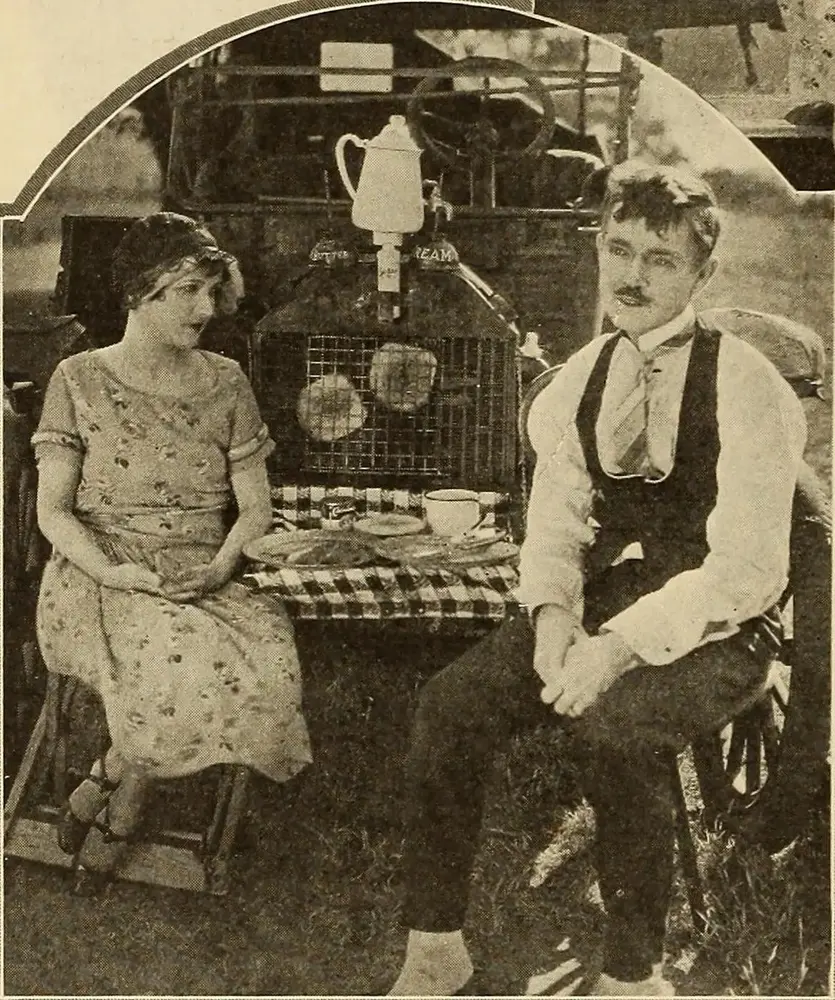
Helen Foster provides a solid foil to Arthur’s frantic energy. While she isn't given much to do beyond being the catalyst for the plot, her presence grounds the film. The chemistry isn't romantic in a traditional sense; it’s more of a partnership born of shared panic.
The villains, played by Glen Cavender and George Davis, are quintessential silent film crooks. They are broad, performative, and entirely devoid of nuance. This works in the context of a 20-minute short where there is no time for a redemption arc or complex motivations.
The location shooting in The Tourist is a breath of fresh air compared to the stagey interiors of many contemporary dramas like The City of Silent Men. The dust, the uneven roads, and the natural lighting give the film a documentary-like texture during the chase sequences.
There is a specific shot where the flivver and the touring car meet 'difficulties' on the road. The camera is placed low to the ground, emphasizing the speed and the precariousness of the vehicles. It’s a technique that would later become a staple of action cinema.
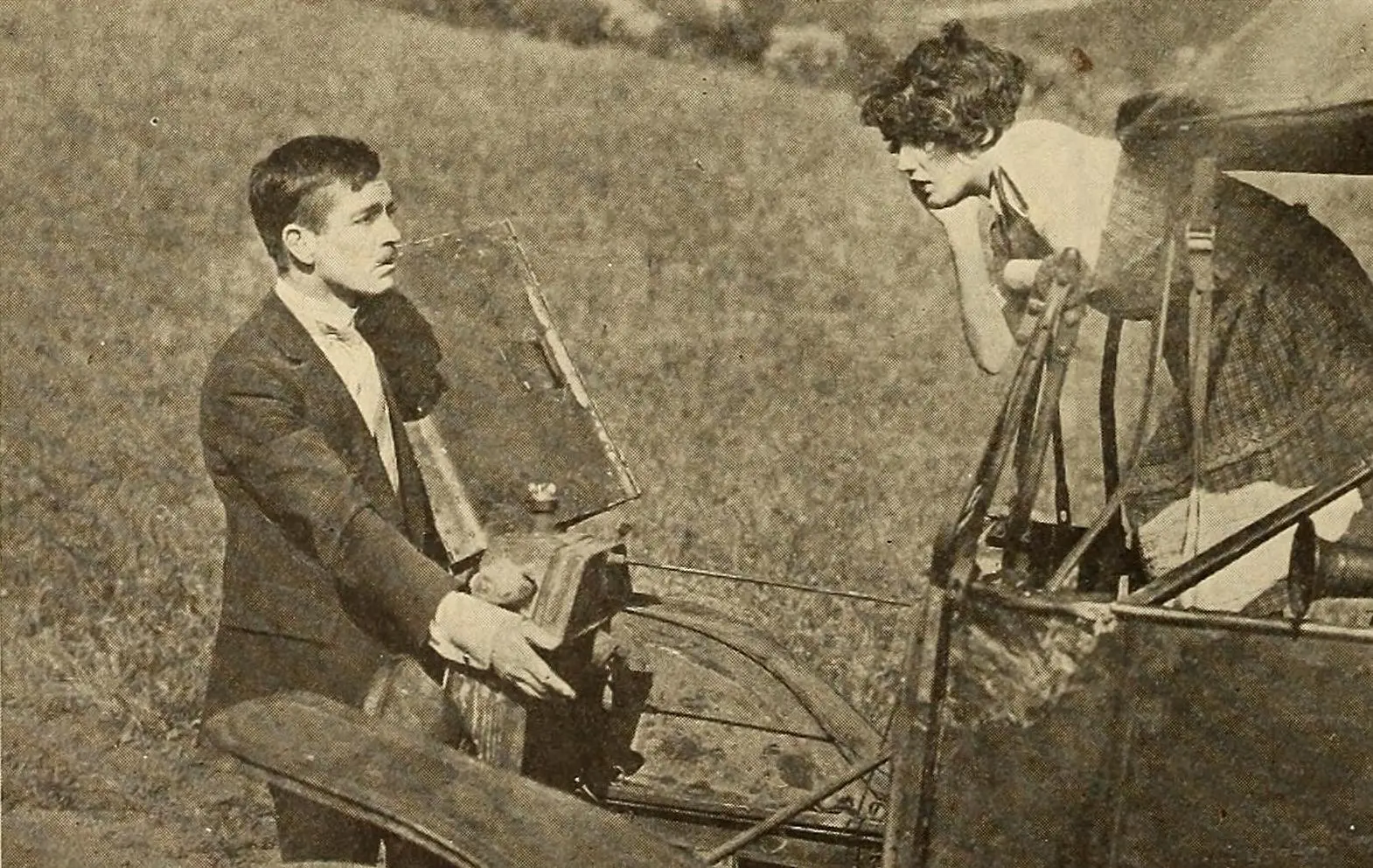
The contrast between the pastoral domesticity of the parents' home and the mechanical violence of the road is stark. It reflects a changing America, moving from the agrarian roots seen in '49-'17 to a more industrialized, fast-paced society.
Is The Tourist (1925) a good movie for modern audiences?
Yes, if you view it as a historical artifact of comedic engineering. The film offers a 20-minute masterclass in how to build tension using nothing but a steering wheel and a dusty road. While the plot is paper-thin, the execution of the physical gags remains impressive.
The film captures a specific moment in time when the car was a symbol of both freedom and extreme frustration. For those interested in the evolution of the 'chase scene,' this is essential viewing. It’s short, punchy, and surprisingly modern in its editing during the final act.
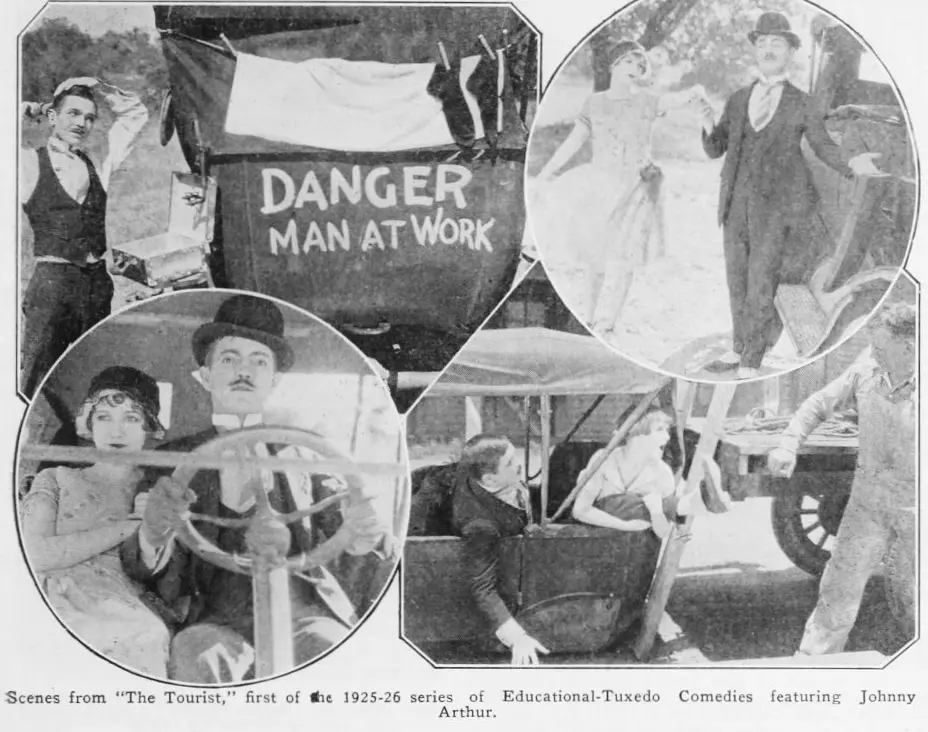
It is impossible to discuss this film without mentioning its director, Roscoe Arbuckle. After his career was derailed by scandal, his work as 'William Goodrich' allowed him to stay in the industry, but with a diminished profile. This film feels like a man trying to prove he still has the 'funny' in him.
There is an underlying bitterness to the comedy here that you don't find in Arbuckle's earlier, more joyful work like Wild Women. The humor is sharper, more focused on the failure of machines and the greed of men. It’s a more cynical brand of slapstick.
Even the title, 'The Tourist,' suggests someone who doesn't belong. Johnny is an outsider in this rural community, much like Arbuckle was becoming an outsider in the industry he helped build. This meta-textual layer adds a level of interest that wouldn't be there otherwise.
The tone shifts abruptly from a lighthearted 'meet-the-parents' comedy to a desperate survivalist race. This jarring transition is common in shorts from this era, where narrative logic often took a backseat to the 'big finish.'
Compared to the more somber tones of If Marriage Fails, The Tourist is purely escapist. It doesn't want you to think about the ethics of land ownership or the plight of the poor; it wants you to laugh at a car jumping over a ditch.
The editing is remarkably tight. Every shot in the final five minutes is designed to increase the sense of speed. It’s a precursor to the high-octane editing we see in modern blockbusters, proving that the language of the 'chase' was perfected early on.
The Tourist is a fascinating, if slightly uneven, piece of silent cinema. It lacks the emotional resonance of the era's great features, but it excels as a pure exercise in physical comedy. Johnny Arthur is a talent that deserves more recognition, and Arbuckle’s direction remains as sharp as ever.
While the plot is a relic of a simpler time, the mechanical mayhem is timeless. It is a film about the anxiety of the modern age—the fear that our machines will fail us just when we need them most. It’s a fun, fast, and occasionally frantic ride that is well worth the twenty minutes of your life.
Ultimately, it’s a minor work from a major talent. It won't change your life, but it will make you appreciate the sheer effort that went into making people laugh in 1925. It’s a piece of history that still moves.
IMDb 6
1932
Community
Log in to comment.