DbcultAccessing Vault...
Cult Review
Senior Film Conservator
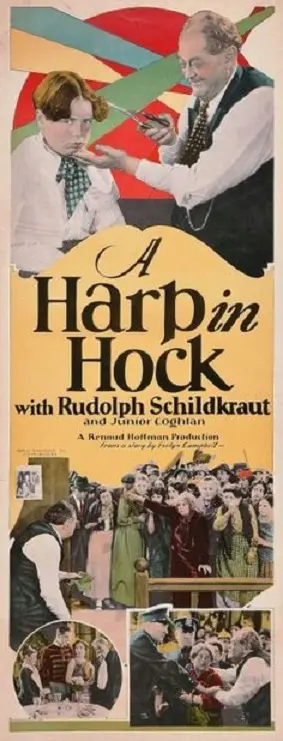
Is A Harp in Hock worth watching today? Short answer: yes, but with significant caveats. This rarely discussed 1927 silent drama is a must-see for dedicated cinephiles and those interested in early cinematic portrayals of immigrant life and urban grit, yet it will likely test the patience of casual viewers accustomed to modern narrative pacing.
This film works because of Rudolph Schildkraut’s utterly captivating performance as Isaac Abrams, grounding an otherwise melodramatic plot in raw, believable humanity. It works because it dares to explore themes of prejudice, found family, and the arbitrary cruelties of bureaucracy with an emotional sincerity that transcends its era.
This film fails because its pacing can feel glacially slow by contemporary standards, and some of the supporting performances lean heavily into the broad theatricality common to the late silent period, occasionally undermining its more nuanced moments.
You should watch it if you appreciate character-driven narratives, are fascinated by the socio-cultural dynamics of early 20th-century America, or simply want to witness a master actor at the peak of his silent screen powers. Skip it if you require fast-paced action, clear-cut heroes, or find the conventions of silent cinema distracting.
Released in the twilight years of the silent film era, A Harp in Hock stands as a poignant testament to the power of character-driven storytelling. It is a film that, despite its age and narrative simplicity, manages to excavate profound emotional truths about isolation, connection, and the unexpected places where family can be found. Directed by Joseph Levering and adapted from a story by Sonya Levien and Evelyn Campbell, this picture ventures into the often-overlooked corners of society, presenting a narrative that feels both deeply specific to its time and remarkably universal in its themes.
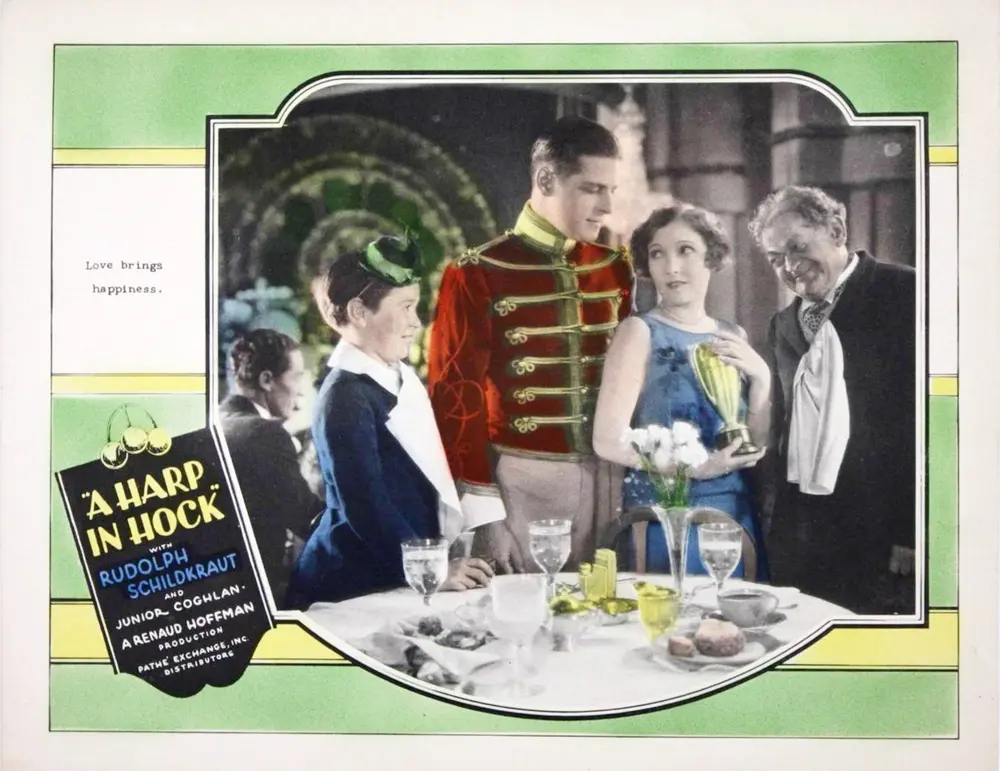
The film introduces us to Isaac Abrams, a pawnbroker whose life is as dusty and unwelcoming as his shop. He is a man defined by his solitude, his face etched with the weariness of a life lived on the fringes. The opening scenes paint a vivid, if somber, portrait of a man ostracized by his community, a common target for suspicion and dislike. This initial characterization is crucial, setting the stage for the profound transformation that is to come.
Abrams's world, a microcosm of a bustling immigrant ghetto, is bleak. His only consistent interactions are transactional, reflecting a transactional existence. The arrival of Tommy, an Irish orphan whose mother tragically dies upon his arrival, shatters this routine. Suddenly, Abrams is burdened with a responsibility he neither sought nor seemingly desires. This plot point, while a classic narrative device, is handled with a delicate realism that prevents it from feeling contrived.
What unfolds is a tender, often heartbreaking, exploration of found family. Abrams, initially hesitant and even resentful, slowly begins to open his heart to the boy. He teaches Tommy not just the business of the pawnshop – the haggling, the valuation of goods – but also the value of learning and self-sufficiency. The shop, once a symbol of his isolation, gradually transforms into a sanctuary, a home built on an unconventional love.
The film doesn’t shy away from the harsh realities of its setting. Prejudice, economic hardship, and the cold hand of bureaucracy are ever-present threats. Mrs. Banks, the vindictive neighbor, embodies the petty cruelties that can fester in close-knit communities. Her actions, born of spite, trigger a chain of events that threaten to tear Abrams and Tommy apart, highlighting the precariousness of their newfound happiness.
Ultimately, A Harp in Hock is a story about redemption – not just for Abrams, but for the very idea of community. It suggests that even in the most hardened hearts and the most challenging circumstances, compassion and connection can bloom. The film's strength lies not in its grand narrative sweeps, but in its unwavering commitment to the small, often uncomfortable truths of human connection amidst squalor.
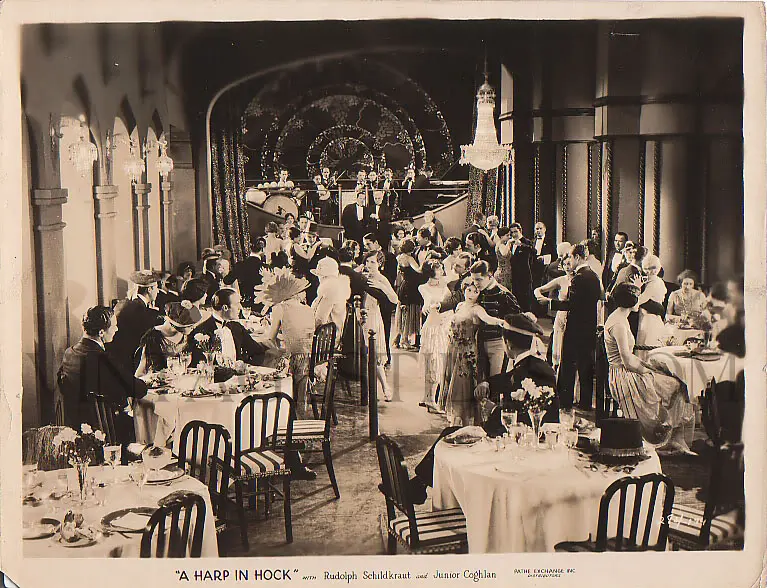
The undeniable anchor of A Harp in Hock is Rudolph Schildkraut’s performance as Isaac Abrams. Schildkraut, a celebrated stage actor who transitioned to Hollywood, delivers a masterclass in silent screen acting that elevates the entire production. His portrayal is a clinic in conveying complex emotions without uttering a single word, relying instead on a nuanced physicality and incredibly expressive eyes.
From his initial appearance, Abrams is a figure of profound loneliness. Schildkraut’s hunched shoulders, his perpetually furrowed brow, and the wary, almost suspicious glance he casts at the world immediately establish his character. He doesn’t just play a lonely man; he embodies the weight of isolation. One particular early scene, showing him silently eating a meager meal alone in his cluttered shop, speaks volumes about his existence.
The transformation he undergoes with Tommy is utterly convincing. Schildkraut meticulously charts Abrams's journey from grudging guardian to loving father figure. We see the subtle softening around his eyes, the tentative smiles, the way his hands, once used only for haggling, learn to gently guide and comfort the boy. The scene where Abrams first truly smiles at Tommy, a slow, hesitant blossoming of warmth, is profoundly moving and a testament to Schildkraut's control.
His acting during moments of crisis is equally powerful. When Tommy is taken away, Schildkraut's raw despair is palpable, his silent pleas and frantic gestures conveying a universal agony that transcends the silent film medium. He avoids broad theatrics, choosing instead a deeply internalized pain that resonates long after the scene ends. This is not merely acting; it is a profound channeling of human experience. His performance alone makes the film worth seeking out, standing alongside the great silent performances of his time.
While Schildkraut dominates, the supporting cast of A Harp in Hock contributes significantly to its texture, though with varying degrees of success. Billy 'Red' Jones as Tommy is a revelation. Child actors in the silent era often struggled with naturalism, but Jones brings an unaffected charm and genuine vulnerability to the role.
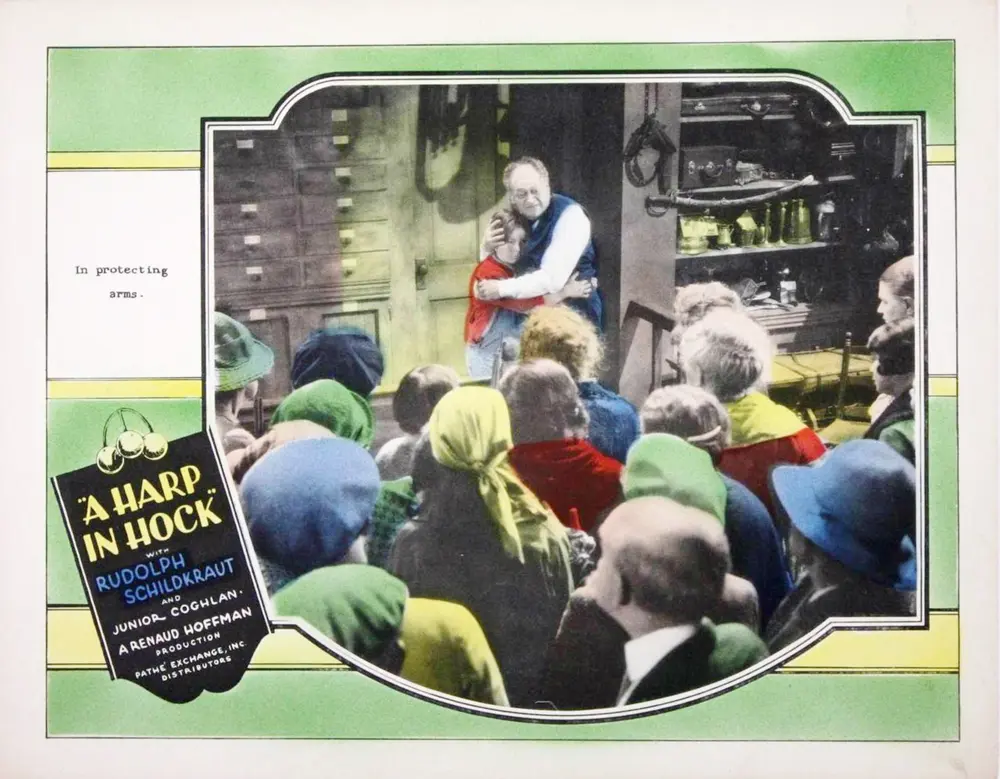
His interactions with Schildkraut are the heart of the film, and their chemistry is undeniable. Jones's wide-eyed innocence and his gradual attachment to Abrams feel utterly authentic, making their bond believable and the subsequent separations heartbreaking. The scene where he first arrives, wide-eyed and alone, immediately garners audience sympathy.
Elise Bartlett as Nora Banks serves as the film’s moral compass, a beacon of kindness in an otherwise harsh environment. Her gentle demeanor and unwavering support for Abrams provide a necessary counterpoint to the prejudice he faces. Her character is perhaps a little idealized, but her presence is essential to the film's emotional landscape, representing the possibility of goodness.
On the other hand, Lillian Harmer as Mrs. Banks, the film's antagonist, leans heavily into the melodramatic conventions of the era. Her portrayal of petty vindictiveness is effective, but sometimes borders on caricature. While her actions drive much of the plot's conflict, her character lacks the subtle shading that Schildkraut brings to Abrams. Her exaggerated gestures of anger and malice, while understandable for the period, occasionally pull the viewer out of the more grounded reality the film attempts to create.
Other characters, such as Mrs. Shannon (Lillian Harmer, also credited as Mrs. Charles Mack, likely a double role) and Dr. Mueller (Joseph Striker), fulfill their narrative functions competently, though without the standout impact of the leads. The ensemble, as a whole, functions to populate Abrams's world, creating a believable, if occasionally theatrical, backdrop for his personal drama.
Joseph Levering’s direction in A Harp in Hock is competent, if not groundbreaking. He effectively utilizes the visual language of silent cinema to convey emotion and atmosphere. The film's strength lies in its ability to immerse the viewer in the cramped, bustling world of the ghetto, a setting that feels authentic and lived-in.
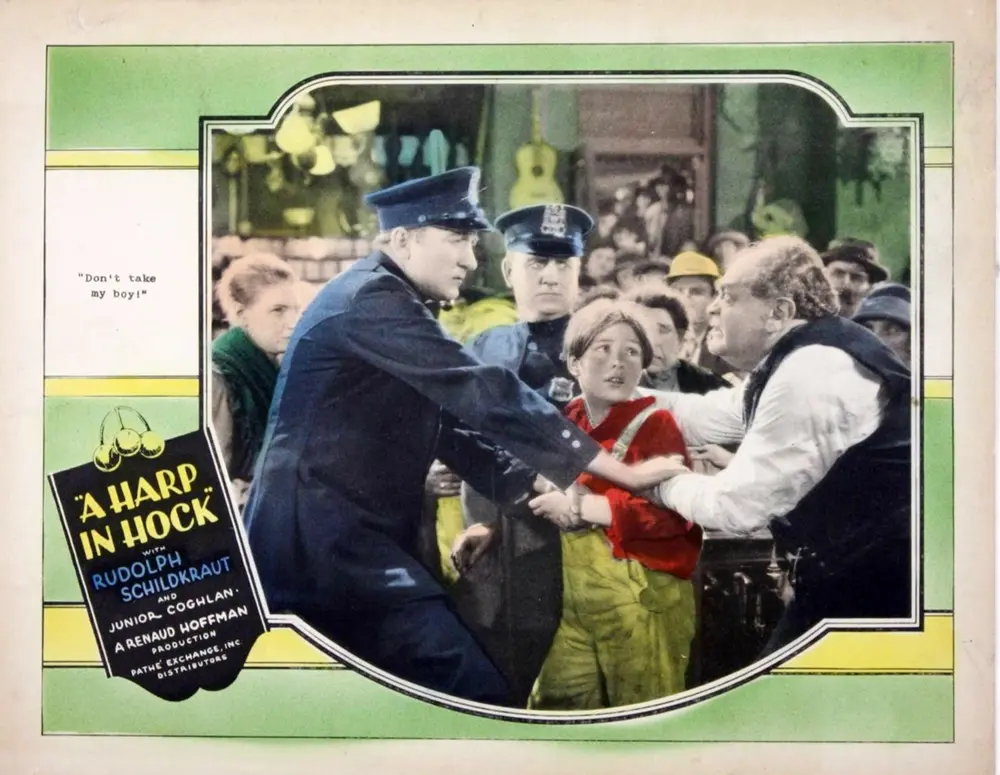
The cinematography, though uncredited, plays a crucial role in establishing the film's tone. The shots of the crowded streets, the close-ups on the haggard faces of the pawnbroker's customers, and the stark contrast between the darkness of Abrams's shop and the occasional shafts of light all contribute to the film's gritty realism. The camera often lingers on Schildkraut's face, allowing his expressions to carry the narrative weight, a smart choice given his immense talent.
Levering’s handling of key dramatic moments is generally effective. The scene of Tommy's arrival at Ellis Island, for instance, evokes the overwhelming experience of immigration. The subsequent scene of Mrs. Shannon’s illness and death is handled with a quiet dignity that underscores the tragedy without resorting to excessive sentimentality. Even the riot scene, a potentially chaotic sequence, is staged with a clarity that maintains its dramatic impact, focusing on the human reactions rather than spectacle.
However, there are moments where the direction feels a little too conventional, adhering strictly to the storytelling formulas of the time. While this doesn't detract significantly from the film's emotional core, it means that A Harp in Hock doesn't push the boundaries of cinematic artistry in the way some of its more famous contemporaries might have. Compared to the often lighthearted fare of the era, such as The Luck o' the Foolish, 'A Harp in Hock' tackles its themes with a weighty sincerity that is admirable.
One of the most significant hurdles for modern viewers approaching A Harp in Hock will be its pacing. Silent films, particularly dramas, often operated on a different temporal rhythm than contemporary cinema. Scenes tend to unfold more slowly, allowing for prolonged reaction shots and more deliberate narrative progression. This film is no exception.
There are sequences where the narrative seems to stretch, where a modern editor might cut several minutes. For those accustomed to the rapid-fire editing and constant stimulation of current films, this deliberate pace can feel frustratingly slow. However, for those willing to adjust their expectations, this slowness becomes an asset. It allows the viewer to truly immerse themselves in Abrams’s emotional journey, to witness the subtle shifts in his character rather than being told about them.
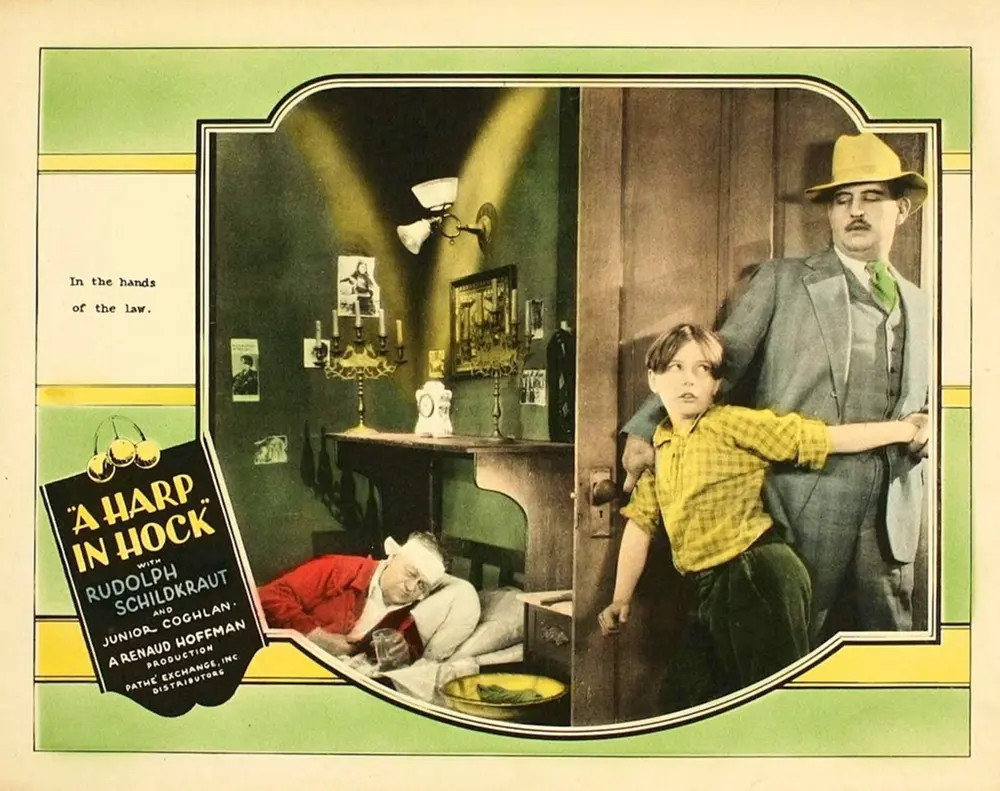
The tone of the film is predominantly melancholic, tinged with a persistent sense of hardship and injustice. Yet, it is punctuated by moments of genuine warmth and even fleeting humor, primarily through Tommy's innocent presence. The film expertly balances its pathos with a resilient optimism, suggesting that hope can endure even in the bleakest of circumstances. This tonal balance prevents the film from descending into unremitting gloom, making its emotional payoff all the more effective.
It works. But it’s flawed. The melodrama, while inherent to the period, occasionally feels a bit heavy-handed, particularly in the actions of Mrs. Banks. However, the sincerity of the central performances and the thematic depth largely overcome these minor tonal imbalances, cementing its place as a compelling, if overlooked, silent drama.
Absolutely, for the right audience. This film offers a powerful, character-driven narrative. Its portrayal of immigrant life remains relevant. Rudolph Schildkraut's performance is a masterclass in silent acting. It’s a rich historical document. It provides a window into early 20th-century social dynamics. You'll need patience for its pacing. But the emotional rewards are significant. It's best for cinephiles and history buffs.
Pros:
- Rudolph Schildkraut’s unforgettable, deeply human performance.
- A poignant exploration of found family and redemption.
- Authentic depiction of early 20th-century immigrant life and urban hardship.
- Strong emotional core that transcends the silent film format.
- Remarkable child performance from Billy 'Red' Jones.
Cons:
- Pacing can be very slow for contemporary audiences.
- Some supporting performances lean into theatrical exaggeration.
- Narrative, while effective, follows a somewhat predictable melodramatic arc.
- Lacks the visual innovation of some other silent classics.
- Requires a significant adjustment to silent film conventions.
A Harp in Hock is a quiet triumph, a film that might have faded into obscurity were it not for the enduring power of its central performance and its timeless themes. It's not a film that demands your attention with flashy visuals or rapid-fire plot twists, but rather one that gently draws you in with its sincerity and emotional depth. While some might argue the ending is too neat, a convenient deus ex machina, I believe it serves as a necessary emotional release, earned through Abrams's profound transformation and the audience's investment in his and Tommy's fate.
This is a film that rewards patience, offering a deeply moving character study wrapped in a poignant social commentary. It reminds us that even in the most unlikely of circumstances, and in the most unlikely of individuals, love and family can take root and flourish. For those willing to embrace its silent era sensibilities, A Harp in Hock offers a surprisingly resonant and emotionally satisfying experience. It's a valuable piece of cinematic history, a testament to the enduring power of human connection, and a showcase for an actor at the height of his craft. Seek it out, and allow yourself to be moved by its quiet strength.

IMDb 6
1918
Community
Log in to comment.