DbcultAccessing Vault...
Cult Review
Senior Film Conservator
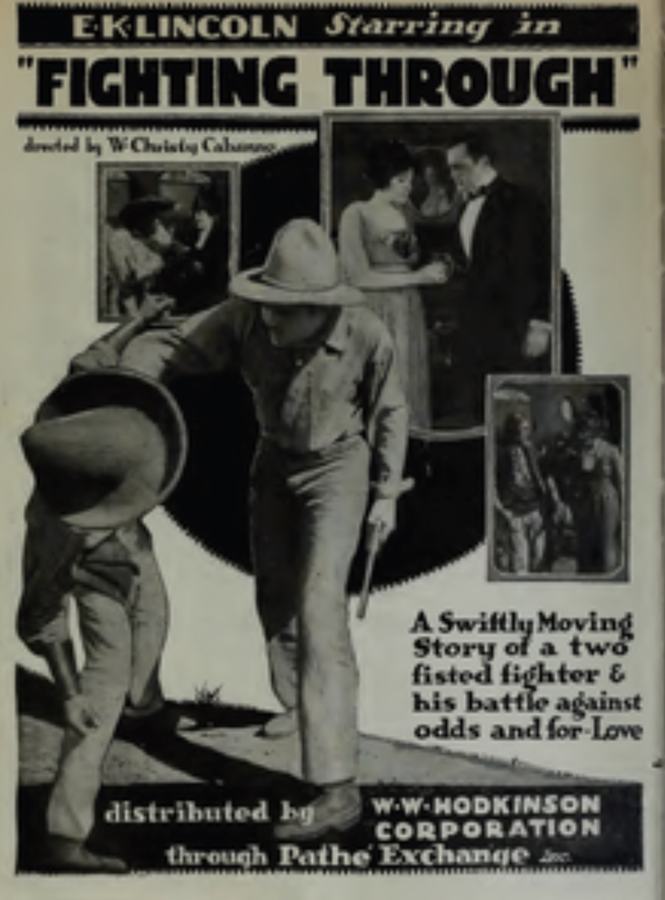
Step into the flickering shadows of early 20th-century cinema, and you'll often find narratives grappling with profound societal shifts, national identity, and the timeless complexities of the human heart. Christy Cabanne's Fighting Through is precisely such a work, a compelling, if occasionally didactic, silent film that plunges its audience into a whirlwind of inherited prejudices, personal growth, and the forging of a nascent American spirit amidst global conflict. Released at a pivotal moment in history, this motion picture isn't just a story; it's a cultural artifact, reflecting the anxieties and aspirations of a nation on the cusp of defining its modern self.
At the heart of Fighting Through lies Robert Carr, portrayed with a compelling blend of youthful naiveté and entrenched conviction by E.K. Lincoln. Robert is not merely a character; he is a living embodiment of the lingering specter of the Confederacy. Raised in Virginia, his worldview is meticulously shaped by his grandfather, a veteran of the Civil War, who instills in him a deep reverence for Southern heritage and, crucially, an inherent distrust of the United States government. This is not a man born of malice, but rather of tradition, a product of a specific regional identity that, even decades after Appomattox, struggled to fully reconcile with the broader national narrative. Lincoln’s performance captures this internal conflict beautifully, his initial stoicism slowly giving way to a more nuanced understanding of duty and honor.
This inherited ideology sets Robert on a collision course with modernity, personified by his spirited fiancée, Maryland Warren, played by the captivating Millicent Fisher. Fisher injects Maryland with a vibrant independence, a woman unwilling to passively accept antiquated notions of loyalty or courage. Her character serves as a vital counterpoint to Robert's anachronistic stance, representing the progressive sensibilities of a new generation. Maryland's frustration with Robert is palpable, an early cinematic exploration of the tension between traditional values and evolving societal expectations. One cannot help but draw parallels to other films of the era that explored nascent female agency, though perhaps not as overtly as A Woman Wills, Maryland's spirit is clearly foreshadowing a shift in how women were portrayed on screen, moving beyond mere damsels in distress to figures of moral and emotional fortitude.
The film masterfully employs a series of escalating provocations to dismantle Robert’s rigid worldview. The initial catalyst is surprisingly mundane yet profoundly symbolic: a tear in Robert’s trousers prevents him from rescuing Maryland from a runaway horse, allowing a rival suitor, presumably Hayward Mack's character, to swoop in. This incident, seemingly trivial, is a devastating blow to Robert’s pride and, more importantly, Maryland’s perception of his courage. It’s a clever narrative device, illustrating how personal failings can foreshadow deeper character flaws, particularly in the context of masculine ideals prevalent at the time.
However, the true ideological battle ignites with the declaration of war against Germany. This historical backdrop is not merely scenery; it's the very engine of Robert's transformation. His refusal to honor the American flag, a direct consequence of his grandfather’s teachings, is the ultimate affront to Maryland. Her accusation of disloyalty and the subsequent breaking of their engagement are pivotal, severing the personal tie that had, perhaps, allowed Robert to remain comfortably entrenched in his inherited prejudices. The film subtly argues that personal commitment and national allegiance are inextricably linked, especially in times of crisis. This theme resonates with other contemporary films like Warning! The S.O.S. Call of Humanity, which similarly leveraged the urgency of wartime to explore patriotism and collective identity.
Robert’s journey into self-discovery is not a deliberate quest but a forced exile. A brutal beating by hobos, a stark reminder of the harsh realities outside his privileged Southern bubble, leaves him unconscious and stranded on a freight train bound for Arizona. This abrupt shift in setting and circumstance is a brilliant narrative stroke, stripping Robert of his familiar environment and forcing him to confront a world far removed from his inherited ideals. Arizona, a rugged frontier land, becomes a metaphorical crucible where his character is tested and reshaped. The contrast between the genteel South and the wild West underscores the vastness and diversity of the American experience, challenging Robert’s narrow perspective.
The serendipitous (or perhaps narratively convenient) arrival of Maryland in Arizona, on vacation, sets the stage for the film’s thrilling climax. The plot thickens considerably when Maryland is taken hostage by Mexican bandits across the border. This narrative turn introduces a clear external antagonist, shifting the conflict from internal ideological struggle to overt physical danger. It's a classic adventure trope, but one that serves a deeper purpose in this film.
It is in the bandits’ lair that Robert’s transformation culminates. The Mexican brigands, in their disdain for American authority, insult the American flag. This act, far removed from the abstract ideological debates of Virginia, hits Robert with visceral force. The flag, once a symbol of an adversary government, now represents the nation, and more importantly, the safety and honor of his fiancée. His subsequent fight against the bandits is not just an act of heroism to rescue Maryland; it is a profound declaration of allegiance, a repudiation of his inherited prejudices, and a powerful embrace of American identity. The personal and the political, the romantic and the patriotic, coalesce in this pivotal moment.
The ensuing escape attempt, fraught with tension, showcases Cabanne’s ability to craft engaging action sequences, even within the constraints of silent film. The bandits surrounding Robert and Maryland create a sense of impending doom, only to be dramatically relieved by the arrival of a posse of cowboys. This deus ex machina, while common in silent Westerns and adventure films, here serves as a potent symbol of collective American strength coming to the aid of its own, reinforcing the themes of national unity that the film so earnestly promotes. One might compare this climactic rescue to the similar dramatic tension and resolution found in films like The Cossack Whip or By Hook or Crook, where timely interventions often saved the day, albeit with different cultural backdrops.
Christy Cabanne, a prolific writer and director of the era, crafts a narrative that, while occasionally relying on tropes, manages to feel fresh due to its thematic ambition. His direction is straightforward yet effective, allowing the actors' expressions and physical performances to carry the emotional weight of the story. The pacing, though perhaps slower by modern standards, builds suspense effectively, particularly in the later Arizona sequences.
E.K. Lincoln as Robert Carr delivers a performance that matures alongside his character. His initial stiffness perfectly conveys Robert's upbringing, while his later scenes reveal a man transformed by experience and conviction. Millicent Fisher, as Maryland Warren, is the film's emotional anchor. Her portrayal of strength, conviction, and vulnerability is a highlight, making her accusations and eventual forgiveness feel earned. Spottiswoode Aitken, likely playing the Confederate grandfather, would have brought his characteristic gravitas to the role, subtly influencing Robert's early development without needing extensive screen time. Hayward Mack, as the rival suitor, provides the necessary friction to ignite the initial romantic conflict, while Frederick Vroom, Helen Dunbar, and George Gebhardt likely fill out the supporting cast with solid, if less central, performances that ground the film in its dramatic reality.
Beyond the adventure and romance, Fighting Through is a powerful allegory for American national identity in the early 20th century. The lingering resentments of the Civil War, the burgeoning sense of national purpose fueled by World War I, and the integration of diverse regional identities into a unified whole are all explored through Robert’s journey. His transformation from a Confederate sympathizer to a staunch defender of the American flag is a microcosm of the larger societal shift occurring in the nation. The film argues for a patriotism that transcends regional divides, emphasizing shared values and collective defense against external threats.
The film's exploration of honor is also multifaceted. Robert initially adheres to an outdated, personal code of honor, tied to his family's past. Maryland, however, challenges him to embrace a more expansive, modern concept of honor, one that includes loyalty to country and active courage. His ultimate actions in Arizona demonstrate a synthesis of these two ideals, proving that true honor can encompass both personal integrity and national fidelity. This internal struggle for a character to find his true moral compass is a recurring theme in cinema, seen in various forms in films like The Power of Decision or Sin, where protagonists grapple with profound ethical choices.
While not as widely remembered as some of its contemporaries, Fighting Through offers a fascinating glimpse into the social and political landscape of its time. It’s a film that speaks to the power of personal experience to reshape deeply held beliefs, and the unifying force of shared adversity. Christy Cabanne, through his writing, paints a vivid picture of a young man coming to terms with his place in a rapidly changing world.
The film’s resolution, with the lovers reunited and returning to their native Virginia, is deeply satisfying. It signifies not just a personal triumph for Robert and Maryland, but a symbolic healing of historical wounds. Robert returns not as the unyielding heir to a lost cause, but as a man who has fought for and embraced a broader American identity, finally worthy of Maryland's modern, patriotic heart. The journey from a Virginia steeped in the past to the wild Arizona frontier and back again, transformed, encapsulates the very essence of 'fighting through' both internal demons and external threats.
In conclusion, Fighting Through is more than just a silent adventure; it's a commentary on national reconciliation, individual evolution, and the enduring power of love to bridge ideological divides. It stands as a testament to the era's storytelling capabilities, delivering a compelling drama imbued with historical relevance and a timeless message of self-discovery and patriotism. For enthusiasts of early cinema and those interested in the cultural narratives of the World War I era, this film remains an insightful and engaging watch, a vivid echo from a pivotal moment in American history.

IMDb 4.1
1931
Community
Log in to comment.