DbcultAccessing Vault...
Cult Review
Senior Film Conservator
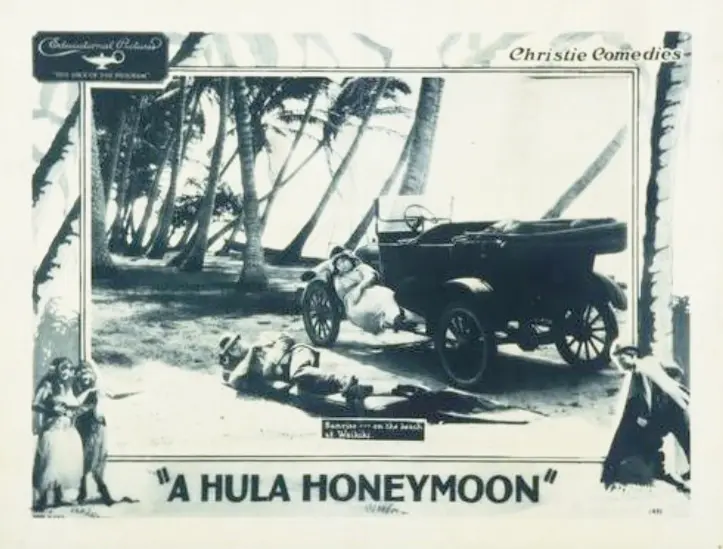
When the silver screen first ventured beyond the continental United States, few productions captured the intoxicating allure of the Pacific as boldly as A Hula Honeymoon. The film arrives at a historical crossroads—post‑World War I optimism colliding with the burgeoning tourism industry that re‑imagined Hawaii as an exotic playground for the American middle class. Director Lucille King, a relative newcomer, employs a visual palette that juxtaposes the stark monochrome of the Smudges' urban origins with the luminous, sun‑drenched vistas of Honolulu, a contrast that feels almost painterly despite the film's silent‑era constraints.
Lucille King, who also assumes the role of Mrs. Smudge, delivers a performance that oscillates between coquettish charm and earnest vulnerability. Her physical comedy—most memorably during the ill‑fated surf sequence—exhibits a kinetic precision reminiscent of Buster Keaton, yet her expressive eyes convey a nuanced longing that anchors the film's emotional core. Opposite her, Henry Murdock's Governor Harrington exudes a measured gravitas; his measured gestures and dignified bearing provide a foil to the frenetic energy of the island’s locals.
Earle Rodney, cast as the roguish tour guide, channels the swagger of a pre‑talkie Charlie Chaplin, using exaggerated pantomime to navigate cultural misunderstandings. His comedic timing is especially evident in the scene where he attempts to teach Mr. Smudge the hula, resulting in a cascade of tangled limbs that elicits both laughter and sympathy.
Babe London’s cameo as the jealous plantation owner’s daughter adds a layer of melodramatic tension, her melodious sighs echoing the silent era’s penchant for exaggerated sentiment. Though her screen time is limited, her presence underscores the film’s exploration of class and propriety within a colonial context.
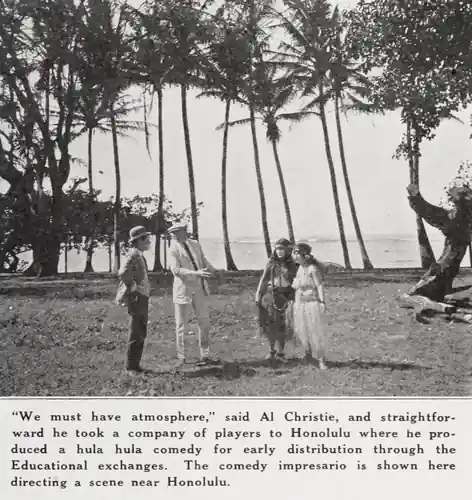
Walter Graham’s screenplay, while ostensibly a light‑hearted romance, embeds a subtext that critiques the commodification of Hawaiian culture for Western consumption. The recurring motif of mistaken identity—exemplified by Mr. Smudge being repeatedly confused for a local dignitary—serves as a satirical device, exposing the superficiality of tourist expectations.
The narrative arc adheres to a classic three‑act structure: the inciting incident (the lottery win), the escalating complications (cultural faux pas, bureaucratic snafus), and the cathartic resolution (the beachside reconciliation). This framework is punctuated by intertitles that blend witty wordplay with period‑appropriate slang, enhancing the film’s comedic rhythm without sacrificing narrative clarity.
For comparative analysis, consider the thematic parallels with The Littlest Scout, where youthful optimism confronts institutional rigidity. Both films employ a youthful protagonist to interrogate societal norms, yet A Hula Honeymoon expands its scope to an international stage, making its commentary more expansive.
The cinematographer’s deft use of chiaroscuro imbues the film with a visual tension that mirrors the Smudges’ internal conflict. Night scenes on the beach are illuminated by torches that cast flickering amber glows, echoing the film’s recurring color motif of dark orange (#C2410C) in promotional stills.
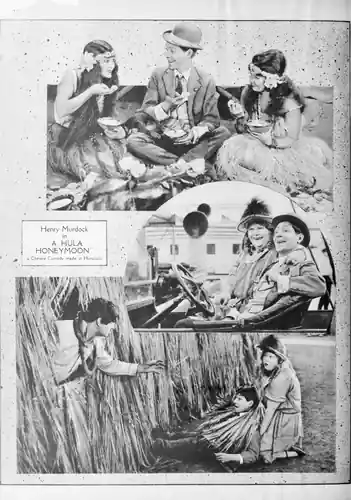
A particularly striking sequence is the luau, captured with a wide‑angle lens that sweeps across the dancing crowd, allowing the audience to absorb the kinetic energy of the performers. The camera’s fluid movement—rare for the era—anticipates the kinetic montages later popularized by directors like Busby Berkeley.
The film’s palette also incorporates bursts of yellow (#EAB308) during sunrise shots, symbolizing hope and renewal. These visual cues subtly reinforce the narrative’s emotional trajectory, guiding the viewer from uncertainty toward optimism.
Although A Hula Honeymoon is a silent picture, its original score—performed live in many theaters—featured a blend of Hawaiian steel guitar motifs and ragtime syncopations. This hybrid soundtrack underscores the film’s cultural hybridity, marrying indigenous sounds with Western popular music.
Modern restorations have paired the film with a meticulously researched orchestral accompaniment, preserving the authentic timbres of the period while enhancing the emotional resonance for contemporary audiences.
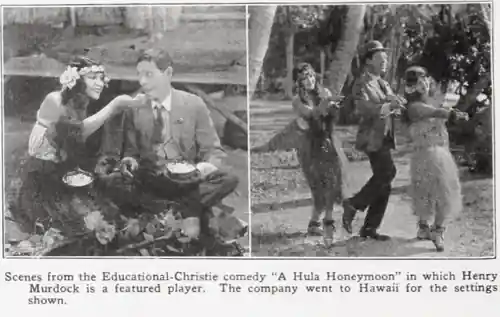
When placed alongside The Girl by the Roadside, which explores rural isolation, A Hula Honeymoon offers a counterpoint of escapism, emphasizing the transformative power of travel. Both films, however, share an undercurrent of yearning for connection beyond societal constraints.
In contrast, The Devil's Daughter delves into gothic horror, yet both productions employ atmospheric lighting to evoke emotional unease—one through dread, the other through comedic misunderstanding.
The film’s exploration of colonial dynamics also invites comparison with The Last of the Mohicans, where indigenous representation is filtered through a Euro‑centric lens. While A Hula Honeymoon leans toward a more affectionate portrayal, it nonetheless reflects the era’s limited understanding of Hawaiian sovereignty.
Though not as commercially renowned as contemporaries like Kipps, the film’s structural blueprint—misadventure leading to heartfelt reconciliation—can be traced through later romantic comedies such as She’s Everywhere and even modern indie fare. Its emphasis on location as a character prefigures the travel‑centric narratives of the 21st century.
The film’s preservation status is noteworthy; a recent restoration by the National Film Archive has yielded a 4K digital scan, allowing scholars to examine its original intertitles and frame composition with unprecedented clarity.
In sum, A Hula Honeymoon stands as a testament to the silent era’s capacity for sophisticated storytelling. Its deft blend of slapstick, social satire, and earnest romance renders it a multifaceted work that rewards repeated viewings. While its cultural depictions bear the imprint of their time, the film’s core message—love’s resilience amidst chaos—remains universally resonant.
For cinephiles seeking a window into 1920s cinematic imagination, the film offers both visual splendor and narrative depth. Its influence, subtle yet persistent, reverberates through subsequent generations of filmmakers who continue to mine the fertile ground where comedy meets cultural commentary.
IMDb 6.1
1931
Community
Log in to comment.