DbcultAccessing Vault...
Cult Review
Senior Film Conservator
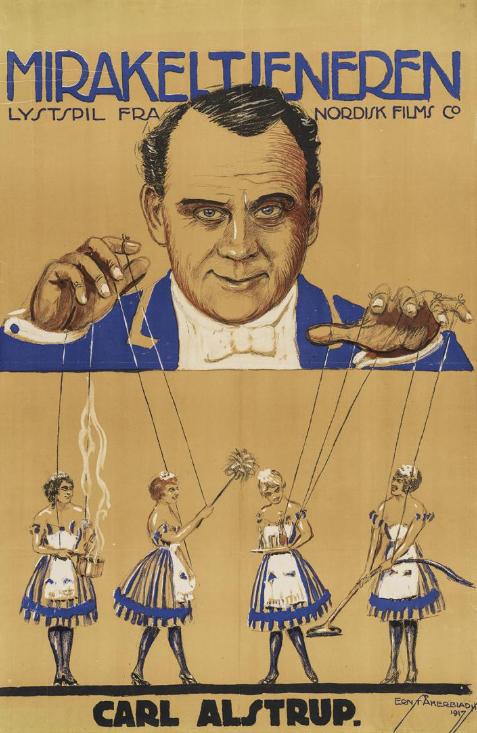
The year 1917 stands as a monumental pivot in the history of global aesthetics, a time when the world was fractured by conflict and the cinematic medium began to shed its swaddling clothes of mere novelty. In this crucible of cultural transformation, the Danish production Mirakeltjeneren emerged, not merely as a flick of the shutters, but as a profound meditation on the human condition. While contemporary audiences might be more familiar with the slapstick pathos of The Kid, the Nordisk Film school was busy perfecting a brand of psychological realism that remains startlingly modern. This film, directed with a precise, almost surgical hand, delves into the murky waters of spiritualism and the transactional nature of hope.
Valdemar Andersen’s screenplay is a masterclass in narrative economy and thematic density. It doesn't rely on the frantic pacing seen in works like The Active Life of Dolly of the Dailies; instead, it invites the viewer into a contemplative space where the silence is heavy with implication. The story of the 'miracle servant' is one of profound isolation. We see a man burdened by the expectations of a society that is hungry for the supernatural but ill-equipped to handle the reality of a true iconoclast. The casting of Viking Ringheim was a stroke of genius; his face, a landscape of stoic suffering and hidden depths, carries the weight of the film’s metaphysical inquiries.
Visually, the film is a triumph of light and shadow. The cinematography utilizes the burgeoning techniques of the era to create an atmosphere that feels both claustrophobic and infinite. There is a specific use of sea blue tones in the tinting of certain night scenes that evokes a sense of cosmic indifference, a stark contrast to the warm, yellow glows of the domestic interiors where the 'miracles' are sought. This visual dichotomy mirrors the internal struggle of the characters—the cold reality of existence versus the warm, flickering hope of divine intervention. It reminds one of the atmospheric depth found in Blodets röst, yet it maintains a uniquely Danish sobriety.
The set design, often overlooked in discussions of early silent cinema, plays a crucial role here. The spaces inhabited by the characters feel lived-in and heavy with history. When we compare this to the more theatrical backdrops of Das Geheimnis von Chateau Richmond, the realism of Mirakeltjeneren becomes even more apparent. Every prop, every shadow cast against the wall, seems to contribute to the overall thesis of the film: that the miraculous is often found in the mundane, and the mundane is often haunted by the miraculous.
Ragnhild Sannom provides a performance of delicate vulnerability that serves as the perfect foil to Ringheim’s intensity. Her portrayal of a woman caught in the crosswinds of faith and despair is heartbreakingly authentic. In an era where acting was often characterized by broad, gesticulating movements—think of the heightened energy in In Again, Out Again—Sannom and Ringheim opt for a more interiorized approach. Their eyes communicate volumes that intertitles could never capture. This subtlety is what elevates the film from a period curiosity to a timeless work of art.
Torben Meyer, who would later find fame in Hollywood, shows early glimpses of his versatile talent here. He navigates the complexities of his character with a nuanced touch, avoiding the pitfalls of the 'villain' or 'skeptic' tropes. Instead, he represents the rational world, a world that is increasingly at odds with the irrationality of the servant’s influence. This tension between logic and belief is a recurring motif that Andersen explores with great sophistication. It’s a thematic thread that echoes through other works of the period, such as The Scarlet Road, though Mirakeltjeneren handles it with significantly more philosophical grace.
We must credit Valdemar Andersen for his refusal to provide easy answers. The script is remarkably brave for 1917. It doesn't shy away from the darker aspects of religious fervor or the potential for exploitation. The 'servant' is not a pristine saint; he is a man of flesh and blood, susceptible to the same frailties as those who seek his aid. This humanization of the divine is what makes the film so compelling. It anticipates the psychological depth we would see in later masterworks like Next, yet it remains firmly rooted in its own historical moment.
The pacing of the film is deliberate, demanding a level of patience from the viewer that is rarely asked for in today’s hyper-kinetic media landscape. However, for those willing to surrender to its rhythm, the rewards are immense. The film builds toward a climax that is less about physical action and more about a profound internal shift. It lacks the bombastic energy of On the Night Stage, but it compensates with a lingering emotional resonance that stays with the viewer long after the final frame has faded.
When placed alongside other films of the era, such as The Isle of Life or Nearly a Lady, Mirakeltjeneren stands out for its intellectual rigor. While many films were content to provide escapist entertainment or moralistic fables, this Danish gem asks difficult questions about the nature of truth. Is a miracle still a miracle if it is born of deception? Can faith exist without an object of worship? These are the questions that circulate through the film’s veins like ice water.
The film also shares an interesting DNA with Little Mary Sunshine and Little Miss Optimist in its exploration of innocence and its corruption, though it approaches these themes from a much grittier, more European perspective. It lacks the sugary sentimentality of the American 'optimist' films, replacing it with a hard-edged realism that is far more impactful. Even when compared to the grandiosity of Don Juan, Mirakeltjeneren holds its own through its sheer intimacy and emotional honesty.
Carl Alstrup’s contribution to the cast should not go unmentioned. He brings a groundedness to the production that prevents it from floating off into the purely ethereal. His performance serves as a reminder of the physical world that continues to turn, regardless of the spiritual dramas unfolding in the foreground. This balance between the high-minded and the earthbound is what gives the film its unique texture. It’s a similar balance found in Jack or The Footlights of Fate, yet Andersen’s vision is more cohesive and tonally consistent.
Ultimately, Mirakeltjeneren is a film that refuses to be forgotten. It is a testament to the power of silent cinema to explore the most complex corners of the human psyche. In the interplay of shadow and light, in the silent screams of its protagonists, and in the masterful script by Valdemar Andersen, we find a work that is as relevant today as it was in 1917. It is a miracle of a film, serving as a reminder that even in our most cynical moments, we are still searching for something that transcends the mundane reality of our lives. It is a cinematic experience that demands to be felt as much as it is seen, a haunting melody played on the strings of the soul.
IMDb —
1924
Community
Log in to comment.