DbcultAccessing Vault...
Cult Review
Senior Film Conservator
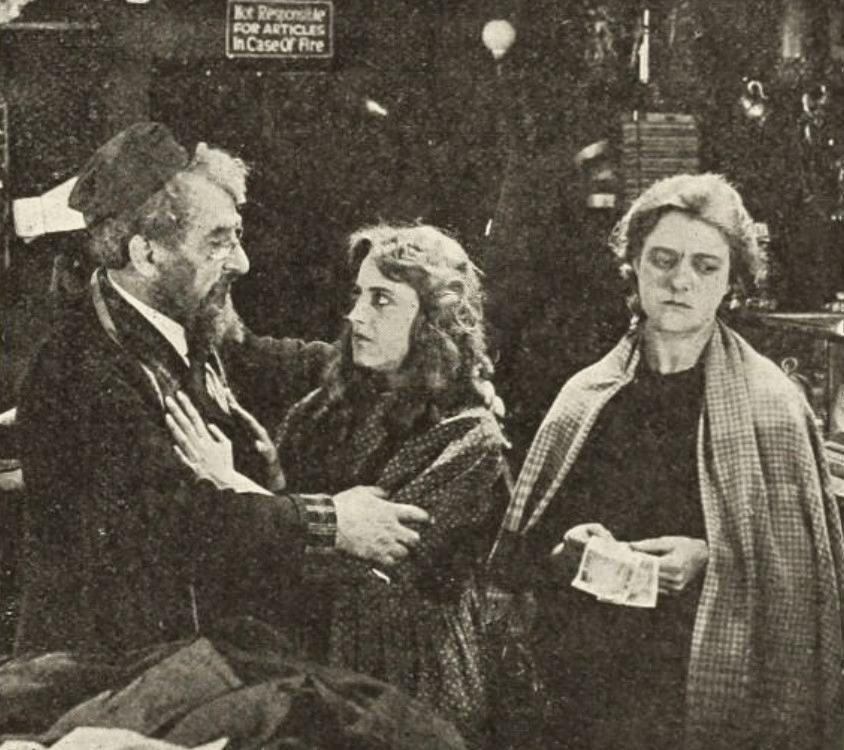
In the annals of early cinema, where narratives often grappled with the stark realities of societal stratification and the enduring power of human affection, "A Jewel in Pawn" (1917) emerges as a remarkably poignant and intricate character study. Directed by Arthur Maude, this silent film transcends mere melodramatic tropes, delving into the profound sacrifices demanded by poverty and the unexpected havens found amidst urban squalor. It's a testament to the era's storytelling prowess, presenting a narrative tapestry woven with threads of despair, hope, and an unwavering belief in the human spirit. The film meticulously charts the harrowing journey of Widow Martin, portrayed with compelling fragility by Maie Hall, whose existence is a ceaseless struggle against the encroaching destitution of the slums. Her singular, all-consuming ambition is to shield her young daughter, Nora (Ella Hall, in a performance of remarkable innocence and resilience), from the coarsening influence of their environment, striving instead to imbue her with the same refinement and grace that once characterized her own privileged upbringing. This maternal aspiration forms the film's emotional bedrock, a desperate yearning to preserve a fragment of lost gentility in a world determined to strip it away.
The narrative’s central conceit, the titular "pawning" of Nora, is a moment of profound, almost unbearable pathos. Faced with the grim realization that her efforts are proving insufficient, and that the battle against the pervasive squalor is gradually being lost, Mrs. Martin makes a heart-wrenching decision. She resolves to seek succor from her estranged, affluent father, a man who had disowned her years prior following her marriage, deeming her choice unworthy of his lineage. This journey, however, is fraught with financial impossibility. It is here that the film introduces one of its most compelling figures: Aaron Levovitch, the aged pawnbroker, brought to life with understated brilliance by Walter Belasco. Levovitch, a man whose gruff exterior belies a profoundly compassionate soul, becomes the unlikely custodian of Nora’s immediate future. The act of "pawning" a child, while shocking in its literal interpretation, is rendered by the film as a desperate act of love, a mother's ultimate gamble for her daughter's salvation, rather than an abandonment. It’s a thematic exploration that resonates with the raw emotional stakes often found in silent-era dramas, where exaggerated gestures and facial expressions conveyed depths of feeling that modern cinema often achieves through dialogue. This pivotal transaction sets in motion a series of events that will irrevocably shape Nora’s destiny, placing her at the nexus of vastly different worlds.
Tragedy, however, is an ever-present shadow in Mrs. Martin’s life. Her arduous journey to her father’s opulent estate ends not in reconciliation, but in illness and a premature demise. She passes away before she can relay her desperate plea, leaving Nora orphaned and her fate seemingly sealed by circumstance. It is at this juncture that Levovitch’s true character shines through. Far from being a mere temporary guardian, he embraces his role with an unexpected tenderness, raising Nora within the humble yet loving confines of his home in the slums. This unexpected turn of events transforms the pawnbroker from a peripheral character into a central figure of paternal affection, challenging audience preconceptions about wealth, status, and the true meaning of family. Nora, growing up under his benevolent eye, embodies the film's central metaphor: a "jewel" — inherently precious and refined — yet "in pawn," temporarily held within circumstances far beneath her perceived value. This period of her life, spent in the vibrant, albeit challenging, environment of the slums, is depicted with a warmth that suggests a genuine sense of community and belonging, contrasting sharply with the cold, unforgiving world of her grandfather’s aristocratic sphere.
The narrative takes a dramatic turn when a perceptive reporter, sensing a compelling human interest story, publishes an article detailing Nora’s extraordinary plight. The headline, "A Jewel in Pawn," captures the imagination of the public and, crucially, catches the eye of Nora’s estranged grandfather, portrayed by George C. Pearce with a suitable blend of initial rigidity and eventual remorse. Confronted with the tangible evidence of his past actions and the tragic consequences for his daughter, he experiences a profound shift. He claims Nora, removing her from the only home and family she has ever truly known, and enrolls her in a fashionable boarding school, attempting to restore her to the life of privilege he believes is her birthright. This transition, however, is far from the fairytale ending one might expect. Nora, despite being surrounded by luxury and refined education, finds herself profoundly alienated. Her heart, forged in the crucible of the slums and nurtured by Levovitch's kindness, yearns for the authenticity and warmth of her former life. She longs for the familiar streets, the communal spirit, and, most ardently, for her childhood sweetheart, Jimmy (Antrim Short), whose unwavering affection represents the genuine connections she cherishes. This emotional dissonance between material abundance and spiritual poverty forms the core of Nora’s internal struggle, a theme explored with considerable nuance for a silent film.
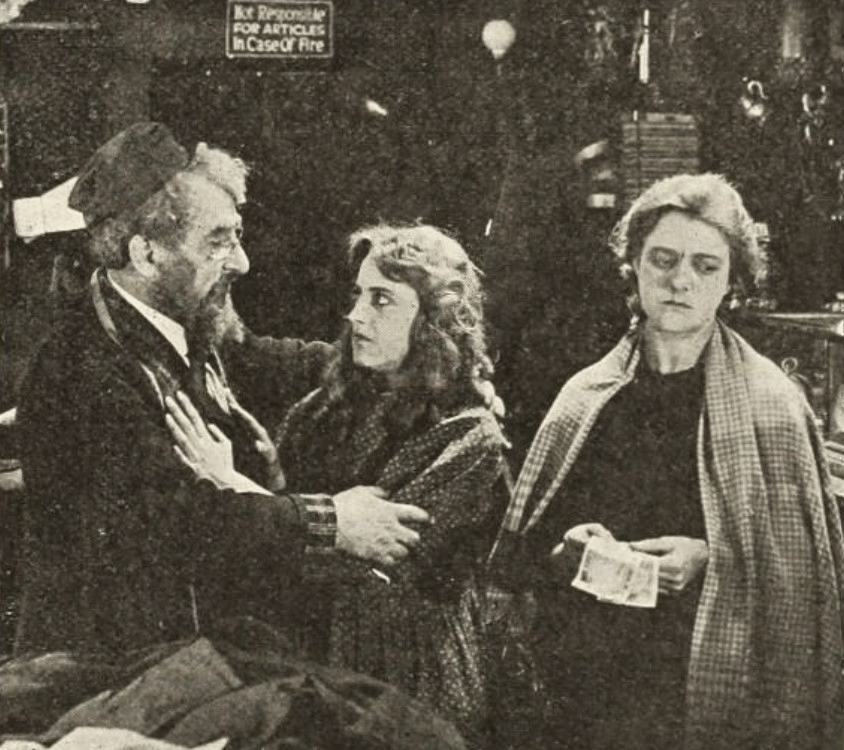
The film’s climax is a powerful affirmation of love and belonging over superficial status. Nora, unable to reconcile herself with the hollow grandeur of her grandfather’s world, makes the courageous decision to return to the slums, to the embrace of Aaron Levovitch, and to the steadfast love of Jimmy. Her return is not a retreat but a triumphant assertion of self-identity and true happiness. The narrative culminates in an elaborate, traditional Jewish ceremony at the pawnbroker's home, where Nora and Jimmy are united in marriage. This conclusion is particularly striking, not only for its emotional resonance but also for its cultural specificity. It underscores the film’s subtle yet powerful commentary on the beauty and resilience of community, and the idea that genuine wealth resides not in material possessions or social standing, but in the bonds of love, family, and shared heritage. The ceremony itself, presided over by Levovitch, symbolizes a full circle, a reclamation of identity and a celebration of a love that transcends societal barriers. It's a remarkably progressive statement for its time, championing the values of a marginalized community and presenting an interfaith relationship (implied, given Nora's background and Jimmy's participation in a Jewish ceremony) with dignity and joy.
Cinematically, "A Jewel in Pawn" showcases the evolving artistry of silent film. Arthur Maude's direction, while adhering to the dramatic conventions of the era, demonstrates an astute understanding of visual storytelling. The stark contrast between the gritty, bustling slum environments and the sterile, imposing grandeur of the grandfather’s mansion is effectively conveyed through set design and lighting. The performances, particularly from Ella Hall as Nora and Walter Belasco as Levovitch, are central to the film's emotional impact. Hall navigates Nora's journey from a vulnerable child to a resolute young woman with grace, her expressive eyes conveying a multitude of unspoken feelings. Belasco, meanwhile, imbues Levovitch with a quiet dignity and warmth that makes him instantly endearing, defying the stereotypical portrayal of pawnbrokers often seen in contemporary media. The film's pacing, characteristic of early features, allows for a deliberate unfolding of the emotional landscape, giving weight to each character's struggle and triumph. This is unlike some contemporary serials like "The Adventures of Kathlyn" or "The Ventures of Marguerite", which prioritized episodic suspense over sustained character development.
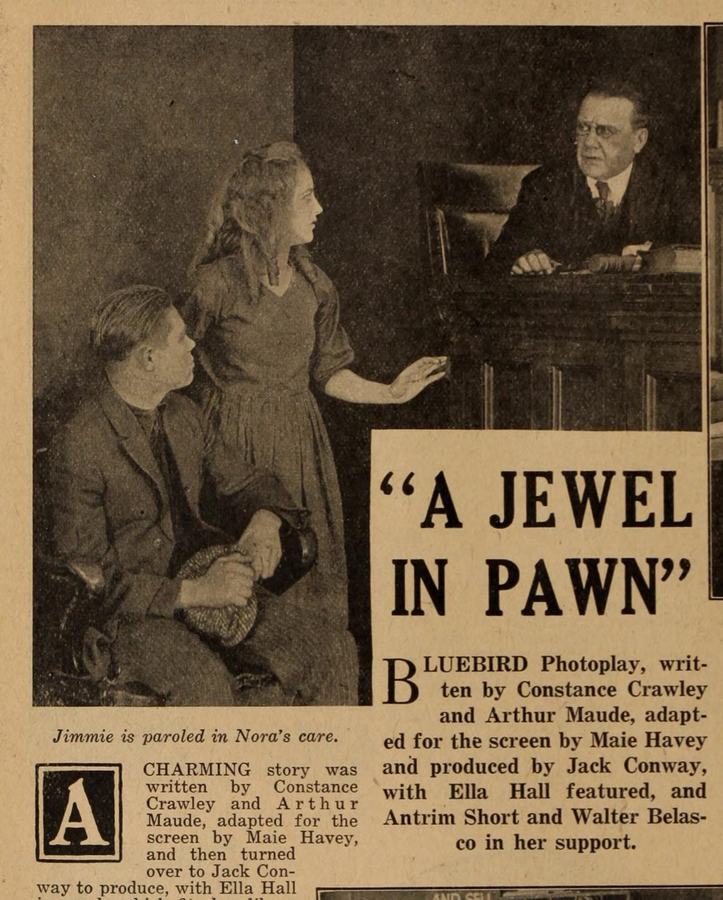
The screenplay, credited to Arthur Maude, Constance Crawley, and Maie B. Havey, masterfully crafts a narrative that is both deeply personal and broadly resonant. It touches upon universal themes of parental sacrifice, the search for identity, and the enduring power of true love. The writers deftly navigate the social commentary inherent in the plot, critiquing the superficiality of class distinctions while celebrating the authentic connections that flourish regardless of economic standing. The film’s exploration of poverty and its effects on family, while not as overtly didactic as some social dramas of the time, offers a nuanced perspective. It avoids simplistic condemnation, instead portraying the slum as a place of genuine human connection and resilience, rather than merely a symbol of degradation. In this respect, it shares thematic kinship with films like "Humanity" (1916), which also explored social issues, though perhaps with a more direct reformist agenda. "A Jewel in Pawn" opts for a more character-driven approach to its social critique, allowing the audience to empathize deeply with Nora's choices.
The character of Aaron Levovitch is particularly noteworthy for its progressive portrayal. In an era where Jewish characters in cinema were often relegated to caricatures or villainous roles, Levovitch stands out as a figure of immense moral rectitude and compassion. His "heart of gold" isn't merely a plot device; it's the very moral compass of the film, guiding Nora through her most vulnerable years and ultimately presiding over her most joyous moment. This positive representation adds another layer of depth to the film’s social commentary, subtly challenging prevailing prejudices and promoting a message of acceptance and understanding. It’s a quiet but powerful statement that distinguishes the film from many of its contemporaries, offering a vision of interfaith and intercultural harmony that was ahead of its time. The film's willingness to embrace and celebrate a specific cultural tradition in its climax further solidifies its unique position within silent cinema. This contrasts with films that might have shied away from such specific cultural portrayals or used them for comedic effect, positioning "A Jewel in Pawn" as a more thoughtful and inclusive work.
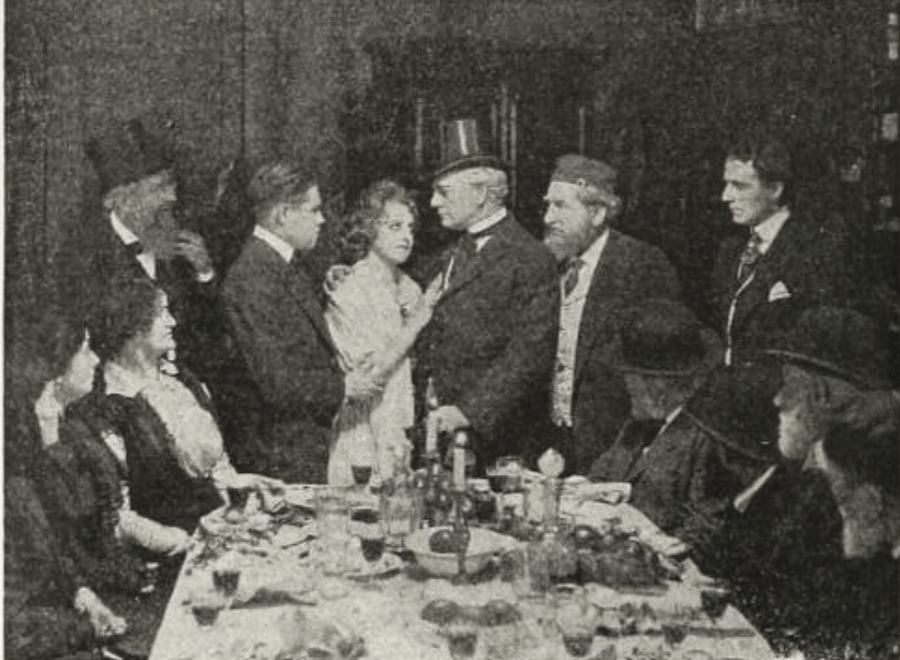
The narrative’s ultimate resolution, with Nora choosing the authentic, loving life in the slums over the gilded cage of her grandfather’s world, is a powerful endorsement of intrinsic values. It posits that true happiness is not found in inherited wealth or societal status, but in genuine human connection and the freedom to choose one's own path. Her decision to marry Jimmy, her childhood sweetheart, in a traditional ceremony at Levovitch's home, is a beautiful and poignant culmination of her journey. It symbolizes a defiant embrace of her true self and the community that nurtured her. This thematic triumph of love and personal fulfillment over material gain is a recurring motif in cinema, but "A Jewel in Pawn" executes it with particular grace and emotional honesty. One might draw parallels to the core message of films like "Brewster's Millions" (1914), where the protagonist grapples with the complexities of wealth and its impact on personal values, though "A Jewel in Pawn" approaches the subject from a perspective of poverty and intrinsic worth rather than the burden of sudden riches.
Furthermore, the film’s exploration of the concept of "home" is particularly compelling. For Nora, home is not defined by architectural grandeur or social standing, but by the presence of love, acceptance, and familiarity. Her yearning for the slums and for Jimmy is not a romanticization of poverty, but a profound recognition of where her heart truly belongs. This resonates deeply, highlighting how environment shapes identity and how the bonds formed in childhood can exert an irresistible pull. The grandfather’s belated attempt at redemption, while well-intentioned, fails to account for the emotional landscape Nora has cultivated. His offering of a "better" life is ultimately hollow because it lacks the foundational elements of love and belonging that Nora experienced with Levovitch and Jimmy. This nuanced portrayal of conflicting definitions of happiness elevates "A Jewel in Pawn" beyond a simple morality tale, transforming it into a thoughtful meditation on what truly constitutes a fulfilling life.
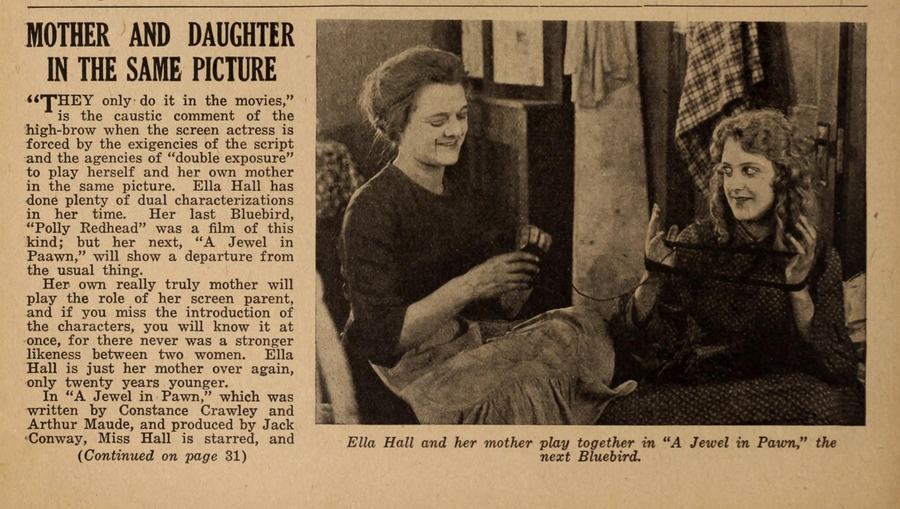
The performances are uniformly strong, a testament to the directorial guidance of Maude and the expressive capabilities of silent film actors. Ella Hall, as Nora, carries the emotional weight of the narrative with remarkable poise. Her transformation from a wide-eyed child to a determined young woman is convincing, and her internal conflict is palpable through her nuanced expressions. Walter Belasco, as Aaron Levovitch, provides the film with its moral anchor, embodying quiet strength and profound empathy. His subtle gestures and warm gaze communicate more than any intertitle could, making him an unforgettable figure. George C. Pearce’s portrayal of the grandfather effectively captures the journey from rigid pride to humbled understanding, completing the film's arc of reconciliation and forgiveness. Even the smaller roles, like Antrim Short’s earnest Jimmy, contribute significantly to the film’s overall texture and emotional authenticity. The ensemble cast works in concert to create a believable world, whether in the bustling, communal streets of the slum or the more austere settings of the upper class.
"A Jewel in Pawn" stands as a significant artifact of early American silent cinema, not just for its engaging plot, but for its thoughtful engagement with complex social and emotional themes. It challenges audiences to look beyond superficial appearances and to recognize the inherent dignity and worth in every individual, regardless of their station. The film's enduring message – that love and belonging are the ultimate forms of wealth – remains timeless and universally resonant. It reminds us that sometimes, the greatest treasures are found not in gilded cages, but in the humble, honest embrace of a community that truly sees and values you. This cinematic gem, with its rich characterizations and heartfelt narrative, deserves to be rediscovered and appreciated for its contribution to the art of storytelling in the nascent years of film. Its ability to evoke such deep emotion and provoke thoughtful reflection without a single spoken word is a powerful reminder of the unique magic of the silent era. The film serves as a potent example of how early filmmakers, despite technical limitations, were capable of crafting narratives of immense emotional depth and social relevance, paving the way for the cinematic language we recognize today.
IMDb 2.2
1936
Community
Log in to comment.