DbcultAccessing Vault...
Cult Review
Senior Film Conservator
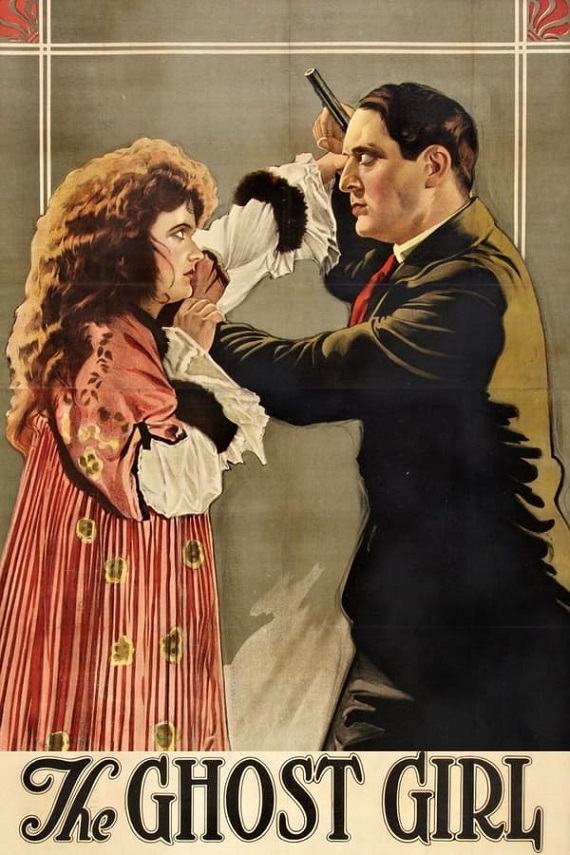
Stepping back into the flickering shadows of early 20th-century cinema, we encounter The Ghost Girl, a silent era drama that, despite its seemingly quaint premise, delves into surprisingly resonant themes of identity, social stratification, and the often-deceptive nature of appearances. Released in 1921, this film, penned by Charles J. Wilson and Patricia Foulds, offers a fascinating glimpse into a period grappling with rapidly changing social norms, even as it clings to the rigid structures of class and decorum. It’s a narrative that, at its heart, questions the very fabric of societal belonging, asking what happens when a young woman dares to peel back the layers of her prescribed existence.
The film introduces us to a protagonist whose very anonymity in the plot description — 'a pretty miss' — underscores her eventual quest for self-definition beyond her social standing. Expelled from a girls' school, this isn't merely a tale of youthful indiscretion. Rather, it’s the catalyst for a more profound rebellion, a deliberate plunge into an existence far removed from her privileged origins. Our 'pretty miss' doesn't retreat into disgrace; she embarks on what she perceives as a 'harmless adventure,' a bold experiment in social anthropology. Her chosen disguise: that of a 'slum girl.' This act of transformative identity is not just a lark; it’s a statement, a silent scream against the suffocating expectations that have defined her life thus far. One might draw parallels here to the rebellious spirit found in films like Eyes of Youth, where a protagonist also grapples with life-altering choices and a desire to forge her own path, albeit through different means. The internal conflict, however, remains a powerful through-line in both narratives.
The audacious nature of her masquerade is amplified by her subsequent encounter with a 'snobbish society girl.' This character, a quintessential representation of the era's entrenched elite, initially embraces our disguised heroine. There’s an undeniable fascination, perhaps even a thrill, in slumming it vicariously through a 'genuine' article. This initial camaraderie, however, is a fragile veneer. The society girl's benevolence soon curdles into a thinly veiled attempt at imposition, a desire to 'civilize' or 'mold' her new acquaintance into a more palatable version of herself. This dynamic exposes the performative aspect of charity and the often-unconscious arrogance of those in power who believe they hold the key to another's betterment. It's a subtle but potent critique of social hierarchies, revealing how even seemingly kind gestures can be imbued with a desire for control and validation.
The performances in The Ghost Girl, typical of the silent era, rely heavily on exaggerated facial expressions, grand gestures, and the evocative power of the intertitles to convey emotion and narrative progression. Casson Ferguson, often remembered for his leading man roles, likely brought a certain gravitas or romantic interest to the proceedings, his screen presence a vital anchor in a world of visual storytelling. Victor Rodman, another prominent actor of the time, would have contributed to the film’s dramatic tension, perhaps as a foil or a figure of authority. The true gems, however, often lie in the supporting cast, and Martha Mattox, known for her stern or formidable portrayals, could have embodied the very essence of the 'snobbish society girl,' her every gesture radiating an air of entitled superiority. Her ability to convey disdain or patronizing kindness without uttering a single word would have been crucial to the film’s social commentary. Similarly,
The screenplay by Charles J. Wilson and Patricia Foulds, though concise in its plot outline, clearly possessed the germ of a compelling social drama. Their collaborative effort likely crafted a narrative arc that allowed for both the initial thrill of rebellion and the subsequent disillusionment that often accompanies an unmasking. The choice to frame the protagonist's journey as a 'harmless adventure' initially suggests a lighthearted romp, but the rapid shift to 'imposition' hints at a more nuanced, perhaps even cynical, view of human nature and societal interaction. This narrative structure, moving from playful defiance to a confrontation with stark realities, is a hallmark of many effective dramas, both then and now. One might compare this exploration of societal facades to the thematic undercurrents in Extravagance, where the perils of appearances and the pursuit of social standing often lead to unforeseen consequences, forcing characters to confront their true selves.
The film's exploration of class distinction is particularly noteworthy for its era. While not as overtly confrontational as later social realist dramas, The Ghost Girl subtly critiques the chasm between the 'haves' and 'have-nots.' The protagonist's ability to seamlessly infiltrate the lower strata, even if only in disguise, speaks volumes about the performative nature of class. Conversely, the society girl's attempts to 'uplift' her new friend reveal the inherent biases and paternalism embedded within charitable endeavors of the time. This isn't just about good intentions gone awry; it's about the fundamental inability of one class to truly understand or accept another on equal terms. This theme, of course, resonates through cinematic history, from early works like The Slave Auction (though dealing with a far more egregious form of social injustice, it too highlights the dehumanizing aspects of social hierarchy) to modern narratives that still grapple with economic and social divides. The silent film medium, with its reliance on visual metaphor and stark contrasts, was uniquely suited to depicting such societal fissures.
Beyond the social commentary, The Ghost Girl is also a story about self-discovery. The protagonist's decision to shed her identity, even temporarily, is a powerful act of agency. It suggests a yearning for authenticity, a desire to understand the world and herself outside the confines of her birthright. The eventual 'imposition' by the society girl serves as a harsh lesson: true freedom isn't found in simply adopting a new persona, but in challenging the very systems that dictate who one can be. Her journey, though perhaps ending in a return to her original station, would undoubtedly leave her changed, imbued with a deeper understanding of human nature and the complexities of her society. This internal transformation, often subtle in silent films, is what gives these early works their enduring power.
The very title, The Ghost Girl, is intriguing. Does it refer to her spectral presence in a world not her own? Or perhaps to the 'ghost' of her true self, hidden beneath layers of societal expectation and adopted identity? The ambiguity adds a layer of poetic depth to the film, inviting viewers to ponder the nature of self and the ephemeral quality of social roles. It’s a title that hints at the psychological undercurrents at play, suggesting that the adventure is as much an internal one as it is an external foray into different social circles. The film's lasting impact, for those fortunate enough to encounter it, lies in its ability to provoke thought about these timeless questions, even a century after its initial release.
In an era where cinema was still finding its voice, The Ghost Girl stands as a testament to the power of narrative to explore complex human experiences. It may not possess the grand spectacle of some of its contemporaries, but its focus on character and social critique gives it a quiet strength. It reminds us that even in the absence of spoken dialogue, films could articulate profound truths about the human condition, challenging viewers to look beyond the surface and engage with the deeper currents of societal interaction. While many silent films have faded from collective memory, those that tackled such universal themes often leave an indelible mark, inviting rediscovery and re-evaluation. It's a film that, much like its protagonist, adopts a guise of simplicity, only to reveal a richer, more thought-provoking core upon closer inspection. Its legacy, however small, lies in its contribution to the ongoing cinematic conversation about who we are, who we pretend to be, and the societies that shape us.

IMDb 6.5
1928
Community
Log in to comment.