DbcultAccessing Vault...
Cult Review
Senior Film Conservator
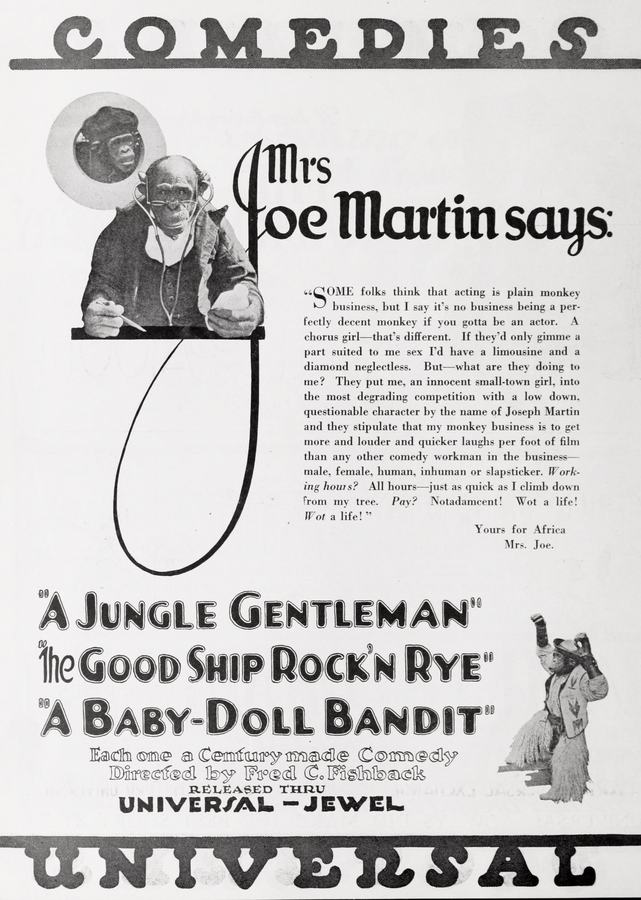
The early days of cinema, often dismissed by casual viewers as mere flickering curiosities, were in fact a fertile ground for narrative experimentation and the forging of comedic archetypes that continue to resonate today. Among these forgotten gems, Fred Hibbard’s 1919 silent short, A Jungle Gentleman, stands as a testament to the era’s ingenious capacity for slapstick, satire, and a particularly biting brand of ironic humor. Far from being a simple, quaint relic, this film offers a surprisingly sophisticated, if overtly farcical, commentary on ambition, desperation, and the often-unforeseen consequences of one's own machinations. It’s a narrative that, despite its century-old vintage, feels remarkably prescient in its exploration of the lengths to which individuals will go to secure financial stability, even if it means treading a path paved with literal peril.
At the heart of this comedic maelstrom is Dr. Cutup, portrayed with a delightful blend of fecklessness and opportunistic zeal by Jimmie Adams. Dr. Cutup is not your conventional medical professional; his true passion lies not in the healing arts, but in the thrilling spectacle of sport. This fervent devotion to athletic pursuits, particularly the local baseball scene and the captivating allure of the ‘Female Giants,’ has unfortunately taken a severe toll on his professional practice and, by extension, his family’s financial well-being. His bankroll, a crucial indicator of a household’s stability, dwindles with each swing of the bat and every neglected patient. Adams imbues Cutup with an almost childlike disregard for his responsibilities, making his eventual turn to a desperate, unethical scheme all the more comically understandable. It's a portrayal that captures the essence of a character whose priorities are so spectacularly misaligned that one can almost forgive his impending moral transgressions, seeing them as the inevitable outcome of a mind more attuned to home runs than healthy returns.
Faced with the grim reality of a wife and baby in need, and his own finances in freefall, Dr. Cutup is forced to confront his predicament. His solution is not to redouble his medical efforts, but to devise an 'unusual means for getting business' – a phrase that barely scratches the surface of its audacious absurdity. This is where Mrs. Joe Martin enters the narrative, playing a pivotal role as the unwitting instrument of Cutup’s ethically questionable enterprise. Hired to execute his 'pet scheme,' she is instructed to don the attire of an office boy – a subtle nod to the era's playful gender-bending in comedy – and dispatched on a peculiar errand: to purchase a dozen bananas. The instructions that follow are nothing short of brilliant in their depraved simplicity: 'Eat them and shatter the peels right in front of my door.' The sheer audacity of this plan, turning everyday refuse into an instrument of economic gain, elevates the film from simple slapstick to a shrewd, if cynical, commentary on human desperation and ingenuity. It’s a testament to the creative heights of silent comedy that such a simple, visual gag could be stretched into the backbone of an entire plot, reflecting the era's fascination with physical comedy and the unexpected.
The scheme, against all reasonable expectations, proves to be a resounding triumph. The banana-paved sidewalk outside Dr. Cutup’s office becomes a veritable minefield of comedic mishaps, each slip and tumble translating into a 'golden trickle' for his till. The sight of unfortunate pedestrians performing involuntary acrobatics on the slick debris, only to find themselves ushered into the waiting arms of the very doctor who orchestrated their misfortune, is a masterclass in dark humor. The film revels in the escalating chaos, showcasing the effectiveness of Cutup’s morally bankrupt, yet undeniably effective, marketing strategy. Forrest Robinson and Esther Wood, alongside Charles Dudley, likely play some of the hapless victims or observers, contributing to the broader comedic tableau of a city suddenly plagued by an epidemic of gravitational failures. The success is 'beyond even his expectations,' a phrase that underscores the sheer, unadulterated luck inherent in such a reckless venture. Yet, as with all tales of hubris, a reckoning awaits. Highly satisfied with his newfound prosperity, Dr. Cutup dons his hat, ready to embark on an evening's entertainment, perhaps to celebrate his business acumen, when, in a perfectly executed piece of cinematic irony, he steps out, 'kerflop,' and succumbs to the very hazard he so cunningly engineered. His own business scheme, the source of his recent affluence, becomes the instrument of his immediate downfall, a poetic justice that punctuates the narrative with a final, uproarious punchline. This kind of karmic retribution, where the protagonist is hoist by their own petard, is a recurring motif in comedic storytelling, a device that finds its roots in ancient fables and its continued resonance in modern narratives.
Fred Hibbard, as the writer and director, demonstrates a keen understanding of comedic timing and visual storytelling, essential elements in the silent era. His direction transforms a simple premise into a dynamic and engaging spectacle. The pacing of the film, from Cutup's initial struggles to the gradual build-up of the banana peel crisis and its ultimate, ironic climax, is meticulously crafted. Hibbard understands that slapstick isn't merely about physical gags; it's about the anticipation, the reaction, and the inevitable consequence. The visual language of the film is articulate, conveying character motivations and plot developments without the need for intertitles to belabor every point. The choice of Mrs. Joe Martin as the 'office boy' is a particularly clever device, adding a layer of charming absurdity to the already outlandish premise. This kind of playful subversion of expectations was a hallmark of early cinema, where filmmakers were constantly experimenting with how to entertain and surprise their audiences. Hibbard’s work here, while perhaps not as widely recognized as some of his contemporaries, showcases a genuine talent for orchestrating comedic chaos that feels both spontaneous and perfectly choreographed. One can see echoes of this precise, yet seemingly chaotic, direction in later physical comedies, where the environment itself becomes a character, much like the treacherous sidewalk in A Jungle Gentleman.
Beyond the overt humor, A Jungle Gentleman subtly touches upon several enduring themes. The most prominent is, of course, the theme of irony. Dr. Cutup's downfall by his own device is a classic example of poetic justice, a narrative trope that resonates deeply with audiences who appreciate a villain (or anti-hero, in this case) receiving their just deserts. This kind of ironic twist is often found in films exploring the darker side of human nature, albeit here played for laughs. One might even draw a parallel to the intricate, often morally ambiguous schemes depicted in more dramatic silent fare like The Mystery of the Black Pearl, though the stakes and tone are, of course, worlds apart. Here, the 'mystery' is simply how long until someone slips, and the 'pearl' is a handful of coins. The film also delves into the theme of greed and desperation. Cutup’s actions, while extreme, stem from a very real need to provide for his family, albeit one exacerbated by his own irresponsibility. This paints a complex picture of a character who is both blameworthy and, in a strange way, pitiable. The urban environment itself functions as a kind of 'jungle,' where survival often dictates unconventional and sometimes ruthless tactics. The anonymous sidewalk, ripe for exploitation, becomes a symbol of the chaotic, dog-eat-dog nature of city life, where opportunity can be found in the most unlikely—and unsafe—of places. The film, therefore, acts as a microcosm of early 20th-century urban existence, a bustling arena where individual ambition often clashed with public welfare, all under the guise of lighthearted entertainment.
The success of any silent film hinges heavily on the expressive capabilities of its cast, and A Jungle Gentleman is no exception. Jimmie Adams, as Dr. Cutup, commands the screen with his blend of exaggerated gestures and subtle facial expressions, perfectly conveying the character's internal conflict between his passion for sport and his burgeoning financial woes. His transformation from carefree sportsman to desperate schemer and finally to ironic victim is a masterclass in silent comedic acting. Mrs. Joe Martin, in her role as the office boy, brings a unique charm and understated humor to the proceedings. Her deadpan execution of the banana peel scheme, coupled with the inherent absurdity of her disguise, makes her a memorable accomplice. While the information on her specific performance is limited, the very act of a woman playing a male 'office boy' in this context adds a layer of social commentary and playful gender role exploration that would have resonated with audiences of the time. Forrest Robinson, Esther Wood, and Charles Dudley, though perhaps in supporting roles as the victims of Cutup's scheme or members of the broader ensemble, undoubtedly contribute to the film's vibrant comedic tapestry. Their reactions, falls, and general air of bewildered misfortune are crucial to the success of the physical gags, providing the necessary contrast to Cutup's calculated, if ultimately self-defeating, entrepreneurship. The collective energy of the cast under Hibbard's direction ensures that the humor lands effectively, transcending the century that separates us from its original exhibition.
A Jungle Gentleman, despite its relatively obscure status compared to the behemoths of silent cinema, offers a fascinating glimpse into the comedic sensibilities of its era. It's a film that utilizes a simple, universally understood comedic trope – the banana peel slip – and elevates it into a sophisticated narrative device for exploring themes of greed, consequence, and the absurd lengths to which individuals will go. The film's enduring appeal lies in its clever script, dynamic direction, and the expressive performances of its cast, particularly Jimmie Adams. It serves as a reminder that early cinema was not just about spectacle, but also about sharp wit and keen social observation, often delivered with a generous dose of physical comedy. While it may not command the same academic scrutiny as a dramatic epic like The Soul's Cycle or the psychological depth of Lady Audley's Secret, its contribution to the evolution of comedic storytelling is undeniable. It's a film that, even today, can provoke genuine laughter, a testament to the timeless nature of well-executed physical humor and narrative irony. For those seeking to explore the rich tapestry of silent film beyond the most famous titles, A Jungle Gentleman offers a delightful and surprisingly insightful journey into the heart of early 20th-century farce. It’s a film that proves that sometimes, the most profound lessons can be learned from the most slippery of situations, reminding us that even the most cunning plans can, quite literally, lead to our own undoing.
IMDb 5.2
1921
Community
Log in to comment.