Atmosphere and Visual Palette
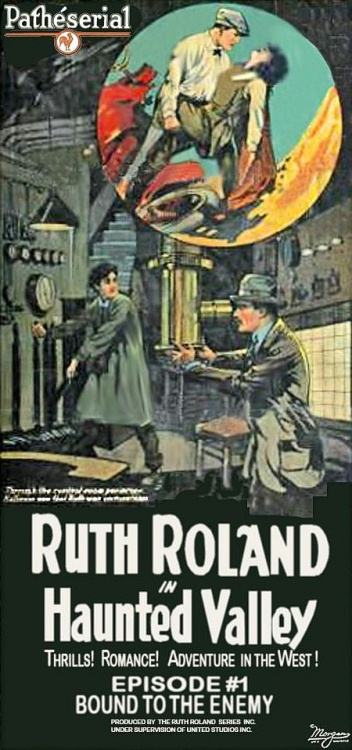
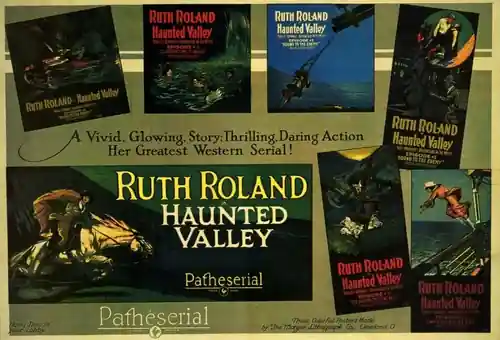
\nThe opening frames of The Haunted Valley immerse the viewer in a chiaroscuro tableau where the obsidian night sky is punctuated by the jaundiced glow of distant lanterns. The cinematographer’s decision to bathe the valley in a muted palette, punctuated by splashes of dark orange (#C2410C) and sea blue (#0E7490), creates a visual tension that mirrors Ruth’s internal turmoil. Shadows creep along the crumbling stone walls, suggesting that the land itself is a character, brooding and unforgiving.
\n \nNarrative Architecture
\nAt its core, the film is a study in contractual oppression. The loan agreement functions as a ticking metronome, its three‑month deadline a relentless drumbeat that drives each scene forward. Ruth Roland (played with steely determination by Ruth Roland) is not merely a proprietor; she is a symbol of frontier resilience, embodying the mythos of the American pioneer who wrestles with both nature and capitalism. The script, penned by Frank Leon Smith, weaves a tapestry of subplots that interlock like the unfinished arches of the Lost River Dam itself.
Character Dynamics
\nAaron Edwards, the dam’s chief engineer, oscillates between pragmatic optimism and covert desperation. His chemistry with Ruth is palpable, yet fraught with the unspoken fear that his own reputation may crumble if the project fails. Andree Peyre’s outsider, a mercurial figure whose loyalties shift like the valley’s wind, adds an element of intrigue reminiscent of the duplicitous characters in The Fatal Card. Francis Ford and William Ryno, as rival magnates, serve as embodiments of corporate greed, each attempting to manipulate the loan’s terms to their advantage.
\n \nThe Silent Laborer
\nEdouard Trebaol’s mute laborer, whose backstory is revealed through haunting flashbacks, provides a poignant counterpoint to the film’s high‑stakes financial drama. His silence is a narrative device that forces the audience to confront the human cost of industrial ambition. This character’s arc subtly echoes the tragic undercurrents found in Hungry Hearts, where personal loss is interwoven with broader societal upheaval.
Thematic Resonance
\nBeyond the surface thriller, the film interrogates the ethics of debt and the commodification of natural resources. The loan’s punitive clause—loss of both the dam and the valley—acts as an allegory for how financial institutions can dictate the fate of entire communities. Ruth’s ultimate decision—to either surrender the dam or risk catastrophic failure—raises questions about sacrifice, stewardship, and the limits of personal agency.
\n \nComparative Lens
\nWhen juxtaposed with The Betrayer, which also explores betrayal within tight-knit societies, The Haunted Valley distinguishes itself through its environmental subtext. While The Betrayer focuses on interpersonal treachery, The Haunted Valley expands the betrayal to the very earth, suggesting that the land can be as duplicitous as any human antagonist.
Performance Nuance
\nRuth Roland delivers a performance that oscillates between iron‑willed resolve and vulnerable introspection. Her eyes, often framed against the looming silhouette of the dam, convey a silent dialogue with the audience. Aaron Edwards’ portrayal is marked by a subtle physicality—tightening fists, a lingering gaze on the unfinished concrete—that hints at his internal conflict without the need for exposition.
\n \nSupporting Cast
\nEulalie Jensen’s matriarchal figure provides a grounding presence, her voice resonating with the cadence of old‑world folklore, reminiscent of the narrative tone in Miss Ambition. Noble Johnson, as the enigmatic financier, embodies the faceless corporate entity, his cold demeanor underscored by an unsettling stillness that lingers long after his scenes conclude.
Cinematic Technique
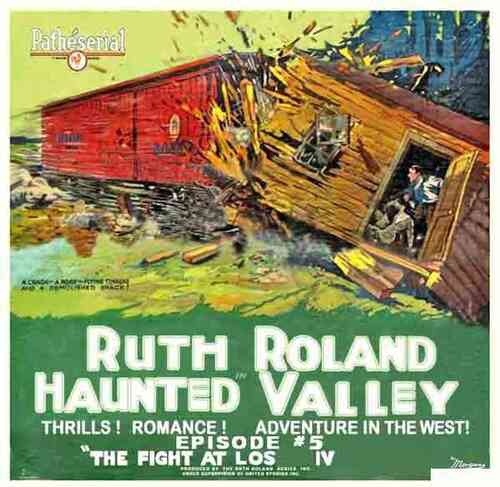
\nThe director employs a series of long takes that linger on the valley’s rugged terrain, allowing the audience to absorb the oppressive atmosphere. The use of practical effects for the dam’s construction sequences lends an authenticity that CGI often fails to achieve. The climactic flood scene, orchestrated with a blend of miniature models and on‑location water work, is a masterclass in tension building, echoing the visceral impact of the deluge in The Devil's Bondwoman.
\n \nScore and Soundscape
\nThe film’s score, a haunting amalgam of low‑drone strings and sporadic percussive bursts, mirrors the heartbeat of the valley itself. Moments of silence are strategically placed, allowing the natural sounds of wind rustling through pine needles to dominate, reinforcing the theme that nature is an ever‑present, albeit often ignored, participant.
\n \nNarrative Pacing
\nThe pacing is meticulously calibrated: the first act establishes stakes with measured deliberation, the second act accelerates as betrayals surface, and the final act erupts into a frenetic crescendo as the dam teeters on collapse. This structure mirrors the three‑month loan timeline, granting the audience an experiential sense of the ticking clock.
\n \nCultural Context and Legacy
\nReleased at a time when public discourse around infrastructure financing was gaining momentum, The Haunted Valley resonates as a cautionary tale about the perils of unchecked capital infusion into rural communities. Its portrayal of a strong female lead navigating a male‑dominated industry prefigures later works such as Hearts and Masks, cementing its place in the evolving canon of feminist cinema.
\n \nFinal Assessment
\nThe Haunted Valley is a cinematic tapestry woven from threads of suspense, moral ambiguity, and environmental allegory. Its strengths lie in a meticulously crafted visual language, layered performances, and a narrative that refuses to simplify the complexities of debt and duty. While occasional dialogue feels stilted—a relic of its era—the film’s overall impact endures, offering viewers a haunting reminder that the greatest dams we build are often the ones within ourselves.