DbcultAccessing Vault...
Cult Review
Senior Film Conservator
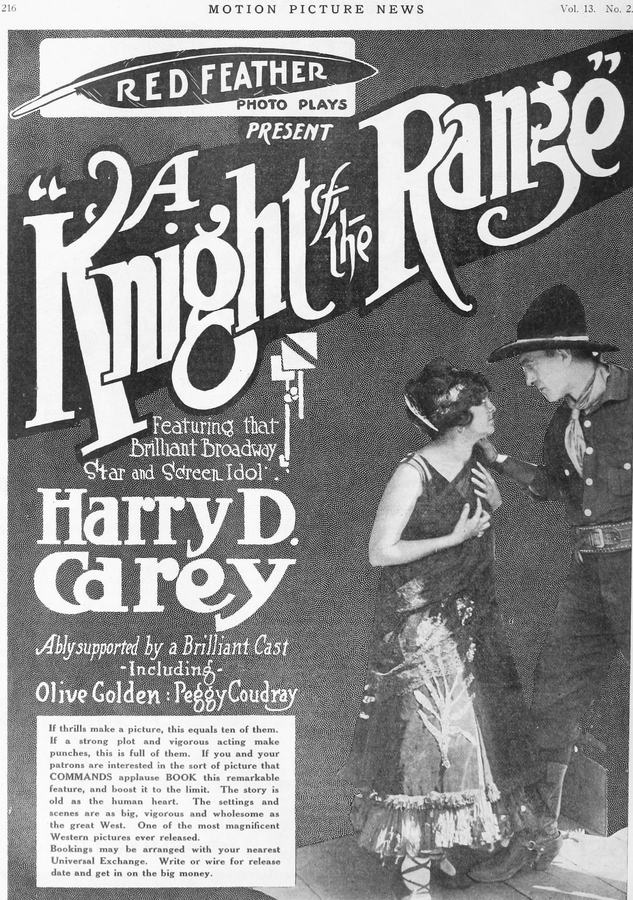
Venturing back to the nascent days of cinematic storytelling, before the spoken word graced the silver screen, we encounter A Knight of the Range, a 1915 silent Western that, despite its antiquity, offers a surprisingly robust exploration of character, sacrifice, and the enduring allure of the American frontier. Directed by William Worthington and featuring the legendary Harry Carey, who also penned the story, this film stands as a fascinating artifact, not merely for its historical significance but for its surprisingly nuanced emotional landscape, a testament to the power of visual narrative even in its earliest forms.
At its core, A Knight of the Range is a morality play draped in cowboy attire, a tale of misguided affection, profound betrayal, and ultimate redemption. Bess Dawson, portrayed by Peggy Coudray with a certain earnestness typical of the era, finds herself at the heart of a classic Western romantic triangle. Her choice, initially, falls upon Bob Graham (William Steele), a man whose outward charm masks a fundamental weakness of character. This initial misjudgment sets the stage for a compelling narrative arc, demonstrating how easily superficial allure can eclipse genuine, unwavering devotion. Contrasting sharply with Bob is Cheyenne Harry, brought to life with understated power by Harry Carey himself. Harry embodies the stoic, honorable cowboy archetype, a figure whose quiet strength and unwavering moral compass define the very essence of frontier heroism.
The plot unfurls with a swiftness characteristic of early cinema, yet it manages to imbue its characters with discernible motivations. Bob Graham, swayed by nefarious influences, succumbs to the temptation of a hold-up, a decision that irrevocably alters the course of his life and those around him. This pivotal moment is not merely a plot device; it serves as a stark illustration of moral decay, a descent into criminality born not of malice, perhaps, but of a profound lack of inner fortitude. The film, through its visual storytelling, communicates Bob's susceptibility, his inability to resist the dark currents of temptation, painting him not as a mustache-twirling villain but as a tragically flawed individual.
It is in the aftermath of this crime that Harry Carey's character, Cheyenne Harry, truly shines, demonstrating a selflessness that elevates the film beyond a simple Western potboiler. Upon learning of the posse dispatched to apprehend Bob, Harry's immediate instinct is not self-preservation or even righteous indignation, but an extraordinary act of loyalty. He rides to Bob's aid, facilitating his escape from the clutches of justice. This initial act of assistance, however, is merely a prelude to a far greater sacrifice. Determined to spare Bess from the ignominy and heartbreak of marrying a convicted criminal, Harry makes a decision of profound moral weight: he deliberately allows the posse to believe that he, and not Bob, was involved in the robbery. This act of taking the blame, a form of cinematic martyrdom, is the emotional linchpin of the entire narrative, a powerful testament to unrequited love and unwavering honor.
Bess's reaction to this unfolding drama is crucial for the audience's engagement. Initially horrified by the perceived betrayal of Harry, her subsequent realization of Bob's true cowardice—his willingness to let Harry shoulder the blame—marks a pivotal turning point in her understanding of character. Her eyes are opened, not by exposition, but by the stark contrast between Harry's selfless nobility and Bob's craven self-preservation. This awakening is a familiar trope in romantic narratives, yet in the context of A Knight of the Range, it feels earned, a poignant moment of clarity forged in the crucible of moral dilemma. It speaks to the film's surprisingly sophisticated grasp of human psychology for its time, illustrating how adversity can strip away illusion and reveal the true nature of individuals.
The resolution of the narrative, while perhaps predictable to modern sensibilities, carries a satisfying weight. Bob Graham's ultimate demise in a gunfight serves as a swift, almost karmic, consequence for his choices, bringing a definitive closure to his tragic arc. With Bob no longer a factor and Harry eventually cleared of the false robbery charges, the path is cleared for Bess to finally recognize and embrace the true hero. Her acceptance of Harry's marriage proposal is not merely a happy ending; it is a profound affirmation of values, a victory for integrity and genuine love over superficiality and weakness. The film, in this regard, delivers a powerful moral message, one that resonates even a century later.
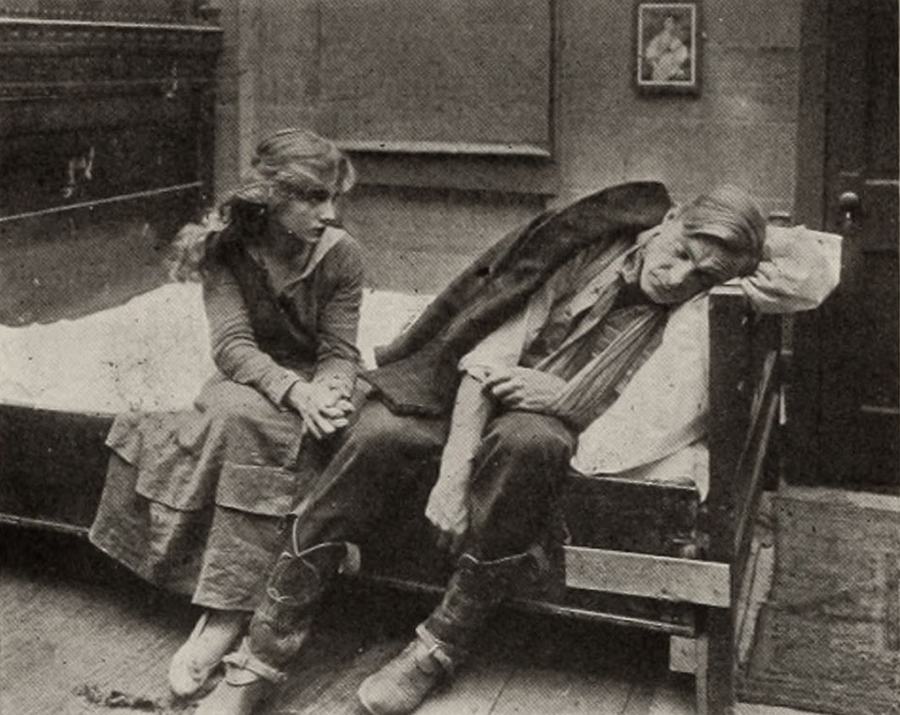
Harry Carey's dual role as writer and lead actor is particularly noteworthy. As a performer, he brings a quiet intensity to Cheyenne Harry, a character whose heroism is defined not by grand gestures but by profound moral conviction. His expressions, though constrained by the conventions of silent film acting, convey a depth of emotion that is both compelling and believable. One can see the nascent stages of the iconic screen persona that would define much of his career. As a writer, Carey crafts a narrative that, while adhering to genre conventions, introduces a layer of emotional complexity that elevates it beyond mere escapism. The moral choices presented, the self-sacrifice, and the eventual enlightenment of Bess are all testaments to his understanding of compelling storytelling.
The supporting cast, including William Steele as the ill-fated Bob Graham and Peggy Coudray as Bess Dawson, deliver performances that, while perhaps broad by today's standards, effectively serve the narrative. Steele conveys Bob's initial charm and subsequent descent into desperation, while Coudray manages to make Bess's transformation from naive suitor to enlightened partner believable. Hoot Gibson, though in an earlier role here, also contributes to the ensemble, hinting at the future star he would become in the Western genre. The synergy among the actors, under Worthington's direction, creates a coherent and engaging experience.
From a technical standpoint, A Knight of the Range showcases the developing cinematic language of the early 20th century. While lacking the sophisticated camera movements and editing techniques that would soon emerge, the film utilizes intertitles effectively to convey dialogue and crucial plot points. The outdoor cinematography, capturing the rugged beauty of the Western landscape, adds an authentic backdrop to the drama. These early Westerns often relied heavily on natural scenery, and this film is no exception, using the vast, untamed environment to underscore the characters' struggles and triumphs. The starkness of the landscape often mirrors the stark moral choices faced by the protagonists.
Comparing A Knight of the Range to other films of its era, one can appreciate its thematic depth. While a film like The Sea Wolf (1926), though later, explored moral ambiguity and the darker aspects of human nature with greater intensity, A Knight of the Range provides a foundational blueprint for the Western hero's moral code. Similarly, while The Rights of Man: A Story of War's Red Blotch (1917) delved into sacrifice in the context of global conflict, Harry's personal sacrifice for love and honor in this film resonates with a more intimate, yet equally powerful, emotional impact. The common thread among these early narratives is often the exploration of human character under duress, a theme that A Knight of the Range tackles with earnest conviction.
The film's contribution to the Western genre is significant. It solidifies the archetype of the noble cowboy, a figure whose moral compass remains true even when faced with personal hardship and the betrayal of others. Harry Carey’s portrayal helped define this enduring image, influencing countless Westerns that followed. It’s a foundational text for understanding how the genre established its core tenets: a vast, often lawless, landscape where individual integrity and swift justice often prevail, and where the line between good and evil, though sometimes blurred, is ultimately made clear through action.
Moreover, A Knight of the Range serves as an excellent window into the evolution of cinematic narrative. In an era where films were often simple sequences of events, this movie attempts to delve into character motivation and emotional consequences, moving beyond mere spectacle. The story’s reliance on gesture, expression, and the careful staging of scenes to convey complex feelings and moral dilemmas highlights the ingenuity of early filmmakers working within the constraints of their medium. The audience is invited to interpret, to empathize, and to connect with the characters on a purely visual and emotional level.
In conclusion, A Knight of the Range is far more than a dusty relic of the silent era. It is a compelling narrative, a testament to the power of self-sacrifice, and a foundational piece in the tapestry of the American Western. Harry Carey, both in front of and behind the camera, delivers a performance and a story that resonate with timeless themes of honor, love, and redemption. For those interested in the genesis of cinematic storytelling, the evolution of the Western genre, or simply a well-crafted tale of moral fortitude in the face of adversity, this film offers a rich and rewarding experience. It reminds us that even without spoken dialogue, the human heart's complexities and triumphs can be eloquently expressed, proving that a true knight, indeed, needs no words to prove his worth.
IMDb —
1929
Community
Log in to comment.