DbcultAccessing Vault...
Cult Review
Senior Film Conservator
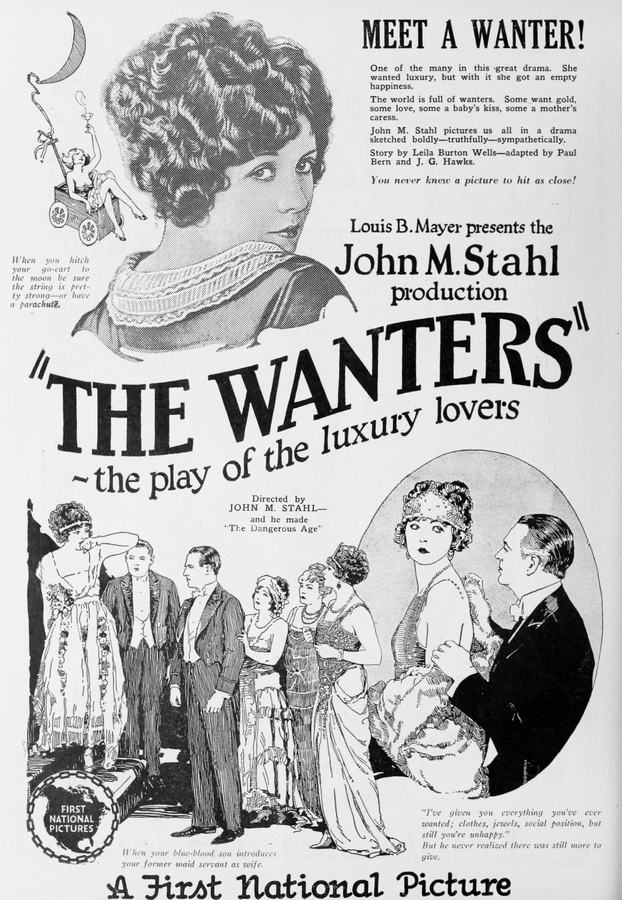
The opening frames of The Wanters unfurl like a chiaroscuro painting, where light and shadow delineate not only physical spaces but also the invisible barriers erected by wealth. Richard Headrill’s Elliot glides through his sister’s manor with a languid confidence, his gaze lingering on Myra (Norma Shearer), whose modest attire and gentle demeanor contrast starkly against the marble corridors. The film’s mise‑mise, saturated with muted tones, underscores the tension between the opulent and the ordinary, setting the stage for a romance that feels both inevitable and transgressive.
The screenplay, penned by J.G. Hawks and Paul Bern, weaves a narrative that is at once simple and subversive. Myra’s dismissal—a seemingly routine act of domestic housekeeping—catalyzes a chain reaction that exposes the fragility of the social order. Elliot’s decision to pursue her is less a whimsical gesture than a deliberate challenge to the entrenched hierarchy. In this regard, the film anticipates later works such as The Home Town Girl, where romantic agency confronts communal expectations.
The script’s dialogue, peppered with period‑specific idioms, never feels stilted; instead, it carries a lyrical cadence that mirrors the characters’ internal rhythms. When Elliot declares his intention to marry Myra, his words are both tender and defiant, echoing the subversive undercurrents of early 1920s cinema that dared to question the rigidity of class structures.
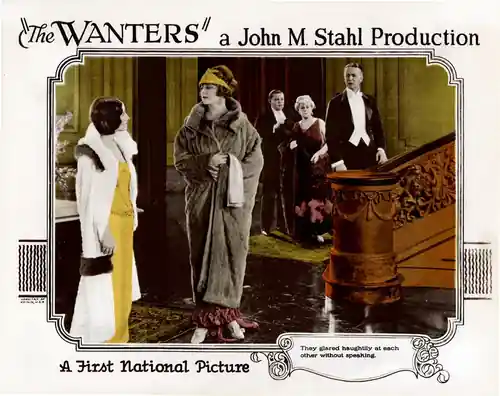
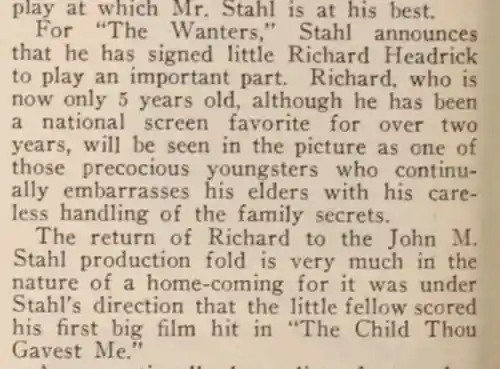
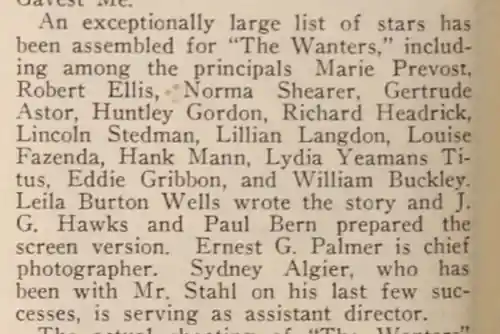
Norma Shearer, still in the early phase of her illustrious career, imbues Myra with a quiet resilience that transcends the script’s occasional melodramatic flourishes. Her expressive eyes convey a spectrum of emotions—hope, dread, disillusionment—without resorting to overt theatricality. Headrill, meanwhile, balances aristocratic poise with a palpable vulnerability, particularly in the scene where he confronts his own family’s scorn. The supporting ensemble—Louise Fazenda’s comic relief as a nosy neighbor, Huntley Gordon’s suave yet duplicitous friend—adds layers of texture, each performance calibrated to the film’s tonal shifts.
The chemistry between Shearer and Headrill is electric yet restrained, a dance of glances and subtle gestures that speak louder than any declaration. Their intimacy is framed by soft focus lenses, a technique that softens the harshness of the surrounding world and invites the audience into a private sphere of affection.
Cinematographer Robert Ellis employs chiaroscuro lighting to underscore the film’s thematic dichotomies. The opulent ballroom, bathed in gilded amber, becomes a stage for Myra’s humiliation; her solitary figure, illuminated by a solitary sea‑blue spotlight (#0E7490), underscores her alienation. The recurring motif of the railway—first as a distant, humming presence, later as a lethal threat—functions as a metaphor for the inexorable march of societal expectations.
The climactic rescue sequence, where Elliot pulls Myra from the clutches of a switching mechanism, is choreographed with kinetic precision. The camera tracks the frantic motion in a series of rapid cuts, each frame saturated with tension. The metallic clang of the switch, amplified by the film’s original score, punctuates the moment with a visceral jolt, reminding viewers that love, in this universe, is both a sanctuary and a battlefield.
Beyond its period setting, The Wanters resonates with contemporary discourses on power dynamics, gender roles, and the performative nature of hospitality. Myra’s evolution—from obedient servant to self‑determined individual—mirrors modern narratives of empowerment. The film’s critique of superficial civility, embodied by the aristocratic guests who veil contempt with polished manners, anticipates the social satire found in later silent classics such as The Midlanders.
The film’s ending, ambiguous yet hopeful, refuses to provide a tidy resolution. Myra’s escape from the manor and Elliot’s subsequent act of heroism suggest a partnership founded on mutual respect rather than patronizing affection. This nuanced conclusion invites audiences to contemplate the sustainability of love that transcends class, a question that remains as pertinent today as it was a century ago.
When placed alongside other silent-era romances—such as Evangeline and The Road to Love—The Wanters distinguishes itself through its unapologetic examination of class prejudice. While many contemporaneous works romanticized the notion of “love conquers all” without interrogating the societal scaffolding that makes such love precarious, this film embeds that interrogation within its very narrative fabric.
The film’s pacing, neither languid nor frenetic, mirrors the measured cadence of a waltz, allowing viewers to savor each emotional beat. Its editing, overseen by Sidney Algier, eschews the rapid montage trends of the late 1920s, instead opting for seamless continuity that respects the story’s emotional integrity.
Production designer William Buckley crafts interiors that are both lavish and oppressive. The grandeur of the Worthington estate, replete with crystal chandeliers and gilt‑edged mirrors, serves as a visual metaphor for the gilded cage that entraps Myra. In contrast, the modest cottage where Myra seeks refuge is rendered with a warm, earthy palette, evoking a sense of authenticity and comfort that the manor lacks.
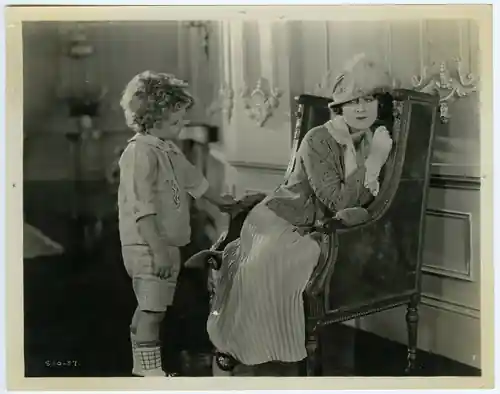
Costume design further delineates class distinctions. Myra’s simple, earth‑toned dresses, contrasted with the flamboyant silk gowns of the aristocracy, reinforce the visual hierarchy. When Myra dons a modest dress for the ballroom—an act of defiance—her attire subtly incorporates a hint of sea‑blue trim, echoing the color motif associated with her inner strength.
Although a silent film, the original musical accompaniment—reconstructed from period cue sheets—features a haunting violin motif that swells during Myra’s moments of isolation. The crescendo that accompanies the railway rescue underscores the peril with a dramatic brass fanfare, aligning the auditory experience with the visual tension.
The subtle use of diegetic sounds—such as the clinking of silverware and the distant rumble of trains—enhances the immersive quality, allowing modern audiences to feel the weight of the world that both binds and threatens the protagonists.
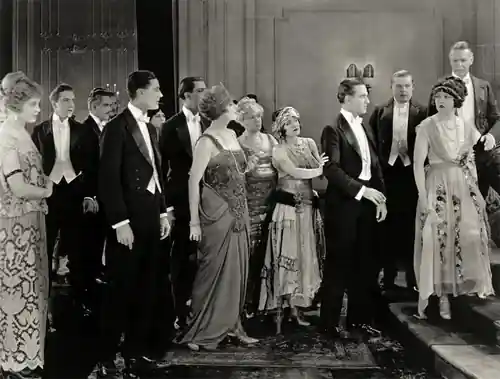
While The Wanters did not achieve the box‑office heights of contemporaneous blockbusters, its influence reverberates through the oeuvre of later directors who explored class tension with a similar lyrical touch. The film’s nuanced portrayal of a servant’s agency predates the more overt social critiques of the 1930s, positioning it as a quiet pioneer in the evolution of American cinema’s social conscience.
Scholars have noted the film’s subtle feminist undertones, particularly in Myra’s ultimate decision to flee the oppressive environment rather than submit to a life of subservience. This act of self‑preservation aligns with the burgeoning women’s emancipation narratives that would later dominate the silver screen.
The Wanters stands as a testament to the silent era’s capacity for profound storytelling, marrying visual poetry with incisive social commentary. Its exploration of love’s capacity to challenge entrenched hierarchies, coupled with masterful performances and meticulous production design, renders it a film worthy of rediscovery. For cinephiles seeking a work that balances romance, critique, and aesthetic beauty, this 1923 gem offers a richly layered experience that continues to resonate across generations.
IMDb 5.8
1929
Community
Log in to comment.