DbcultAccessing Vault...
5.4/10
Senior Film Conservator
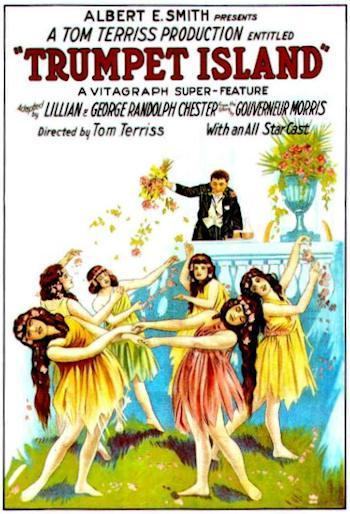
A definitive 5.4/10 rating for a film that redefined the boundaries of cult cinema. Trumpet Island remains a cornerstone of transgressive art.
Ah, the silent era! A time when emotions were writ large across the screen, not merely spoken, but felt in the grand, sweeping gestures of actors and the evocative power of a well-placed intertitle. Among the many cinematic treasures from this bygone age, Trumpet Island emerges as a particularly poignant entry, a melodrama that delves into the profound depths of human sorrow, the futility of escape, and the unyielding hand of destiny. It's not merely a film; it’s an emotional odyssey, an exploration of how the past, no matter how distant, often dictates the present.
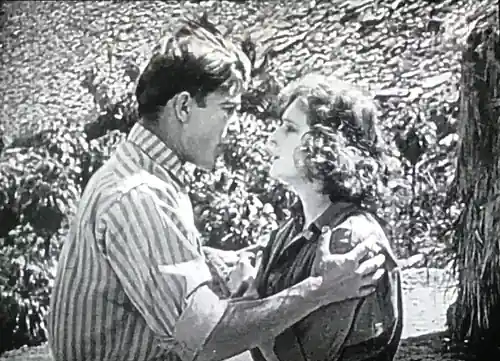
At its core, Trumpet Island unfurls the lamentable tale of Richard, brought to life with understated intensity by Hallam Cooley. We meet him as a man in flight, not from justice or peril, but from the unbearable weight of a love lost, a love that was never truly his to begin with. His beloved, Eve, portrayed with luminous fragility by Marguerite De La Motte, was compelled by societal pressures, or perhaps familial obligations, to enter into a marriage with another. This forced union casts a long, dark shadow over Richard’s existence, prompting his desperate retreat to a remote, windswept island – a place he hopes will serve as both sanctuary and purgatory, a geographical and emotional severance from the world that betrayed his heart.
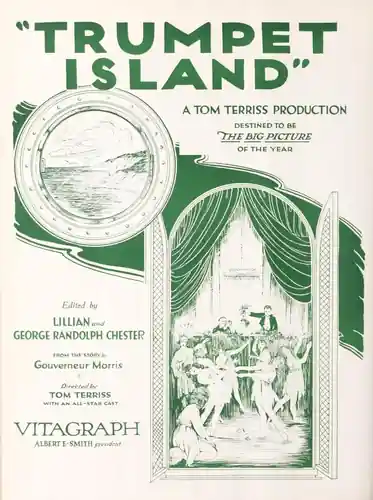
His chosen refuge, however, is no tranquil balm. Instead, it becomes a stark, almost theatrical backdrop against which the drama of his internal conflict plays out. The island, with its isolation and raw beauty, mirrors Richard's own desolate spirit. It's a testament to the evocative storytelling of Gouverneur Morris, Lillian Christy Chester, Rudolph De Cordova, and George Randolph Chester, the quartet of writers who penned this screenplay, that the setting feels less like a mere location and more like a character itself – an indifferent observer, perhaps, or even an active participant in the unfolding tragedy. Richard’s solitude, far from offering peace, amplifies the echoes of Eve’s memory, transforming the island into a crucible where his past refuses to release its grip.
What truly elevates Trumpet Island beyond a simple romantic melodrama is its profound engagement with the themes of fate and the futility of human endeavor against its relentless current. Richard’s flight is an act of rebellion against destiny, an attempt to rewrite a script that has already been etched. Yet, as the narrative progresses, it becomes agonizingly clear that fate, like the tides around his island, will inevitably pull him back into the very currents he sought to escape. This notion of an unyielding destiny, a predetermined path from which no escape is possible, is a powerful undercurrent throughout the film, resonating with a philosophical weight that belies its era.
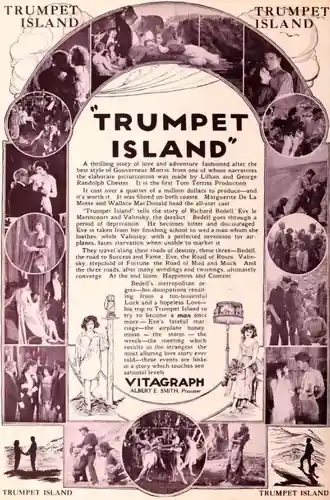
The film masterfully explores the psychological toll of unfulfilled love and the corrosive power of regret. Richard's journey isn't just physical; it's a descent into the labyrinth of his own mind, where Eve's image is both a torment and a cherished relic. This internal struggle is conveyed through Hallam Cooley's nuanced performance, his eyes often reflecting a deep, inexpressible sorrow that transcends the need for spoken words. It’s a powerful reminder of the silent film actor’s unique ability to communicate complex emotions purely through physicality and facial expression.
The supporting cast, including Percy Challenger, Marcella Daly, Wallace MacDonald, Josef Swickard, and Arthur Hoyt, each contribute layers to this emotional tapestry. Their characters, whether allies, antagonists, or mere bystanders, serve to highlight Richard’s isolation or to subtly push the narrative towards its inevitable, fated conclusion. Marcella Daly, in particular, adds a certain gravitas, her presence often hinting at the societal pressures that initially separated Richard and Eve, embodying the very forces against which their love struggled.

The direction, while uncredited in some records, demonstrates a keen understanding of visual storytelling inherent to the silent era. The use of long shots to emphasize Richard's isolation against the vastness of the island, juxtaposed with tighter close-ups to capture the raw vulnerability of his emotional state, is particularly effective. The cinematography, though likely constrained by the technology of the time, manages to imbue the island setting with a palpable sense of both beauty and melancholy. One can almost feel the salt spray and hear the mournful cries of gulls, an atmospheric achievement that speaks volumes without a single uttered word.
Hallam Cooley’s portrayal of Richard is a masterclass in silent film acting. He conveys a myriad of emotions – grief, longing, faint hope, despair – with remarkable subtlety, avoiding the theatrical excesses that sometimes plagued the era. His performance is a quiet storm, an internal tempest that threatens to engulf him, yet he maintains a dignified, almost stoic façade. Marguerite De La Motte, as Eve, complements him perfectly. Her brief appearances or the memories of her are imbued with a luminous, ethereal quality, making her absence all the more keenly felt. Her character embodies the tragic beauty of a love that was denied its rightful course, a symbol of what could have been.
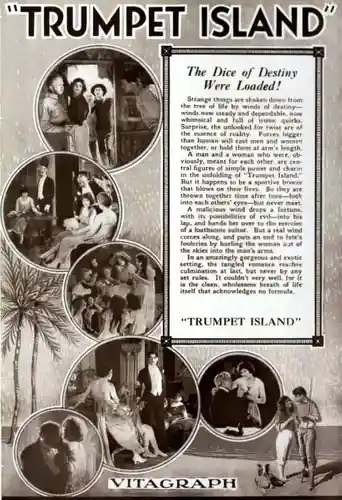
The screenplay, crafted by such a collaborative team, manages to maintain a cohesive and compelling narrative arc. It’s a testament to their skill that the plot, while rooted in classic melodramatic tropes, never feels manipulative. Instead, it feels organic, a natural progression of events driven by character and an almost mythological sense of destiny. The intertitles, crucial conduits of information and emotion in silent films, are sparingly yet effectively used, providing just enough context without over-explaining, allowing the visuals and performances to carry the bulk of the storytelling weight.
When considering Trumpet Island within the broader context of silent cinema, particularly those films dealing with themes of isolation, love, and the relentless hand of fate, several parallels and contrasts come to mind. One might draw a thematic link to films like Wrath of Love, which also explores the intense emotional turmoil caused by romantic entanglements and societal pressures. Both films delve into the profound suffering that arises when love is obstructed, though Trumpet Island leans more heavily into the psychological landscape of its protagonist's retreat.
The isolated island setting, a character in itself, might evoke comparisons to other silent dramas set in remote locales, such as the adventurous yet often perilous environments seen in films like Terror Island. While the latter often focuses on external threats and thrilling escapes, Trumpet Island uses its isolation as a mirror for internal conflict, amplifying the protagonist's emotional turmoil rather than physical danger. The island in Trumpet Island is less about a physical threat and more about a psychological one, a place where the mind’s demons are given free rein.
The film also shares a certain melancholic resonance with other narratives of enduring love and separation. One could also see a kinship with the dramatic tension found in a film like Price of Treachery; Or, The Lighthouse Keeper's Daughter, where the lighthouse setting provides a similar sense of remote, windswept drama, albeit with a different set of moral and romantic dilemmas. Both films leverage their settings to heighten the sense of emotional stakes and the characters' vulnerability to external and internal forces.
In its exploration of resilience against overwhelming odds, Richard's journey might also find common ground with the thematic fortitude often portrayed in films like Silent Strength, though the strength in Trumpet Island is more about enduring heartbreak than physical prowess. The 'silent strength' here is the capacity to carry immense grief and still move forward, even when hope seems a distant, mocking echo.
Despite its age, Trumpet Island possesses a timeless quality. Its exploration of universal themes – love, loss, the search for solace, and the inescapable nature of one's fate – continues to resonate with audiences. It reminds us that while the technological aspects of filmmaking have evolved dramatically, the core human emotions and narratives remain constant. The film is a testament to the power of pure cinematic storytelling, relying on visual poetry and the expressive power of its actors rather than dialogue to convey its profound message.
For modern viewers, rediscovering Trumpet Island is an opportunity to connect with a foundational period of cinematic art. It’s a chance to appreciate the craft of silent film, to marvel at the ability of its creators to evoke such deep emotional responses without the aid of spoken words or synchronized sound. It serves as a powerful reminder that sometimes, the most eloquent statements are made in silence, in the subtle shift of an actor’s gaze, or the stark beauty of a desolate landscape.
The conclusion of Richard’s journey, without giving away specifics, is handled with a delicate touch, reinforcing the film’s central tenet that some bonds are simply meant to be, regardless of the detours and heartbreaks along the way. It’s a narrative that leaves a lasting impression, prompting contemplation on the unpredictable nature of life and the enduring strength of the human spirit in the face of adversity. This film is more than just a historical artifact; it is a living, breathing testament to the enduring power of storytelling.
In an era saturated with sensory overload, Trumpet Island offers a refreshing, almost meditative experience. It invites the viewer to slow down, to observe, and to feel. It’s a poignant piece of cinema that, like a forgotten melody, once heard, lingers in the mind, reminding us of the profound beauty and inherent tragedy of the human condition. It’s a film that demands to be seen, to be felt, and to be remembered, a true gem from the golden age of silent pictures, where every frame was a brushstroke on the canvas of emotion.

IMDb 6.3
1930
Community
Log in to comment.