DbcultAccessing Vault...
Cult Review
Senior Film Conservator
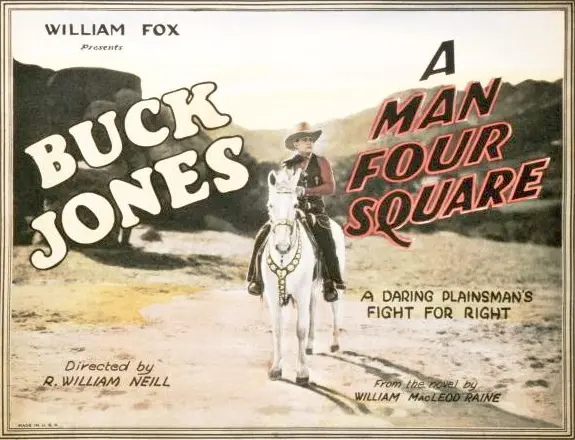
Is A Man Four-Square worth your time in an era of high-octane digital Westerns? Short answer: Yes, but only if you value the raw, unvarnished physicality of the silent era over modern narrative complexity.
This film is strictly for those who want to see the DNA of the American Western before it became self-aware and cynical. It is not for viewers who require fast-paced dialogue or complex moral ambiguity, as the lines between hero and villain are drawn with a very thick brush.
1) This film works because Buck Jones possesses a natural, athletic charisma that elevates a standard 'wronged man' plot into something visceral.
2) This film fails because the middle act relies on repetitive horse-chase sequences that lack the inventive framing found in masterpieces like Sherlock Jr..
3) You should watch it if you want to understand how the 1920s defined the 'honest man' archetype through physical action rather than words.
Buck Jones was often the blue-collar alternative to the more flamboyant Tom Mix. In A Man Four-Square, Jones plays Craig Norton with a grounded stillness that feels surprisingly modern. While many silent actors leaned into theatrical gesticulation, Jones uses his eyes and his posture to convey the weight of a man who has lost the trust of his community.
Take the scene where Norton first realizes the posse is after him. There is no frantic waving of arms. Instead, Jones tightens his grip on the reins, his jaw setting in a way that tells the audience exactly what he’s thinking. It is a masterclass in silent stoicism. It reminds me of the ruggedness seen in Davy Crockett, where the environment is as much a character as the lead actor.
The film’s title refers to the 'four-square' philosophy—being honest, upright, and reliable. Jones embodies this. Even when he is being pursued, he doesn't look like a criminal; he looks like a man waiting for the world to catch up to the truth. It’s a simple performance. But it’s effective.
The plot kicks off with Norton returning from the city. In 1926, the 'city' was often portrayed as a place of moral decay, a theme echoed in films like School for Wives. By having Norton return from a holiday, the film sets up a contrast between the leisure of the urban world and the hard-scrabble reality of the ranch.
The cattle rustling charge against the foreman is the catalyst, but the real story is about the fragility of reputation. It’s fascinating how quickly the town turns on Norton. One minute he is the 'well-to-do rancher,' and the next, he is a pariah. This theme of 'the fall from grace' is handled with more nuance here than in something like The Woman Pays, mostly because the stakes are tied to physical survival.
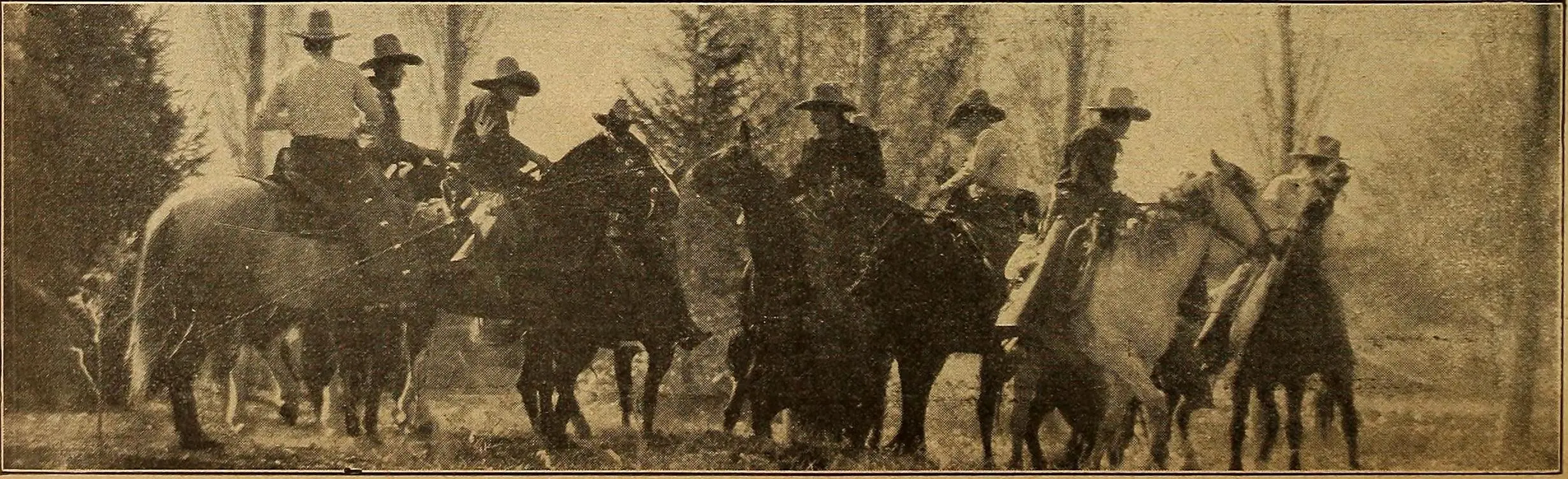
The cinematography by Daniel B. Clark captures the isolation of the ranch perfectly. The wide shots of the posse silhouetted against the horizon are iconic. They don't just show a chase; they show the vastness of a law that is difficult to outrun. It’s a visual language that predates the sweeping vistas of John Ford but contains the same DNA.
Every Western of this era needed a romance, and A Man Four-Square gives us Polly, played by Marion Harlan. The conflict arises when the foreman—Norton’s friend—suspects Norton of double-crossing him. This is where the film dips into standard melodrama. The jealousy feels forced, a plot device to create friction where the rustling plot might have sufficed.
I find the foreman’s character to be incredibly frustrating. He is supposedly Norton’s friend, yet he believes the worst of him at the first sign of trouble. This makes the final 'forgiveness' scene feel a bit unearned. In a more modern film, like Blind Chance, this betrayal would have led to a much darker conclusion.
However, Polly isn't just a damsel. She has a few moments of genuine agency, especially during the climactic rescue. While she isn't as central as the female leads in The Vow, her presence provides the emotional stakes necessary to keep the audience invested in Norton’s survival.
A Man Four-Square is worth watching if you are a fan of Western history or Buck Jones. It provides a clear look at the transition of the Western genre from simple morality plays to more complex character studies. While it lacks the avant-garde flair of European cinema from the same year, it excels at being exactly what it promises: a rugged adventure about a man of integrity.
Director William MacLeod Raine, who also wrote the source material, knows how to stage a horse chase. The pacing in the final third of the film is relentless. The way the camera tracks the horses across uneven terrain is impressive for 1926. There are no CGI safety nets here; those are real riders taking real risks.
The editing is functional but lacks the rhythmic pulse of something like The Kelly Gang. Sometimes, the cuts between the posse and Norton feel a bit disjointed, making it hard to tell exactly how close the pursuers are. It’s a minor gripe, but in a film that relies on tension, it’s a noticeable one.
One surprising observation: the film spends a significant amount of time on the 'legal' aspects of the rustling charge. This isn't just a shoot-em-up. It’s a film about the burden of proof. Norton isn't just running; he’s trying to find evidence. This procedural element adds a layer of depth that many of its contemporaries lacked.
A Man Four-Square is a sturdy piece of craftsmanship. It doesn't reinvent the wheel, but it rolls it down the hill with considerable force. It’s a film about the importance of being 'square'—honest, direct, and brave. While the melodrama of the love triangle hasn't aged particularly well, the core story of a man fighting for his name remains universal.
It works. But it’s flawed. It’s a reminder of a time when movie stars were defined by what they could do on a horse rather than what they could say in a press junket. If you can overlook the simplistic plot, you’ll find a film that has more heart than many of today’s blockbusters. It is a solid B-tier Western that deserves a spot in the conversation of 1920s cinema, right alongside the likes of No Trespassing or The Mayor of Filbert.
"A Man Four-Square is a testament to the era when a hero's silence spoke louder than a modern soundtrack's monologue."
IMDb —
1928
Community
Log in to comment.