DbcultAccessing Vault...
6.8/10
Senior Film Conservator
A definitive 6.8/10 rating for a film that redefined the boundaries of cult cinema. News in Brief remains a cornerstone of transgressive art.
In the pantheon of early French avant-garde cinema, few works possess the sheer, unadulterated audacity of Claude Autant-Lara’s News in Brief (1923). While many of its contemporaries were still tethered to the theatrical conventions of the 19th century—relying on heavy-handed intertitles to bridge the gap between image and understanding—this film dares to treat the eye as the sole arbiter of truth. It is a work of pure cinematic semiotics, a visual manifesto that suggests language is not only unnecessary but perhaps even a hindrance to the transmission of raw human emotion. The film operates on a plane of existence where the flicker of a shutter carries more weight than a thousand words of dialogue.
The architecture of the film is built upon a domestic tragedy, a 'fait divers' or a common news item, yet Autant-Lara elevates this tabloid fodder into a high-art exploration of the psyche. We are presented with a love trio—a configuration as old as time itself—but it is stripped of its melodramatic safety nets. The adultery is not a plot point to be discussed; it is a visual vibration, a shimmering instability in the frame. To watch this film is to witness the birth of a new grammar. Unlike the more structured narratives of Under the Red Robe, News in Brief thrives on the ambiguity of the gaze. It demands an active participation from the viewer, an intuitive leap into the rhythmic pulses of the editing suite.
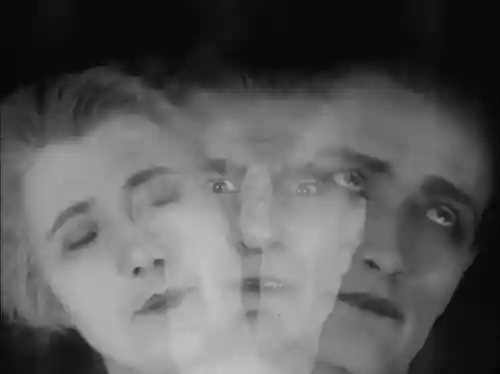
The most striking feature, and indeed the film’s greatest triumph, is the total absence of titles. In an era where even experimentalists often leaned on text to clarify complex emotional states, Autant-Lara chooses the path of most resistance. This decision forces the camera to become more than a recording device; it becomes a neuro-transmitter. We see the desire to murder not through a written confession, but through the aggressive juxtaposition of a knife, a shadow, and a dilated pupil. This technique creates a sense of immediacy that is often lacking in the more static productions of the early 1920s, such as Sixty Years a Queen, which, while grand, feels entombed in its own historical reverence.
By removing the linguistic anchor, the film achieves a state of 'photogénie'—the transformative power of the filmic image. The associations between shots are not logical in a literary sense but are instead associative and emotional. A hand reaching out is not just a gesture; through the use of overprints and idling (slow motion), it becomes a desperate prayer or a suffocating threat. The 'tricks' employed here are not the whimsical illusions of Méliès, nor the playful hauntings found in The Haunted House, but are rather surgical tools used to dissect the human heart. They serve to externalize the internal, making the invisible visible.
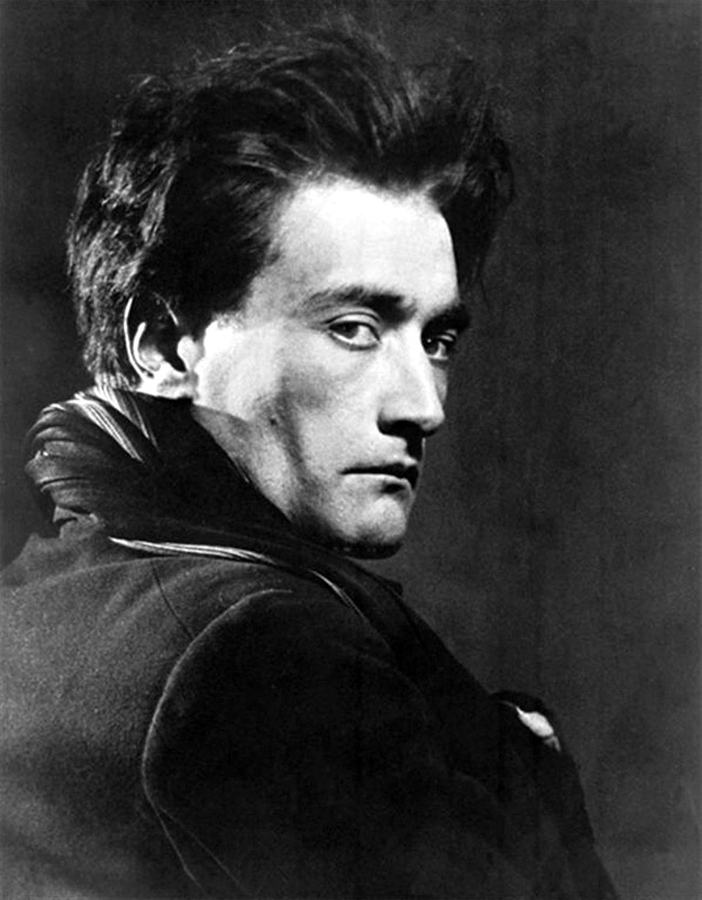
Central to the film’s visceral impact is the presence of Antonin Artaud. Long before he would formalize his 'Theatre of Cruelty,' Artaud was already practicing a cinema of the nerves. His face in News in Brief is a battlefield. Every twitch of his jaw and every hollowed look from his eyes communicates a depth of jealousy that would take a novelist chapters to describe. There is a jaggedness to his performance that contrasts beautifully with the fluid, impressionistic camerawork. While other actors of the period might lean into the pantomime styles seen in Who Loved Him Best?, Artaud remains hauntingly internal, projecting a psychic intensity that seems to vibrate the very celluloid.
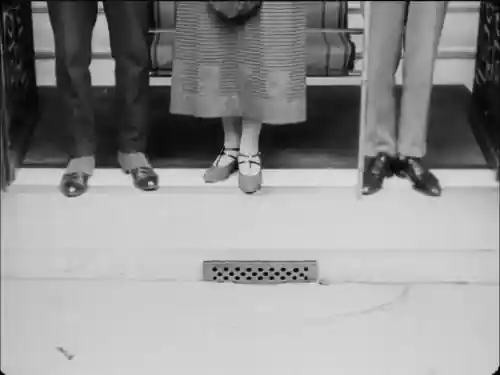
The supporting cast, including Louise Lara and Paul Barthet, navigate this title-less world with a remarkable restraint. They understand that in a film governed by association, the smallest movement is magnified. The dynamics of the trio are established through spatial relationships—how they stand in a room, the distance between their bodies, the way the light catches a profile while leaving another in total darkness. It is a masterclass in blocking as narrative. This is far removed from the more traditional dramatic structures of A Man's Law or the straightforward heroism of Bulldog Drummond.
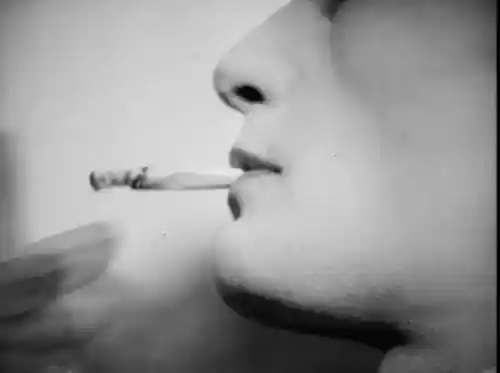
Autant-Lara’s use of technical 'tricks' is where the film truly transcends its era. The overprints—multiple images layered upon one another—create a palimpsest of memory and desire. We see the protagonist’s thoughts literally clouding the screen, a visual representation of obsession. This is not the stylistic excess of Genuine: The Tragedy of a Vampire, which relies on set design to convey madness; here, the madness is in the very fabric of the film’s assembly. The editing doesn't just cut between scenes; it collides them, creating new meanings in the sparks that fly from the friction.
The manipulation of time—the 'idling' and 'acceleration'—acts as a psychological metronome. When the jealousy reaches its zenith, the film speeds up, mimicking the racing heart and the frantic thoughts of the betrayed. Conversely, moments of realization are stretched out in slow motion, forcing the viewer to dwell in the agony of the character’s epiphany. This temporal elasticity is a hallmark of French Impressionism, yet here it feels more grounded in human pathology than in mere aesthetic play. It shares a certain spiritual kinship with the epic scale of Christus, but instead of the divine, it explores the demonic depths of the mundane.
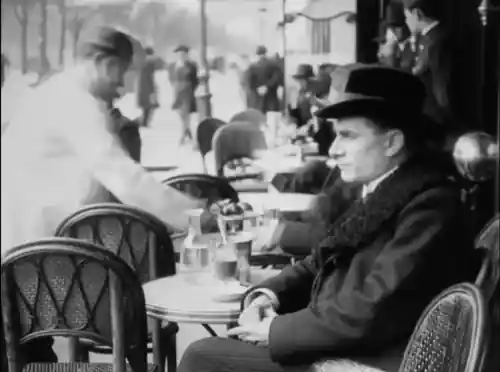
To understand the radical nature of News in Brief, one must look at what it chooses not to be. It is not the sprawling adventure of The Jungle Trail, nor is it the social drama of Rosemary Climbs the Heights. It is a claustrophobic chamber piece that uses the tools of the epic to explore the microscopic. In its refusal to explain itself, it attains a level of purity that few films of the 1920s could match. Even highly regarded works like Lady Hamilton feel somewhat dated by their reliance on traditional storytelling, whereas News in Brief remains startlingly modern.
The film’s influence can be felt in the way modern directors use rhythmic editing to convey emotional states. The legacy of Autant-Lara’s experiment is found in every film that trusts its audience to understand a character’s interiority without a voice-over or a line of dialogue. It is a testament to the power of the image to transcend the limitations of the spoken or written word. While films like Dangerous to Men or The Defeat of the City provide entertainment and narrative satisfaction, News in Brief provides a spiritual and sensory experience that lingers long after the final frame has flickered out.
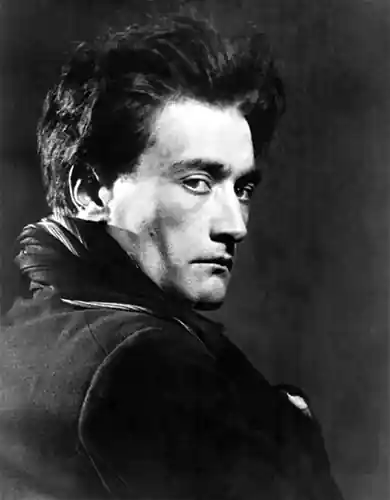
In the final analysis, News in Brief is a haunting reminder of what cinema can be when it is freed from the shackles of literature. It is a symphony of shadows, a dance of light and darkness that captures the terrifying beauty of human frailty. It does not ask for your attention; it seizes it. It does not tell you a story; it makes you live a nightmare. For those who seek to understand the true potential of the medium, this film is not merely a historical curiosity—it is an essential, breathing piece of art that continues to challenge our perceptions of what it means to see.
Comparing it to the lyrical but more conventional La piccola parrocchia or the moralistic tones of As God Made Her, Autant-Lara’s work stands out as a beacon of uncompromising vision. It is a film that understands that the most profound truths are often those that cannot be spoken, only felt through the rhythmic pulse of the light upon the screen. It remains a cornerstone of the avant-garde, a bold leap into the void that successfully captured the elusive essence of the human soul.
IMDb 5.5
1936
Community
Log in to comment.