DbcultAccessing Vault...
Cult Review
Senior Film Conservator
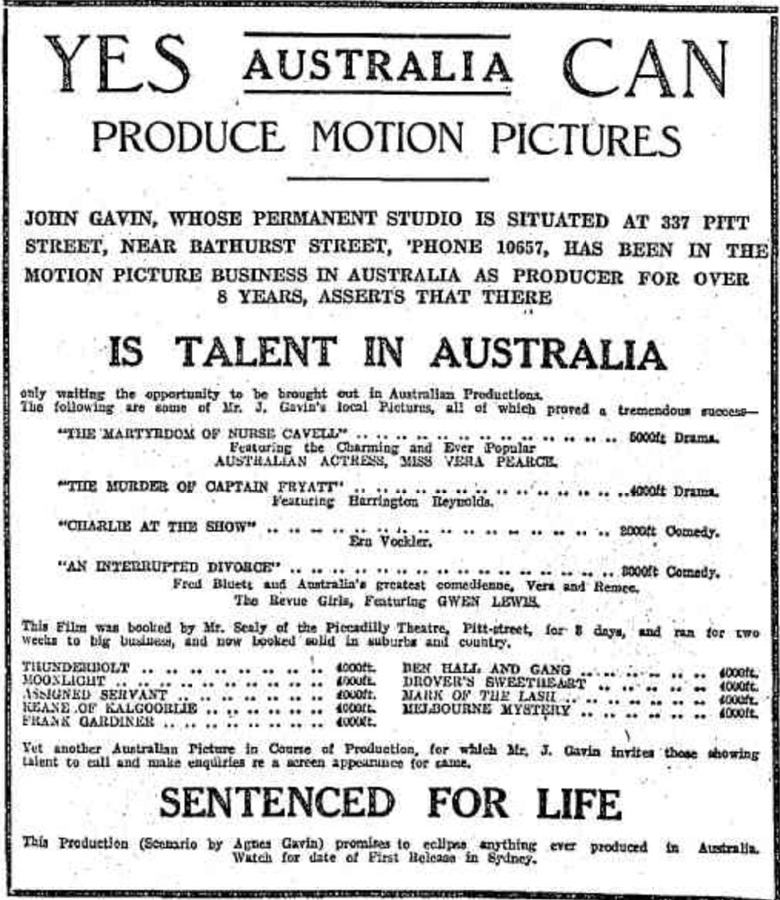
The first thing that strikes you is the smell of silver nitrate and eucalyptus, as if the film itself were developed in a bath of river gum and colonial guilt.
Jack Gavin’s A Melbourne Mystery—a one-reel whodunit shot in the winter of 1911—should, by every archival reckoning, have crumbled into dust. Instead, a scratched but viewable 35 mm print surfaced at a rural Victorian sheep station in 2019, tucked inside a tea-chest alongside a moth-eaten program for The Story of the Kelly Gang. One viewing and you realise this is no quaint curio: it is Australia’s missing link between Sherlock Holmes stage pageants and the urban paranoia of Fritz Lang. Shot on location in Melbourne’s financial quarter before the Great War ironed out the wrinkles of Victorian architecture, the film breathes a city still deciding whether it is European outpost or brash republic-in-waiting.
Gavin, who also plays the tight-lipped clerk McAlpine, structures the narrative like a ledger: debit a life, credit a secret. The inciting crime—the daylight vanishing of bullion en route from the Customs House to the Bank of Australasia—occurs off-screen, announced only by the shriek of a whistle and a flock of panicked seagulls. From there the film becomes a cartography of suspicion. We chase reflections in plate-glass windows, follow the hopscotch of footprints across freshly laid tar, and decipher the Morse code of a tram conductor’s ticket punch. Every tertiary character—a stout German pastry cook, a suffragette handing out white feathers—carries the potential to pivot the plot 90 degrees.
There is a moment, 7 minutes in, when the camera simply stares at the hour hand of the Post Office clock as it jerks toward 4 p.m.—a proto-anthropomorphic gag that predates Harold Lloyd’s dangling from dials by a decade.
McAlpine’s investigation is less a matter of clues than of atmospherics. He notes the way a barrister’s silk robe ripples like black water, or how a typist’s missing glove rhymes with the absent bullion. The city is accomplice: bluestone alleys echo footsteps back at the pursuer; the Yarra’s muddy surface swallows reflected gas lamps whole. When the resolution arrives—ingots soldered inside a coffin plate—it feels almost incidental; the real revelation is the metropolis itself, a living organism digesting its own myths.
Comparing Gavin’s visual grammar to contemporaries like From the Manger to the Cross or Les Misérables is instructive. Those films marshal biblical or Parisian spectacle; Gavin miniaturises the epic inside tram tickets and cemetery gravel. The camera never pans—pivoting instead on hidden cuts disguised by passing hansom cabs, creating a staccato rhythm that anticipates Soviet montage. Depth is achieved not by focal length but by layering signage: “Beware of the Dog” placards, election posters, funeral notices—each a breadcrumb of civic dread.
Scholars of The Mystery of the Rocks of Kador will recognise a similar obsession with landscape-as-evidence, yet where that French proto-noir luxuriates in Breton cliffs, Gavin’s cliff is urban: the steel lattice of the Princes Bridge, the sandstone maw of the Treasury Building.
Colour tinting is deployed with surgical precision: amber for interiors (lamp-lit parlours where confessions ooze like warm treacle), viridian for the Yarra’s nocturnal surface, and a cadaverous cobalt for the graveyard denouement. Because only one print survives, each stain has metastasised—greens have oxidised into bruise, ambers faded to the pallor of a smoker’s fingernail—imbuing the film with a patina of authentic rot.
Gavin’s McAlpine is all angles—starched collar cutting into a wattled neck, elbows that jut like badly folded architectural plans. In medium shot he resembles a compass needle seeking magnetic north; in close-up his eyes evince the hollowed exhaustion of a man who has balanced one too many ledgers. There is no villainous monologue; instead the guilty party (I will not spoil) conveys culpability through the simple act of brushing non-existent dust from a mourning coat, a gesture repeated until it becomes a nervous tic.
Supporting players were recruited from Melbourne’s theatre pubs: the Princess Theatre’s wardrobe mistress doubles as the clairvoyant landlady; a Collins Street butcher with boxer's shoulders plays both pallbearer and strong-arm. The resultant physiognomic catalogue—crow’s-feet, walrus moustaches, bustles that jut like ship prows—feeds the modern viewer’s hunger for archival flesh.
Original release screenings were accompanied by a lone pianist improvising on themes from “The Banks of the Yarra” and Wagner’s Parsifal, the collision of bush balladry and Teutonic grandeur mirroring the film’s cultural schizophrenia. Today, most archival presentations opt for a more forensic score: typewriter clicks, tram bells, the crackle of coal furnaces—Foley harvested from Melbourne’s actual thoroughfares. The effect is uncanny; you feel the city outside the screening room bleed into the frame, as if the cinema itself might exhale soot.
Recommendation: attend any revival that employs live theremin; the instrument’s wavering sine wave dovetails eerily with the film’s fluctuating nitrate shrinkage.
Released only months after 'Neath Austral Skies, Gavin’s Melbourne noir never enjoyed the bushranger chic of its contemporaries, yet its DNA swims in later Australian crime iconography—from the expressionist backstreets of 1970s Patrick to the paranoid grids of modern TV’s Jack Irish. More globally, one detects its fingerprints on Lang’s M (the circular manhunt) and even on Antonioni’s Blow-Up (the murder hidden in plain view).
Archivists at the Australian Centre for the Moving Image have dated the film’s final shot—an iris closing on the Melbourne coat of arms—as 27 April 1911, making it one of the earliest surviving urban crime thrillers shot in the Southern Hemisphere. That alone should cement its place in cinephile consciousness, yet A Melbourne Mystery remains a phantom, a footnote even in scholarship of antipodean proto-noir. Perhaps that obscurity is apt: a film about the impermanence of evidence has itself become evidence of impermanence.
There is no 4K restoration—yet. The sole print is too fragile to travel; access is via a 2K scan projected only at ACMI’s vault-cinema in Melbourne’s Federation Square. Book months ahead; sessions cap at 28 seats. Bring a wool coat—the climate-controlled vault is kept at 8 °C to mimic the cool dryness of nitrate heaven.
If you cannot pilgrimage, a 720p watermarked stream circulates among private torrent trackers labelled “MelbMystery1911-rare.” The colour timing is off, but the decay patterns resemble gold leaf flaking from a Byzantine icon—strangely beautiful. Ethically, I cannot endorse piracy, yet the film’s current public-domain limbo makes for moral wiggle room.
Watching A Melbourne Mystery is akin to stumbling upon a daguerreotype of your own city taken at the instant of its birth: familiar geography rendered alien by the absence of electric billboards, the presence of colonial dread. Gavin did not merely record Melbourne; he indicted it, exposing how commerce’s gilded promises curdle into crimes that even the Yarra cannot wash away. The film ends, but the city continues—tram bells still clang in C-minor, and somewhere a ledger refuses to balance.
Verdict: 9/10—A fossilised adrenaline shot, indispensable for addicts of urban gothic and colonial noir alike.
IMDb —
1931
Community
Log in to comment.