DbcultAccessing Vault...
Cult Review
Senior Film Conservator
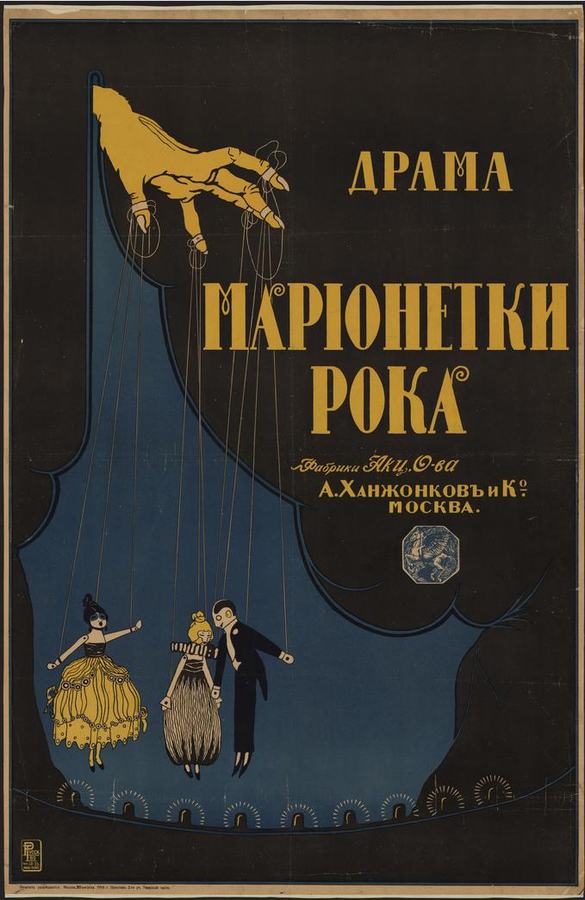
From the very first frame, Marionetki roka (Puppets of Fate) ensnares its audience in a web of profound philosophical inquiry and disquieting aesthetic brilliance. This isn't merely a film; it's an experience, a descent into the labyrinthine mind of an artist grappling with the very fabric of existence. Zoya Barantsevich, wearing the dual hats of writer and lead actress, delivers a tour-de-force that is both intellectually stimulating and emotionally devastating. Her vision, meticulously crafted and flawlessly executed, dares to ask uncomfortable questions about agency, creation, and the unsettling possibility that our lives are nothing more than elaborate choreographies performed for an unseen puppeteer.
Barantsevich’s portrayal of Anya, the reclusive marionette maker, is nothing short of mesmerizing. Her movements, initially precise and deliberate, gradually devolve into a fragile, almost marionette-like quality themselves, mirroring the very creations that consume her. Anya's atelier, a character in its own right, is a marvel of production design: dust motes dance in shafts of dim light, illuminating countless wooden figures, each with an expression that hints at a nascent soul. The atmosphere is thick with the scent of wood, glue, and a pervasive, melancholic solitude. It’s a space where the boundaries between the living and the inanimate become perilously thin, a concept explored with similar unsettling intensity in films like Teufelchen, though Barantsevich pushes the psychological envelope even further, blurring the line between obsession and genuine sentience.
The narrative, penned with an exquisite understanding of psychological tension, unfolds like a carefully unwound spring. Anya's dedication to her craft is not just a profession; it is an all-consuming devotion, a desperate attempt to impose order and meaning onto a chaotic world. Her 'children,' particularly 'The Fates' – Clotho, Lachesis, and Atropos – are not mere puppets; they are extensions of her psyche, repositories of her fears and aspirations. The film's genius lies in its ability to make the viewer question the nature of these creations. Are they truly imbued with a fragment of her will, or is Anya’s fervent belief a symptom of an encroaching madness? This ambiguity is the engine of the film's profound resonance, forcing us to engage actively with its philosophical underpinnings.
The central catalyst for Anya's descent is the commission to create a marionette in her own likeness. This plot device, while seemingly straightforward, becomes a profound exploration of identity and self-perception. As Anya sculpts her wooden doppelgänger, she is forced to confront her own image, not as she sees herself, but as she would be seen through the eyes of an indifferent observer – or, perhaps, through the eyes of fate itself. The meticulous process of carving, painting, and stringing her own replica is depicted with an almost ritualistic intensity, each stroke of the chisel a painful incision into her own psyche. This self-referential artistry echoes the themes found in När konstnärer älska, where the artist's life and work become inextricably intertwined, but Barantsevich takes this fusion to a terrifying, existential extreme.
The blurring of lines is achieved not just through Barantsevich's nuanced performance but also through the film's masterful cinematography and sound design. The camera often adopts a low, almost ground-level perspective, making the marionettes appear larger, more imposing, more 'alive.' Close-ups on their unblinking wooden eyes create an unnerving sense of being watched, an effect amplified by the subtle creaks and whispers woven into the soundscape. These auditory and visual cues are crucial in establishing the film's pervasive sense of unease, blurring the auditory perception of reality, much like the subtle psychological manipulations in The Price, but here, the price is one's very sanity.
At its core, Marionetki roka is a profound meditation on free will versus determinism. Anya believes she controls her puppets, but as her artistic process deepens, she begins to feel controlled by them, or by the larger, unseen forces they represent. The film posits a world where autonomy is an illusion, where every action, every choice, is merely a predetermined twitch of a string. This existential dread is palpable, resonating with the fatalistic undertones of classics like Patria, but infused with a deeply personal, artistic anguish. Barantsevich as a writer doesn't offer easy answers; instead, she meticulously dissects the human yearning for control in a universe that seems utterly indifferent to our desires.
The script is replete with subtle allegories and symbolic gestures. The decaying atelier, with its peeling paint and forgotten corners, can be seen as a metaphor for Anya's own decaying mental state, or perhaps, for the crumbling illusion of human agency. The 'performance' of 'The Fates' becomes more than just a theatrical display; it transforms into a ritualistic unraveling, a public confession of Anya's internal turmoil. The audience, initially captivated, becomes increasingly uneasy, their discomfort mirroring our own as we witness the boundaries of sanity and artifice dissolve before our eyes. This visceral reaction to a performance within a film brings to mind the unsettling revelations in Il film rivelatore, where the act of viewing itself becomes a transformative, almost dangerous experience.
The visual language of Marionetki roka is impeccably rich, each shot laden with meaning. The recurring motif of strings, both literal and metaphorical, is handled with exceptional finesse. We see them not just connecting puppets to their controller, but also in the tangled threads of Anya’s hair, the intricate patterns of cobwebs, and even the architectural lines of her oppressive surroundings. This constant visual reinforcement subtly primes the viewer for the film’s ultimate conclusion: that we are all, in some sense, connected by invisible threads to forces beyond our comprehension. The use of shadow and light is particularly striking; Anya is often shrouded in gloom, her face illuminated only partially, suggesting her fragmented psyche and the hidden depths of her obsession. The film’s aesthetic choices are as meticulously crafted as Anya’s puppets themselves, creating a cohesive and immersive world.
The color palette, though subtle, is highly effective. Predominantly muted tones of browns, greys, and deep greens are punctuated by stark contrasts – a flash of vibrant red in a puppet's costume, the glint of metal tools, or the unnerving, almost luminous quality of Anya's eyes in moments of intense focus. These visual accents serve to highlight moments of profound psychological significance, drawing the viewer's attention to the internal drama unfolding beneath the surface. The meticulous attention to visual detail, reminiscent of the intricate symbolism in A Hyeroglyphák titka, elevates the film from a mere narrative to a work of art that can be endlessly reinterpreted and analyzed.
Zoya Barantsevich's performance as Anya is a masterclass in controlled intensity. She conveys the character's intellectual brilliance, her profound loneliness, and her gradual descent into an all-consuming obsession with remarkable subtlety. There are no grand, theatrical outbursts; instead, her madness manifests in the quiet intensity of her gaze, the tremor in her hands, the almost imperceptible changes in her posture. This understated approach makes her eventual psychological rupture all the more devastating. She inhabits Anya so completely that the viewer often forgets they are watching an actress, instead feeling as though they are privy to the raw, unfiltered experience of a soul teetering on the brink. Her ability to convey so much with so little dialogue is a testament to her profound understanding of the character she created.
The film’s climax, a private performance of 'The Fates,' is where Barantsevich truly shines. It's a sequence of breathtaking power, where Anya’s movements become indistinguishable from those of her puppets. Her body contorts, her voice shifts, and her very being seems to merge with the wooden figures. This scene is a visceral representation of the film’s central theme: the ultimate fusion of creator and creation, the terrifying realization that perhaps the artist is merely a conduit for larger forces. It's a performance that will undoubtedly be studied for years to come, standing alongside other iconic portrayals of artistic obsession and psychological collapse, such as those found in The Sin of a Woman, but with a unique, unsettling artistic dimension.
Marionetki roka is not an easy film to watch, nor is it meant to be. It demands active engagement, inviting its audience to grapple with complex philosophical questions long after the credits roll. It’s a film that lingers, its haunting imagery and profound themes embedding themselves deep within the subconscious. Barantsevich has not only crafted a compelling narrative but also an enduring work of art that challenges conventional notions of storytelling and performance. Its exploration of artistic obsession, the nature of reality, and the illusion of free will places it firmly among the most thought-provoking cinematic achievements of recent memory. It’s a bold, uncompromising vision, executed with a precision that borders on the miraculous. This film, much like a perfectly crafted marionette, dances with an unsettling grace, revealing the strings that may, indeed, control us all. It will undoubtedly spark endless debate and analysis, much like other challenging yet rewarding films such as I my kak liudi or The Burglar, but its unique aesthetic and thematic depth carve out its own irreplaceable niche.
In an era where much of cinema feels designed for passive consumption, Marionetki roka stands as a defiant testament to the power of film as a medium for intellectual and emotional provocation. It is a cinematic experience that rewards careful consideration, a film that peels back layers of reality to reveal the unsettling mechanisms beneath. Zoya Barantsevich has delivered a masterpiece that is both deeply personal and universally resonant, cementing her status as a formidable force in contemporary cinema. Her ability to weave such a complex tapestry of psychological drama and philosophical inquiry, all while maintaining an almost hypnotic visual style, is truly commendable. This is a film that will undoubtedly be discussed, dissected, and revered for years to come, a true jewel in the crown of arthouse cinema.
IMDb —
1923
Community
Log in to comment.