DbcultAccessing Vault...
Cult Review
Senior Film Conservator
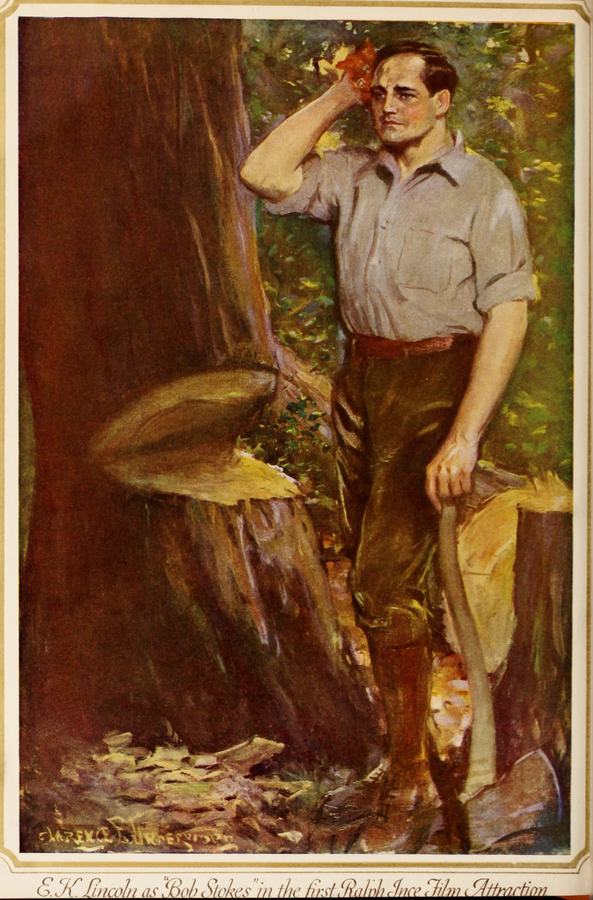
In the annals of early cinematic storytelling, few narratives capture the zeitgeist of their era with such compelling clarity as Ralph Ince's 1919 production, Virtuous Men. This silent film, a potent blend of melodrama, social commentary, and thrilling espionage, plunges the viewer into a world grappling with shifting fortunes, moral rectitude, and the nascent anxieties of a post-World War I landscape. At its core lies the transformative odyssey of Bob Stokes, portrayed with earnest conviction by Danny Hayes, a character whose initial moral compass is swayed by the fickle winds of wealth and societal standing, only to be recalibrated through adversity and the stern demands of national duty. The film, a vibrant artifact from a pivotal moment in American history, transcends mere entertainment to offer a window into the cultural fabric of its time, presenting a heroic ideal forged in the crucible of personal loss and patriotic imperative.
Our protagonist, Bob Stokes, begins his journey as the quintessential New York clubman, a man whose identity is inextricably linked to his vast inherited fortune and the social cachet it affords. He inhabits a world of effortless luxury, where his engagement to Marcia Fontaine, a woman whose affections are clearly tethered to his financial standing, seems but another accessory to his privileged existence. The narrative’s initial stroke of genius is its swift, brutal divestment of Stokes’s wealth. This sudden, catastrophic loss is not merely an economic event; it is a profound existential crisis. Stripped of his material comforts and, more painfully, jilted by the calculating Marcia, Stokes is left adrift, his former life crumbling around him. This precipitous fall from grace serves as the essential catalyst for his subsequent spiritual and moral awakening. Danny Hayes, in a performance that, even without spoken dialogue, conveys a remarkable range of emotional nuance, meticulously charts Stokes's initial despair and subsequent burgeoning resilience. It is a portrayal that speaks volumes about the era's understanding of character development, emphasizing actions and expressions over exposition.
The film then transports Stokes to an upstate lumber camp, a stark contrast to the opulent drawing-rooms of New York. This rugged, unforgiving environment becomes his crucible. Here, amidst the towering pines and the arduous labor, Stokes's true character begins to emerge. He is no longer defined by his inherited wealth but by his innate capabilities: his natural leadership, his unwavering fortitude, and his surprising physical prowess in quelling disputes. Henry Willard, the discerning owner of the lumber camp, recognizes in Stokes a man of substance, not merely superficial charm. This segment of the film is crucial, illustrating the foundational American ideal of self-made success and the redemptive power of honest labor. Stokes's journey here echoes the thematic undercurrents found in other narratives of the era, where men, often through hardship, discover their true calling and inner strength. One might draw parallels to the spirit of films like Billy's Fortune, where a character's destiny is reshaped by unexpected circumstances, forcing a reevaluation of what truly constitutes 'fortune'.
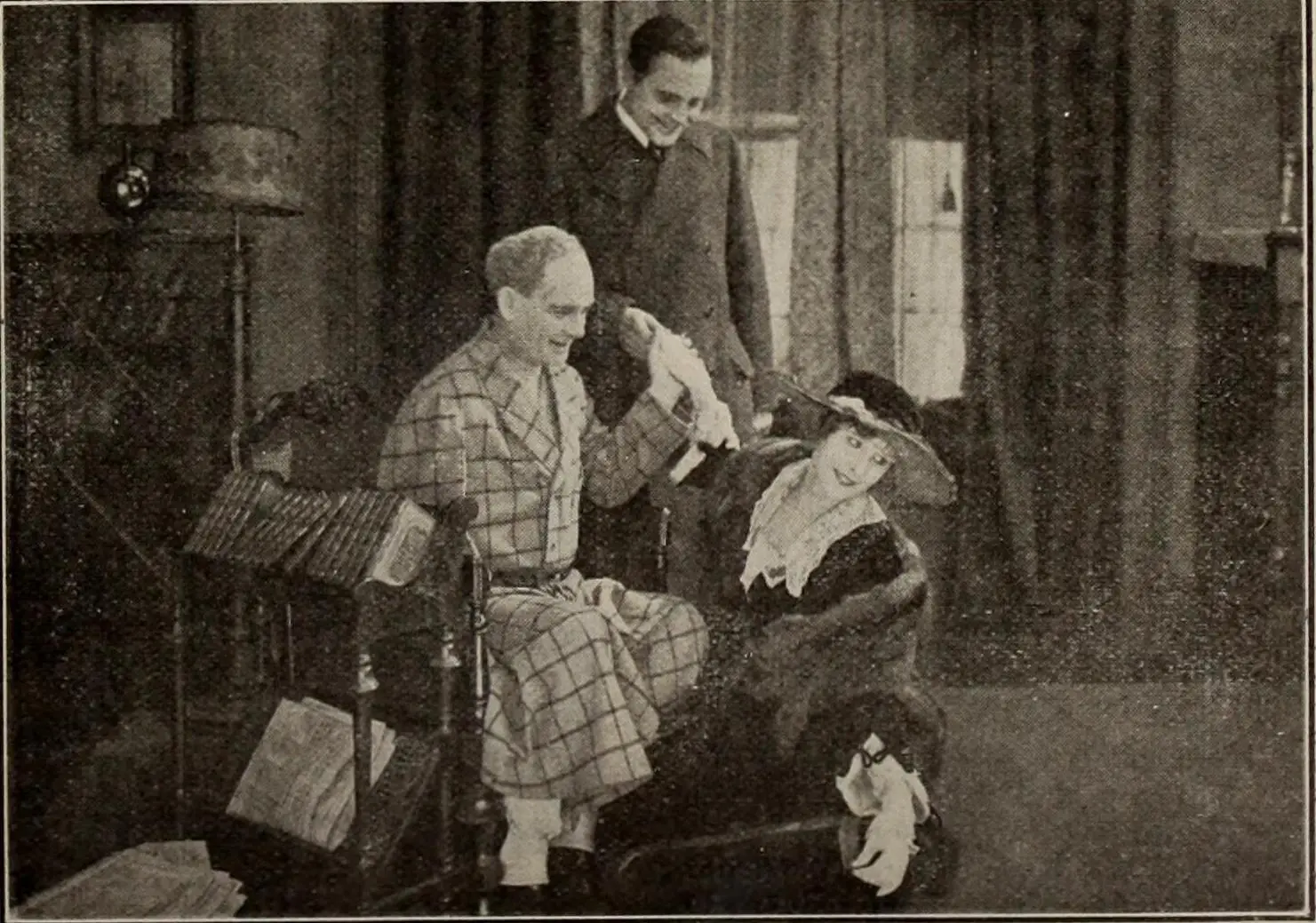
No hero’s journey is complete without a formidable antagonist, and Virtuous Men delivers this in spades with Robert Brummon, a character steeped in the anxieties of the post-Revolutionary Russia era. Brummon, initially introduced as the previous foreman of the lumber camp, quickly reveals his true colors as a Bolshevik agitator. His machinations are not merely born of personal grievance but are fueled by a broader, more insidious ideological agenda: to disrupt government contracts and undermine national stability. This portrayal is a clear reflection of the 'Red Scare' paranoia that gripped America in the wake of the Russian Revolution, where fears of communist infiltration and sabotage were rampant. Edward Talbot imbues Brummon with a menacing intensity, his silent performance conveying a chilling blend of ideological zeal and personal vindictiveness. The film uses Brummon as a personification of external threats to the American way of life, highlighting the perceived dangers of radical foreign ideologies.
Brummon's initial act of sabotage—orchestrating a strike to halt lumber shipments vital for government contracts—is masterfully quelled by Stokes, further solidifying our hero's reputation. This defeat only stokes Brummon’s vengeful fires, leading to a more destructive act: setting the forest ablaze. The visual spectacle of the raging inferno, even in a silent film, must have been a powerful sequence for contemporary audiences, symbolizing the destructive potential of unchecked malice. Stokes’s heroic control of the fire is not just a triumph of physical courage but a symbolic victory over chaos and destruction. Brummon's relentless pursuit of revenge escalates dramatically when he reappears in New York, targeting Stokes's new role overseeing the construction of a top-secret "mystery ship" for the government. This shift from rural conflict to urban espionage broadens the film's scope, transforming it into a thrilling patriotic drama. The film's depiction of a hidden enemy, working from within to undermine national security, resonates with the themes found in other thrillers of the period, such as Under Suspicion, where unseen forces pose a constant threat.
Beyond the high-stakes drama of industrial sabotage and national security, Virtuous Men weaves a compelling romantic thread through its narrative. Upon Stokes’s transfer to the New York shipyards, he encounters Helen Willard, the astute daughter of his benefactor, Henry Willard. Their burgeoning romance is depicted with a warmth and sincerity that contrasts sharply with Stokes's earlier, superficial entanglement with Marcia Fontaine. Helen, portrayed by Clara Joel, is not merely a damsel in distress; she represents a different kind of virtue, one rooted in genuine affection, loyalty, and a shared sense of purpose. Her character embodies the ideal partner for the reformed Stokes, a woman who values character over capital, offering emotional stability rather than fleeting social status. Their love story is a quiet affirmation amidst the tumultuous backdrop of industrial espionage, symbolizing the personal rewards of a life lived with integrity.
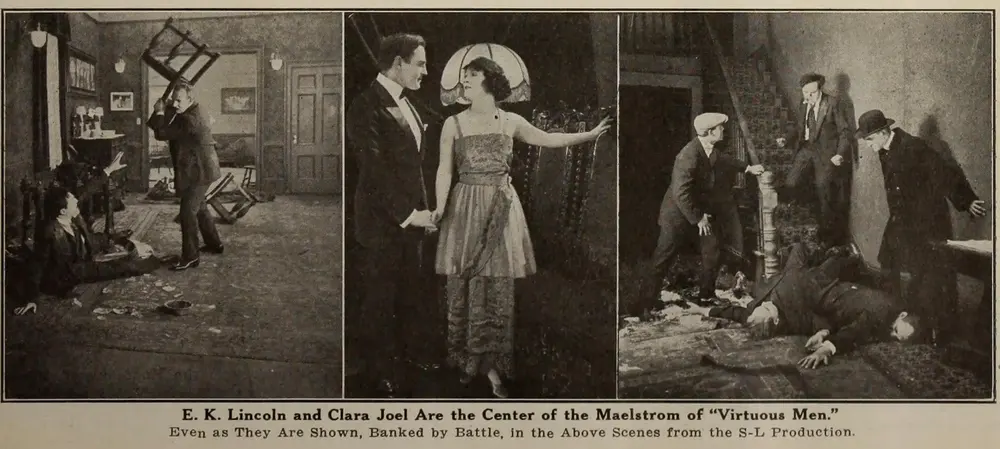
The reintroduction of Marcia Fontaine, however, injects a potent dose of moral peril into Stokes’s newfound happiness. Brummon, ever the cunning manipulator, exploits Marcia’s avarice and her lingering, albeit superficial, connection to Stokes. He orchestrates a seductive trap, using Marcia to lure Stokes to her apartment under the pretense of a rekindled romance, all while planning his assassination. This sequence is a masterclass in silent film suspense, building tension through a series of close-ups and dramatic gestures. Marcia, played by Grace Darling, embodies the allure of temptation, the ghost of Stokes's past life of superficiality. Her role serves as a final test of Stokes’s reformed character, challenging him to choose between the ephemeral pleasures of his past and the profound, virtuous love he has found with Helen. His escape from this perilous trap, driven by the sudden realization of the time bomb’s threat to the ship, elevates him from a mere survivor to an active defender of national interests, solidifying his heroic stature.
The film’s climax is a thrilling crescendo of suspense and patriotic fervor. The revelation of the time bomb, meticulously placed to destroy the government’s "mystery ship," propels Stokes into a desperate race against the clock. This sequence, undoubtedly designed to keep audiences on the edge of their seats, underscores the high stakes involved. The fate of a crucial naval asset, and perhaps even national security, rests squarely on Stokes’s shoulders. The visual language of silent cinema, relying on exaggerated expressions, rapid cutting, and dramatic intertitles, would have been employed to maximum effect here, amplifying the urgency of Stokes’s mission. His frantic search for the bomb, his discovery of it, and the split-second decision to hurl it into the water just before its detonation are moments of pure, unadulterated heroism. This act is not just a physical feat but a symbolic purging of the destructive forces that threatened to engulf the nation.
The capture of the saboteurs in the aftermath of the averted disaster brings a satisfying resolution to the narrative’s central conflict. Justice is served, and the forces of order triumph over chaos. The final scene, depicting Stokes and Helen standing together, watching the majestic launch of the once-threatened ship, is a powerful tableau. It symbolizes the successful fusion of personal triumph and national achievement. The ship, once a target of malevolent intent, now sails as a testament to the vigilance and courage of individuals like Bob Stokes. This imagery, rich with nationalistic pride, would have deeply resonated with audiences in 1919, a nation still basking in the glow of wartime victory and wary of new threats. It’s a moment that beautifully encapsulates the film’s core message: that true virtue lies not in inherited wealth or social standing, but in character, courage, and unwavering dedication to the greater good.
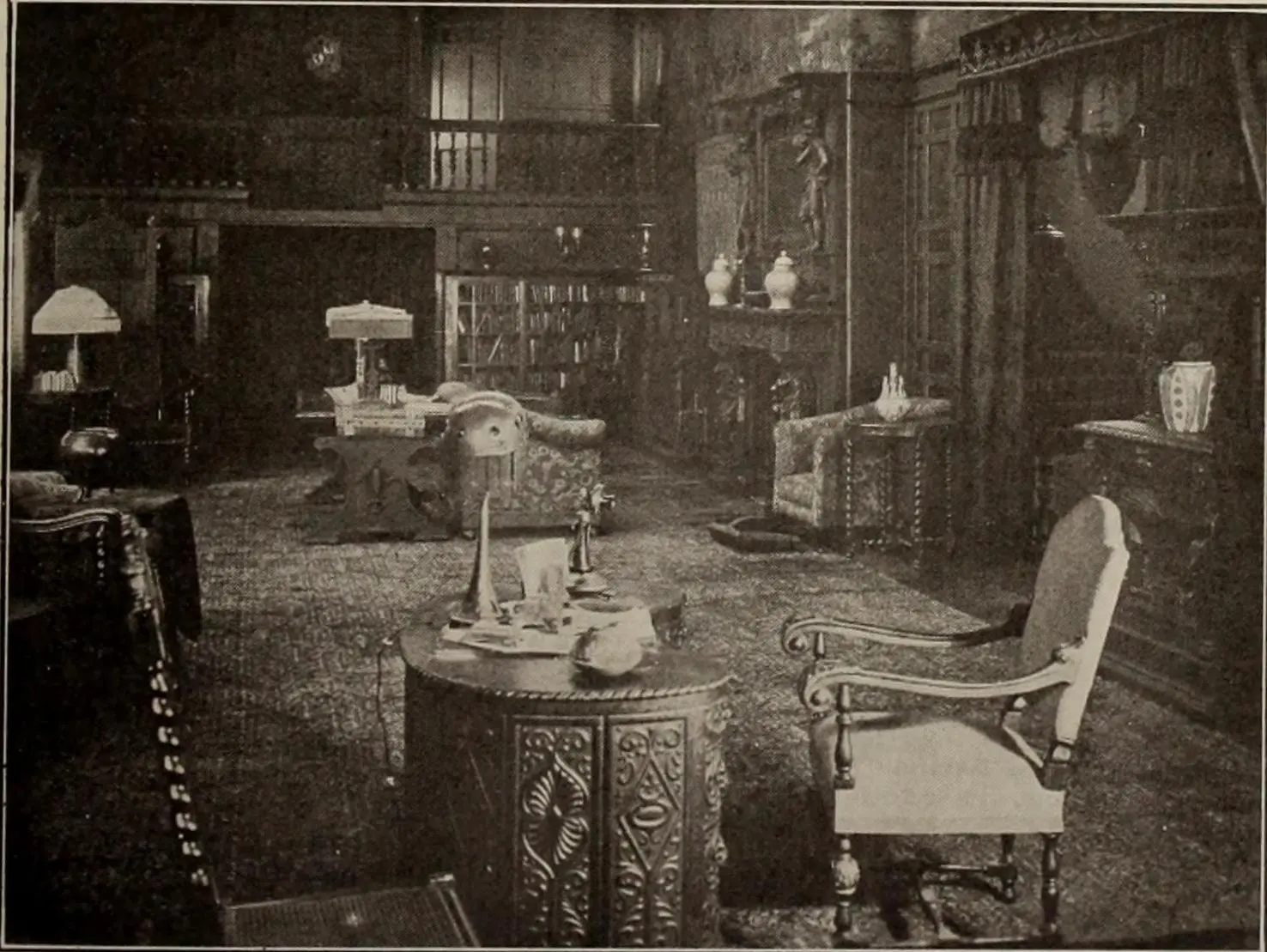
Ralph Ince, as director, demonstrates a keen understanding of silent film grammar, employing visual storytelling techniques that were both innovative and effective for his time. The pacing of Virtuous Men is notably dynamic, shifting seamlessly from the languid decadence of New York society to the rugged intensity of the lumber camp, and finally to the taut suspense of the shipyard. The use of intertitles is judicious, providing necessary exposition without bogging down the visual flow. The cinematography, though limited by the technology of the era, effectively captures both the grandeur of the natural landscapes and the claustrophobic tension of urban intrigue. The performances, particularly by Danny Hayes and Edward Talbot, are exemplary, showcasing the expressive power of silent acting. Their ability to convey complex emotions and motivations through gesture, facial expression, and body language is a testament to the artistry of the period.
Beyond its narrative prowess, Virtuous Men serves as a fascinating historical document. It reflects the prevailing social and political anxieties of post-World War I America, particularly the burgeoning fear of radicalism and foreign influence. The film’s clear delineation between the virtuous American hero and the nefarious Bolshevik agitator is a powerful piece of propaganda, consciously or unconsciously, reinforcing national identity and traditional values. While some elements might seem overly simplistic by today's sophisticated narrative standards, it is vital to view the film through the lens of its original context. It was a film designed to entertain, to thrill, and to subtly reinforce the virtues of patriotism, hard work, and moral integrity. Its enduring appeal lies in these timeless themes, presented through a compelling narrative that, even a century later, continues to captivate those willing to delve into the rich tapestry of early cinema.
In its exploration of a man's fall and subsequent redemption, his battle against external and internal demons, and the ultimate triumph of good over malevolence, Virtuous Men remains a significant entry in the silent film canon. It is a testament to the power of cinema to reflect, shape, and entertain, offering a compelling blend of thrilling adventure and profound moral inquiry. For enthusiasts of early cinema, it provides not only a gripping story but also a valuable glimpse into the cultural anxieties and heroic ideals that defined a pivotal moment in American history. Its legacy lies not just in its dramatic achievements but in its earnest articulation of what it meant to be 'virtuous' in a rapidly changing world.

IMDb 8.3
1914
Community
Log in to comment.