DbcultAccessing Vault...
5.1/10
Senior Film Conservator
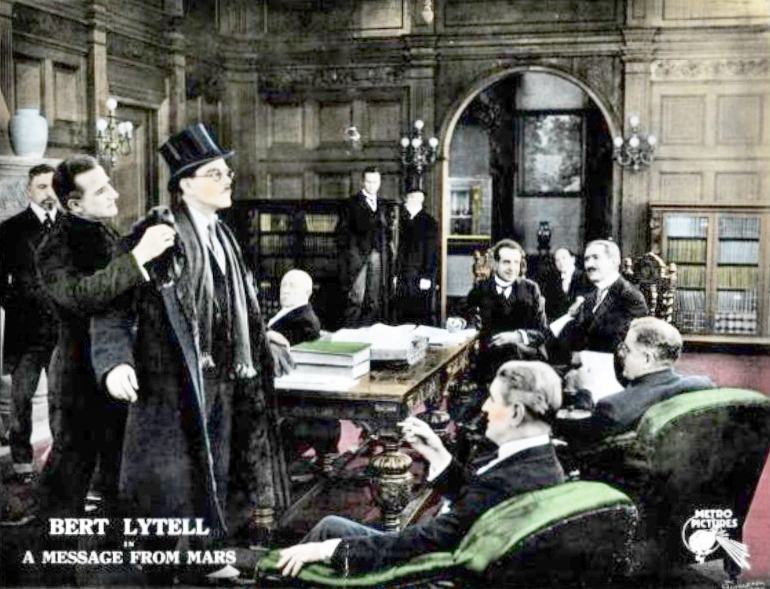
A definitive 5.1/10 rating for a film that redefined the boundaries of cult cinema. A Message from Mars remains a cornerstone of transgressive art.
The year 1921 was a threshold in cinematic history, a moment when the primitive flickers of the nickelodeon era were coalescing into the sophisticated visual language of high art. At the center of this metamorphosis stands A Message from Mars, a film that dares to bridge the chasm between the terrestrial drawing-room drama and the burgeoning genre of science fiction. While contemporary audiences might be conditioned to expect alien invasions or interstellar warfare from such a title, this silent-era gem offers something far more profound: a spiritual autopsy of the modern man. To watch this film today is to engage with a piece of celluloid archaeology that remains startlingly relevant in its critique of late-stage narcissistic tendencies.
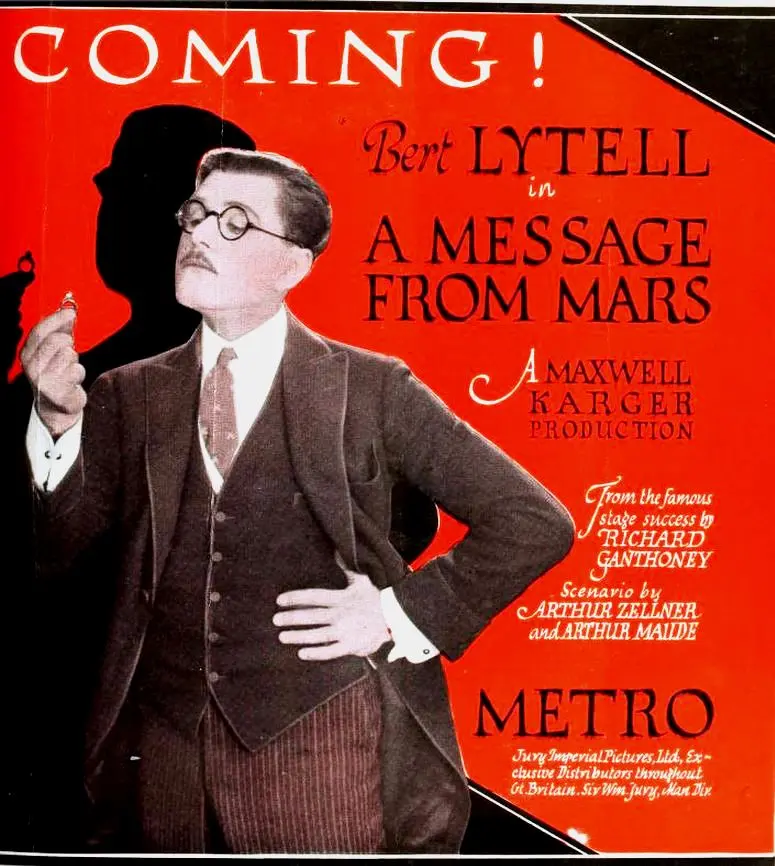
Bert Lytell delivers a performance that is nothing short of a masterclass in silent-screen characterization. His portrayal of Horace Parker is not a caricature of villainy but a nuanced study of a man entirely insulated by his own privilege. We see in Parker a precursor to the protagonists found in The Other Half, where the divide between social strata is not just a matter of economics, but a fundamental failure of perception. Lytell uses his physical presence to occupy space with an aggressive indifference; every gesture is calculated to reinforce his own comfort at the expense of others. When he interacts with Minnie Talbot, played with a fragile yet firm grace by the ensemble, one feels the chill of his emotional winter.
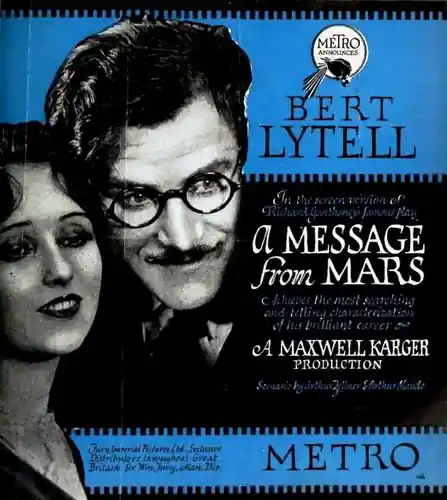
The genius of the script, adapted by Arthur Maude and Arthur J. Zellner from Richard Ganthony’s play, lies in its refusal to make Parker’s redemption easy. Unlike the more whimsical transformations seen in Every Girl's Dream, Parker’s journey is one of agonizing realization. He is a man who has built a fortress out of his inheritance, and it takes a literal extraterrestrial force to breach those walls. The film posits that selfishness is not merely a personality flaw but a cosmic imbalance that requires planetary realignment to correct.
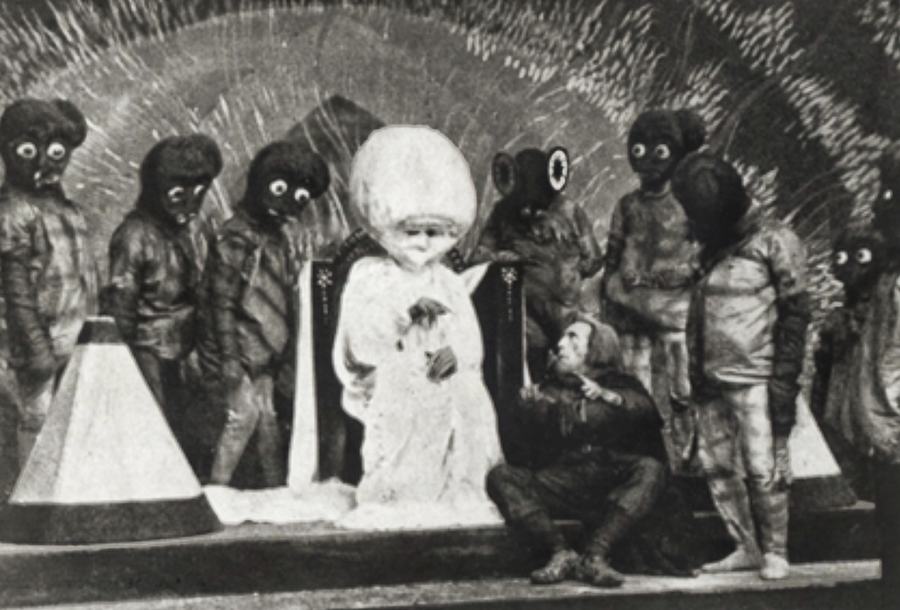
The arrival of the Martian (Alphonse Ethier) is where the film’s visual ingenuity truly shines. In an era before CGI, the use of double exposures and clever lighting created a sense of the uncanny that remains effective. The Martian does not arrive in a saucer; he manifests as a specter of conscience. He is a towering figure, radiating a stoic authority that dwarfs Parker’s petty grievances. This choice elevates the film from a simple Dickensian riff into something more akin to the philosophical explorations found in The Cup of Fury, where the individual is forced to confront the collective suffering of the masses.

The sequences where the Martian leads Parker through the streets of London are haunting. The cinematography captures the stark contrast between the warm, opulent interiors of the elite and the stygian darkness of the slums. This visual dichotomy serves as a silent indictment of the social stratification of the time. While films like Old Wives for New dealt with the complexities of modern marriage, A Message from Mars tackles the complexity of the human soul’s obligation to its neighbor. The Martian’s "ray"—a visual effect that forces Parker to see the truth—acts as a precursor to the modern cinematic gaze, stripping away the artifice of the protagonist’s reality.
Technically, the 1921 version of A Message from Mars (not to be confused with the 1913 version) demonstrates a significant leap in narrative pacing. The editing is crisp, allowing the moral weight of the story to accumulate without becoming bogged down in overly long intertitles. The writers understood that the power of the medium lay in the image. The way the Martian vanishes and reappears, the way the environments shift from reality to a dream-like state, showcases a confidence in the medium that was still being refined. It shares a certain aesthetic bravery with Something New, pushing the boundaries of what a camera could narrate without spoken dialogue.
Furthermore, the set design is meticulously crafted to reflect Parker's internal state. His home is cluttered with the artifacts of wealth—heavy draperies, ornate furniture—that feel like a tomb. As the film progresses and his perspective shifts, the world opens up. The use of deep focus in the street scenes creates a sense of immersion that was rare for its day. We aren't just watching a play on film; we are experiencing a cinematic world that breathes and suffers. This level of detail is reminiscent of the atmospheric work in The Silent Man, where the environment is as much a character as the actors themselves.
One cannot ignore the timing of this release. In the wake of the Great War, society was grappling with a sense of lost direction and the rise of a new, often hedonistic, individualism. A Message from Mars serves as a stern, yet ultimately hopeful, corrective. It suggests that the progress of the 20th century—symbolized by the fascination with Mars and scientific advancement—is hollow if it is not accompanied by a moral evolution. The film echoes the sentiments of Patria nueva in its call for a social rebirth, though it frames this rebirth through the lens of individual character rather than national identity.

The scenes involving the poor, the crippled, and the forgotten members of society are handled with a surprising lack of sentimentality. These are not just "props" for Parker’s redemption; they are presented with a dignity that demands the audience’s respect. The film avoids the trap of being a mere morality play by grounding its stakes in the very real threat of social collapse. If men like Parker do not change, the film implies, the fabric of society will tear beyond repair—a theme explored with equal fervor in One of Many.
While Lytell and Ethier carry the narrative’s heavy lifting, the supporting cast provides the necessary emotional grounding. Maud Milton and Gordon Ash deliver performances that navigate the difficult waters of early 20s melodrama without succumbing to the era’s penchant for over-acting. Their interactions with Parker provide the baseline of normalcy against which his eccentricity and eventual transformation are measured. The chemistry between Lytell and Mary Beaton is particularly poignant, capturing the exhaustion of a woman who loves a man but cannot tolerate his cruelty.
Even in the smaller roles, such as those played by George Spink and Leonard Mudie, there is a sense of a lived-in world. This ensemble approach helps to mitigate the fantastical elements of the plot, making the Martian’s presence feel like an intrusion into a very real, very tangible reality. It is this groundedness that allows the film to transcend the limitations of its genre, much like the way Joan of Arc uses historical realism to bolster its spiritual themes.
One of the most striking elements of the film is the "Martian Ray," a device that forces Parker to experience the physical and emotional pain of others. This is a brilliant narrative conceit that functions as a metaphor for the cinema itself. Just as the camera forces the audience to inhabit the lives of others, the Martian forces Parker into a state of radical empathy. This meta-commentary on the power of the moving image is remarkably sophisticated for 1921. It suggests that cinema has a duty not just to entertain, but to enlighten—a sentiment that would be echoed in the works of directors like Cecil B. DeMille in Flames of the Flesh.
The climax of the film, set against a backdrop of fire and chaos, is a visceral depiction of Parker's internal purgatory. The flames are not just a physical threat but a symbolic cleansing. As Parker risks his own life to save those he previously looked down upon, the visual language shifts from the sharp, cold lines of his earlier life to a softer, more incandescent glow. It is a powerful resolution that feels earned rather than gifted. The Martian’s departure is handled with a quiet dignity, leaving Parker—and the audience—to ponder the fragility of our own moral compasses.
A Message from Mars is more than a historical curiosity; it is a vibrant, challenging piece of art that demands to be seen by anyone interested in the evolution of cinematic storytelling. It possesses a lexical diversity of images that speaks across the century, reminding us that while our technology may advance, the fundamental struggle between the ego and the soul remains unchanged. It lacks the cynicism of modern sci-fi, opting instead for a sincere belief in the possibility of human change. In a world that often feels as cold and distant as the Red Planet itself, this film offers a warm, flickering light of hope.
Whether you are drawn to it for its pioneering special effects, its sharp social commentary, or the magnetic performance of Bert Lytell, A Message from Mars delivers a cinematic experience that is both intellectually stimulating and emotionally resonant. It stands as a testament to the power of silent film to tackle the biggest questions of our existence with nothing more than light, shadow, and the boundless reach of the human imagination. If you find yourself lost in the narcissism of the modern age, perhaps you, too, need a message from Mars.

IMDb 6.1
1935
Community
Log in to comment.