DbcultAccessing Vault...
Cult Review
Senior Film Conservator
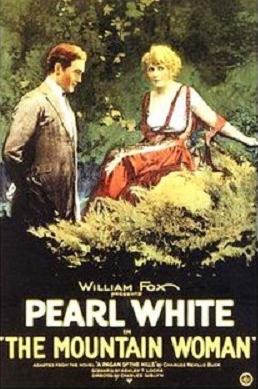
*The Mountain Woman* emerges as a singular artifact of early American cinema, a film that marries the rugged aesthetics of frontier life with a radical interrogation of gender identity. Set against the visceral backdrop of Kentucky’s mountainous terrain, the film’s protagonist, Alexander McGivens—alternately called “the girl in pants”—is not merely a character but a living manifesto of defiance. Her father’s decision to raise her as a boy is not an act of cruelty, but a pragmatic assertion of survivalist individualism, a theme that reverberates through the film’s every frame.
The narrative pivots on a single, violent act: Aaron McGivens is wounded in a fight with Bud Sellers, a local antagonist whose presence injects the film with a raw, almost mythic sense of antagonism. This wound becomes the catalyst for Alexander’s transformation from passive heir to active agent. Her journey to deliver her father’s logs to market is not a mere plot device; it is a ritual of passage, a literal and metaphorical descent into the wilderness of self-reliance. The lumber crew, a microcosm of Appalachian society, serves as both a support system and a mirror, reflecting the societal pressures that will later attempt to relegate Alexander back into the role of a “proper” woman.
The film’s romantic subplots—each suitor embodying a different cultural archetype—are less about courtship than they are about power dynamics. Jerry O’Keefe, the Irishman, brings a romantic idealism that borders on naivety; Jase Mallows, the roughneck, represents the toxic masculinity that seeks to control and possess; and Jack Halloway, the easterner, is a capitalist specter, offering wealth as a substitute for authenticity. These suitors are not merely obstacles in Alexander’s path but manifestations of the societal forces that seek to define her gender.
What elevates *The Mountain Woman* beyond the conventions of early Westerns is its unflinching portrayal of violence as both a tool and a consequence. The capture by Mallows and his followers is not just a physical subjugation but a symbolic regression into the very societal norms Alexander has spent the film resisting. Yet, her return home is not a defeat—it is a reclamation. By choosing O’Keefe, the “soft-spoken mountaineer,” she rejects the performative manhood of her upbringing in favor of a relationship rooted in mutual respect and shared labor.
The film’s visual language is equally radical. The Kentucky hills are rendered with a painterly intensity, the red clay and green foliage forming a stark contrast to the stark black-and-white of the film stock. This aesthetic choice mirrors Alexander’s duality—she is both part of and apart from the landscape. The use of shadow and light in scenes such as the lumber camp’s nighttime toil or the final confrontation with Mallows evokes German Expressionism, yet remains grounded in the film’s regional authenticity.
Comparisons to *Hitting the Trail* are inevitable, but where that film romanticizes frontier life, *The Mountain Woman* complicates it with a gendered lens. Unlike the moonshine narratives of *The Moonshine Trail*, which often center on male camaraderie, this film’s heart beats in the silent strength of its female protagonist. The influence of *La Belle Russe* (1919) is felt in the film’s use of romantic entanglements as narrative drivers, though *The Mountain Woman* subverts the Russian film’s focus on exoticism with a deeply rooted regionalism.
Technically, the film is a marvel of its era. Director Charles Neville Buck’s framing of Alexander’s journey—whether she’s scaling a mountainside with logs or standing defiant against Mallows—is imbued with a kinetic energy that belies the static constraints of silent film. The use of intertitles is sparse but deliberate, allowing the actors’ physicality to carry the emotional weight. Pearl White’s portrayal of Alexander is a masterclass in silent screen acting; her eyes and gestures convey the interior struggle of a woman caught between two worlds.
The film’s climax, where Alexander returns home to O’Keefe, is a quiet, devastating moment. There is no triumphant fanfare, no overt celebration of her victory. Instead, there is a recognition of the cost of her autonomy—a choice that forgoes societal approval for personal truth. This ending rejects the binary of success and failure, offering instead a nuanced portrait of self-determination.
In an age where the term “feminist film” is often reserved for modern works, *The Mountain Woman* stands as a testament to the genre’s early roots in subversion. Its themes of gender performativity and economic survival resonate with contemporary debates about identity and labor. The film’s legacy is further enriched by its historical context; released during the Progressive Era, it reflects the tensions between traditional gender roles and emerging notions of women’s agency.
For modern audiences, the film may require a contextual leap—its silent format and archaic social norms are as far removed from today’s cinematic norms as its Appalachian setting is from urban landscapes. Yet, it is precisely this distance that allows for a fresh reading. The absence of spoken dialogue forces viewers to engage with the film’s visual and emotional language, creating a meditative experience that mirrors the introspective journey of its protagonist.
In conclusion, *The Mountain Woman* is not merely a relic of early cinema but a daring exploration of identity and survival. Its bold questioning of gender roles, its unflinching portrayal of violence, and its lyrical use of landscape make it a landmark in American film history. For those seeking a film that challenges as much as it entertains, this 1913 gem remains a beacon of cinematic audacity.

IMDb 6.8
1931
Community
Log in to comment.