DbcultAccessing Vault...
Cult Review
Senior Film Conservator
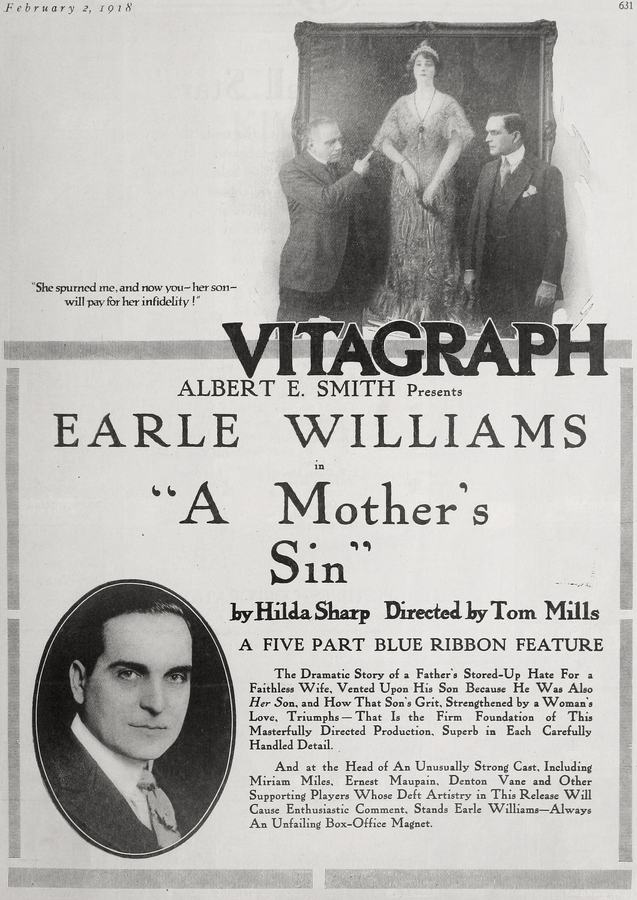
A Mother's Sin: A Gothic Study of Identity and Inheritance
Unpacking the Layers of Deception in Edward J. Montagne’s Silent Drama
Edward J. Montagne’s A Mother's Sin (1918) is a masterclass in psychological tension, a silent film that lingers in the mind like a half-remembered nightmare. Set against the gilded decay of Edwardian England, the film dissects the corrosive effects of familial shame and the performative nature of identity. At its core, it’s a tragedy of misdirection: Patrick Yardley (Earle Williams) is ostracized not for his own transgressions, but for his uncanny resemblance to his mother’s long-ago betrayal. This haunting premise—where appearance dictates destiny—sets the stage for a narrative that is as much about self-discovery as it is about societal cruelty.
The film’s genius lies in its refusal to assign easy villains. Vincent Tessier (Denton Vane), the opportunistic usurper, is a complex figure whose manipulation of both Patrick’s father and his love interest, Celia Graham (Louise Du Pre), reveals the fragility of trust in a world where reputation is currency. When Vincent dons Patrick’s identity, the film’s central metaphor crystallizes: identity is a costume, and the line between authenticity and imitation is perilously thin.
Montagne and co-writer Hilda Sharpe construct a narrative that is both intimate and epic in scope. The film’s third act—a crescendo of revelations and retribution—is executed with operatic precision. Yardley, Sr.’s (Ernest Maupain) belated attempt to correct his will, and Vincent’s subsequent downfall, are rendered with a tragic inevitability that feels both satisfying and harrowing. The supporting cast, particularly Miriam Miles as the scheming mother of Celia, adds layers of moral ambiguity, ensuring that no character exists in a vacuum.
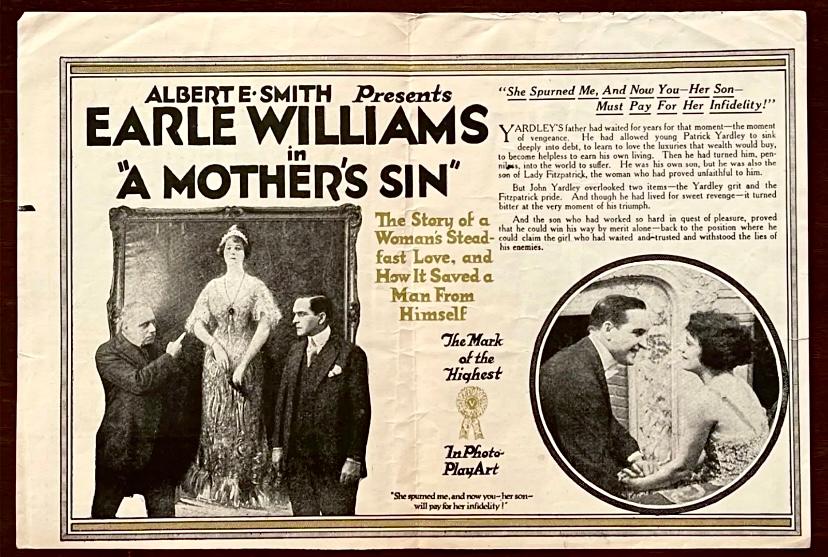
Visual Storytelling: Light, Shadow, and the Weight of Legacy
Though silent films often rely on intertitles to drive narrative momentum, A Mother's Sin uses its visual language to devastating effect. The cinematography, stark and high-contrast, mirrors the binary conflicts at the film’s heart: truth versus deception, love versus duty. One standout sequence features Patrick’s exile from his family estate; the camera lingers on his shadow cast against an opulent fireplace, a visual metaphor for the ghost of his identity that haunts both him and those he leaves behind.
The film’s score, though lost to time, is presumably as haunting as its imagery. The absence of dialogue amplifies the emotional weight of each gesture—Celia’s trembling hands when pressured to abandon Patrick, Vincent’s smug smile as he appropriates a life not his own. These moments are etched into the screen with the precision of a Shakespearean tragedy, where every action reverberates with consequence.
Comparisons and Context: A Mother's Sin in the Silent Film Canon
Placing A Mother's Sin within the broader landscape of early 20th-century cinema reveals its unique contribution to the genre. Unlike the lurid sensationalism of films like Satanasso or the overt melodrama of The Bells, Montagne’s work is more introspective, focusing on the internal unraveling of its characters. It shares thematic DNA with The Tempting of Justice, particularly in its exploration of moral hypocrisy, but distinguishes itself through its nuanced handling of familial dynamics.
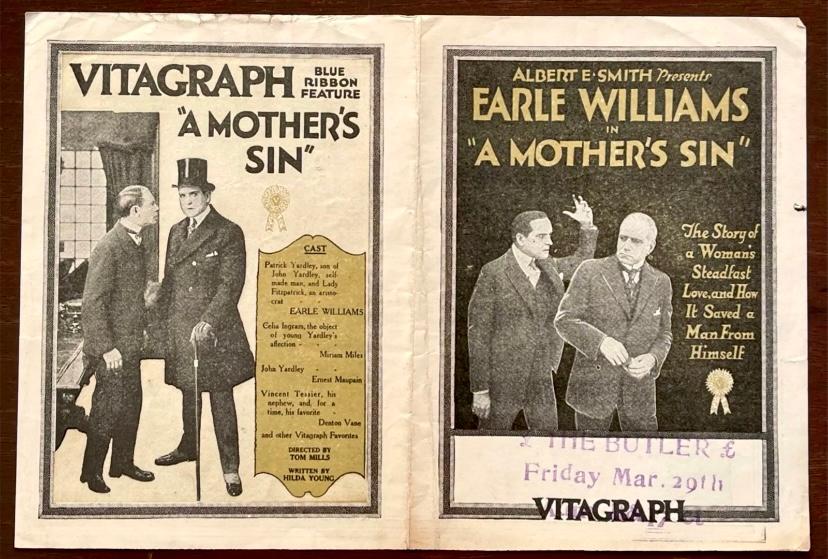
For modern audiences accustomed to fast-paced narratives, the deliberate pacing of A Mother's Sin may initially feel languid. However, this measured tempo allows the audience to inhabit the characters’ emotional landscapes. The film’s exploration of identity theft prefigures themes that would later be examined in works like Fantomas: The Mysterious Finger Print, yet Montagne’s focus on personal rather than societal corruption makes it a more intimate study.
Performances: The Human Core of a Gothic Tale
Earle Williams’ portrayal of Patrick is a masterclass in restrained acting. His eyes, often wide with a mix of anguish and defiance, convey volumes in a medium where words are absent. Williams makes the audience feel the weight of his disinheritance not as a plot device, but as a lived experience. Conversely, Denton Vane’s Vincent is a study in calculated charm, his every movement betraying a man who knows power lies in perception.
Louise Du Pre’s Celia is the emotional anchor of the film. Her performance is a delicate balancing act between loyalty to Patrick and the pragmatic demands of her social class. A pivotal scene—where she tearfully confronts Vincent, unaware of his treachery—showcases Du Pre’s ability to convey conflicting emotions: love, confusion, and a dawning horror that her choices have consequences beyond her control.
The supporting cast, particularly Eleanor Lawson as Patrick’s disapproving aunt and Charles Horton as the vengeful Maxton, add texture to the film’s moral landscape. Horton’s brief but electrifying appearance as the valet who exacts justice is a reminder that in A Mother's Sin, retribution is as inevitable as it is poetic.

Legacy and Relevance: Why A Mother's Sin Endures
Over a century after its release, A Mother's Sin remains a potent exploration of how identity is shaped—and often stolen—by the forces of family and society. Its themes resonate in an age where digital personas can be as malleable as Vincent’s false identity. The film’s critique of patriarchal inheritance and the commodification of women’s choices (embodied in Celia’s mother’s manipulations) adds a layer of social commentary that feels startlingly contemporary.
For cinephiles, the film is a gateway to understanding the silent era’s capacity for psychological depth. It joins the ranks of works like The Dawn of Understanding in demonstrating that even without dialogue, film can articulate the most complex human emotions. Its influence can be glimpsed in later adaptations of gothic literature, where the uncanny and the personal collide.
Final Thoughts: A Masterpiece of Emotional Precision
A Mother's Sin is a film that rewards patience and attention. Its slow burn and moral complexity may not appeal to those seeking action-driven narratives, but for those willing to immerse themselves in its world, it offers a richly rewarding experience. Montagne and Sharpe have crafted a story that is as gripping now as it was a century ago, a testament to the timelessness of its themes.
In the pantheon of silent cinema, A Mother's Sin stands as a reminder that the most powerful films are those that speak to the universality of human frailty. It is a work that lingers, not just in memory, but in the quiet spaces where identity and truth converge.

IMDb 5.8
1934
Community
Log in to comment.