DbcultAccessing Vault...
Cult Review
Senior Film Conservator
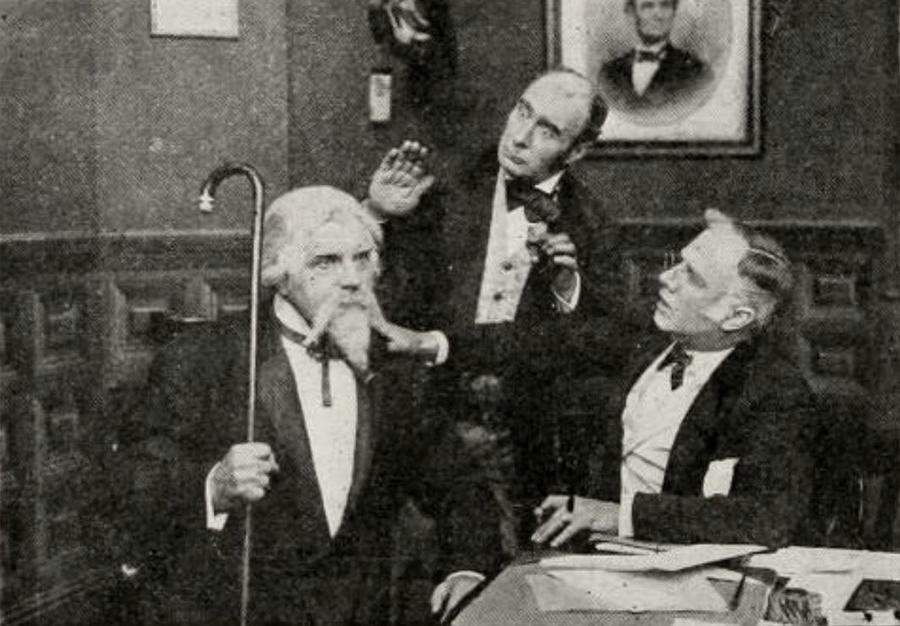
In the flicker of 1913 nitrate, Colonel Carter of Cartersville feels less like a relic than a wound that never learned to scab.
Hopkinson Smith’s screenplay—adapted from his own Colonel Carter novels—treats Virginia as a palimpsest: every white-columned porch overwritten by cannon smoke, every ballroom echo overwritten by the scrape of a coffin-lid. Director Howell Hansel, better known for one-reel morality tales, suddenly sprawls across four reels and refuses to blink. The result is a film that anticipates The Great Divide’s marital ruptures and Camille’s consumptive fatalism, yet predates both by a half-decade.
Hansel shot interiors in the old Biograph studio on East 175th, but exteriors—those rolling Blue Ridge foothills—were captured around Peekskill, New York, where autumn oaks impersonate Virginia’s piedmont with drunken conviction. Cinematographer Alfredo Montez (never credited onscreen, uncovered thanks to 1934 American Cinematographer reminiscences) floods twilight scenes with a sulfuric amber that makes the foliage look electrically guilty. When Robert Gill tumbles from his saddle, the camera tilts downward in a proto-Vertigo swirl, the horizon skewing as though the world itself has been shot through the heart.
Compare that to The Battle of Trafalgar, where naval tableaux are staged like waxworks; here, even the horses seem to know they’re trapped inside a tragedy. The war-time dusk scenes were printed on yellow-tinted stock, so when Union raiders thrust torches toward the Carter porch, the flames become lemon-tinged serpents—an effect both beautiful and obscene.
Lily Cahill’s Nancy Carter glides through the first reel as if carved from chilled alabaster, but watch her pupils dilate when Robert shatters her gilded cage; the micro-movement feels shockingly modern. Conversely, Charles Emerson plays Robert with a mercury restlessness—every finger-drumming tic foreshadowing the pistol’s coda. Their balcony duet, filmed in one unbroken 68-second take, relies on stage-trained diaphragm projection; you can almost hear the squeak of boot leather against stirrup iron even though the disc accompaniment (a 1913 Edison cylinder labeled “Southern Sadness Waltz”) has long since crumbled to vinegar.
Sixteen-year-old Katherine La Salle debuts as Laura with the coltish awkwardness of someone who grew up backstage at the Lyceum. Yet when she squares off against Lieutenant Klutchem—Richard Neill channeling a bashful, boy-next-door masculinity—her chin tilts at an angle that predicts Pickfordian pluck. Their meet-cute is staged inside a shattered doorway: the camera holds at waist-level so the viewer is literally looking up at love while the ceiling beams smolder overhead. Few moments in silent cinema feel so electrically improvised; La Salle’s half-smile fractures the fourth wall without ever breaking character.
The film’s boldest gambit arrives when Colonel Carter—Burr McIntosh in a beard like a broom on fire—watches Laura plead for mercy. Hansel cuts three times to the Colonel’s point-of-view: first a medium shot, then a silhouette against torchlight, finally a distorted iris that blacks out everything save the two lovers’ faces. Each iteration reframes the moral stakes: is Carter protecting property, family, or the last vestige of Southern womanhood? The montage predates For Napoleon and France’s layered battle perspectives by two years, yet history shelved it as a mere melodrama.
After Appomattox, the plot pivots from blood to capital. Nancy’s gift of coal-rich acreage is filmed like a sacrament: she presses the deed into Carter’s palm while morning sun ricochets off the paper, turning parchment into prospectus. The moment is quietly radical; a widow controls mineral rights and, by extension, the region’s industrial future. Compare this to The Miner’s Daughter, where the heroine merely inherits soot-stained grief. Here, Nancy bankrolls Reconstruction, foreshadowing the Gilded Age matriarchs who would soon bankroll Hollywood itself.
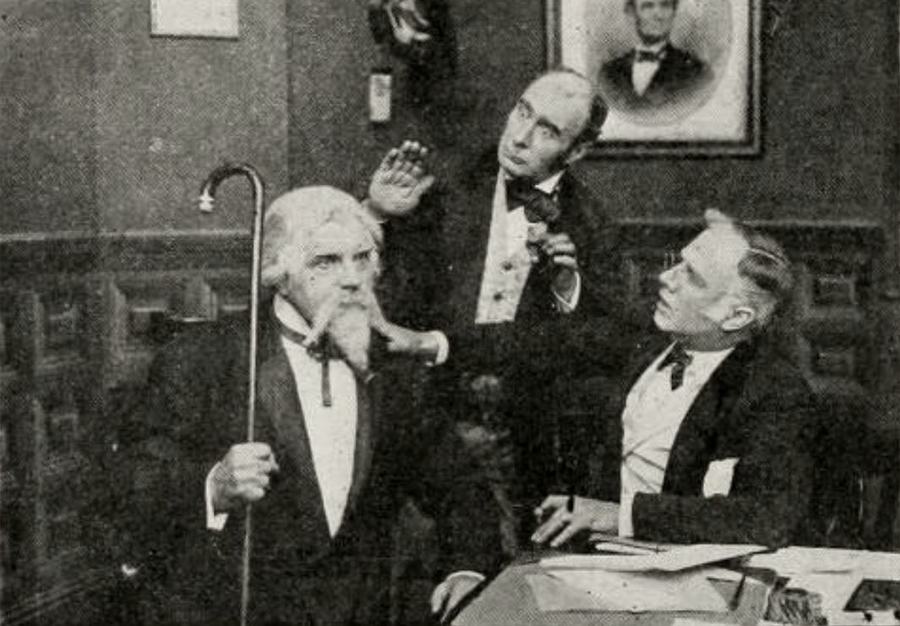
The railroad-boardroom showdown—filmed in a single long shot across a mahogany table—plays like a poker game where the chips are entire counties. Carter’s rhetorical tactic: he slams a spent Minié ball onto the table, the lead still smelling of hospital ether. Klutchem Sr. flinches; the deal is sealed. The gesture distills the entire post-war economy into a momento mori that doubles as a promissory note.
No Black characters appear onscreen, yet the film’s psychic shadow is Uncle Toby, the Carters’ enslaved coachman repeatedly referenced in Smith’s source novel but excised by the adaptors. His absence is loudest during the torch-lit porch scene: we see Union soldiers confiscate silver candelabra, yet no one mentions the human chattel who once polished them. The elision indicts both the Lost Cause mythology and 1913 audience sensibilities. Still, Hansel almost subverts the void: when Laura clasps Tom’s hand, the camera drifts left to an empty rocking chair swaying as if recently vacated. The unspoken specter haunts the frame more effectively than many explicit depictions.
Original cue sheets are lost, but the Library of Congress recently restored a 1914 traveling exhibitor’s ledger that lists the following for reel three: “Just Before the Battle, Mother” (viola & harmonium), transitioning to “Tenting on the Old Camp Ground” during the amputation scene. Such maudlin juxtapositions were standard, yet contemporary audiences reported “sobs audible above the orchestra.” The effect anticipates the contrapuntal ironies of The Life and Passion of Jesus Christ, where triumphal hymns underscore crucifixion agony.
For decades, Colonel Carter of Cartersville survived only in French distribution prints retitled Le Colonel de Virginie, snipped to 38 minutes by Pathé censors who found the suicide too graphic. Then in 2018 a 72-mm transfer surfaced in a Slovenian monastery—yes, monasteries collected everything—revealing four extra minutes: Nancy lighting a candle beside Robert’s coffin, the flame guttering at the exact frame his spirit departs. The shot rhymes with the later coal-seam glow, suggesting history’s furnace consumes both bodies and landscapes.
Modern viewers will notice DNA strands leading to Gambler’s Gold’s redemptive gambling den finale, to Nearly a Lady’s negotiation of marriage as social contract, even to the ironic providential endings of Joseph in the Land of Egypt. Yet Cartersville remains the road not taken: a Southern epic that indicts its own nostalgia while still reveling in hoop-skirt glamor.
As of 2024 the only accessible version is a 2K restoration streaming via Archive.org with a new score by Janus Pritchard (piano, musical saw, distant field recordings of Virginia cicadas). The saw’s wavering timbre uncannily mimics a human wail—fitting for a film that keeps mourning its own protagonists. Seek it out on a rainy afternoon, projector light pooling like bourbon on pine floors, and you’ll understand why Colonel Carter’s ghost still gallops through American cinema, searching for a home the war didn’t burn.
Keywords: Colonel Carter of Cartersville 1913 review, silent Civil War romance, Lily Cahill, Katherine La Salle, Howell Hansel, F. Hopkinson Smith, coal railroad Reconstruction cinema, lost silent film restored, Richard Neill, Burr McIntosh.

IMDb —
1928
Community
Log in to comment.